 Lives of Scripture
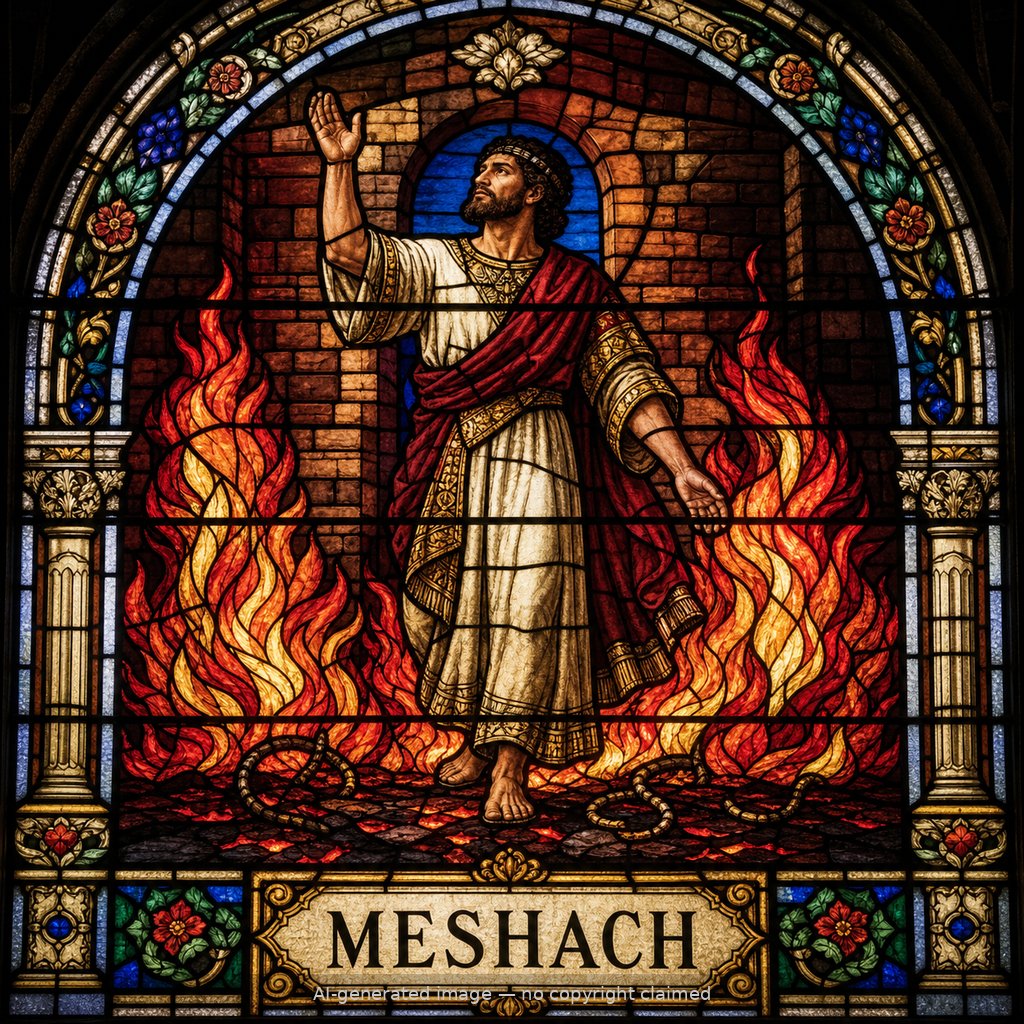
Meshach (M)
First named in Daniel 1:6-19
Meshach was the Babylonian name given to Mishael, one of the young Judean nobles taken to Babylon with Daniel and trained for royal service (Daniel 1:6-7). Along with Shadrach and Abednego, he was later promoted to administer the province of Babylon at Daniel's request (2:49). When King Nebuchadnezzar erected a ninety-foot golden image and commanded all officials to bow and worship it at the sound of music, Meshach, Shadrach, and Abednego refused, since bowing to an idol would violate their exclusive worship of the LORD (3:1-12). Reported to the furious king, they answered him with remarkable resolve: "our God whom we serve is able to deliver us... but even if He does not, let it be known to you, O king, that we are not going to serve your gods" (3:16-18) -- faith that did not depend on the outcome. Nebuchadnezzar had the furnace heated seven times hotter and had them bound and thrown in, so hot that the soldiers who threw them in were killed by the flames (3:19-23). Yet the king, watching, saw four men walking unbound and unharmed in the fire, the fourth appearing "like a son of the gods" (3:24-25). Meshach and his companions emerged without so much as the smell of smoke on them, and Nebuchadnezzar publicly praised their God and promoted them further (3:26-30) -- one of Scripture's most vivid demonstrations that God can deliver His faithful even from certain death, and is worthy of worship whether He does or not.
Thought for Today
Thrown into a furnace heated seven times hotter for refusing to bow to Nebuchadnezzar's idol, Meshach told the king that God could deliver him -- but even if He did not, he still wouldn't worship a false god. May we trust Jesus that way, not just when He rescues us but even when He doesn't.
References: Daniel 1:6-19; Daniel 2:17-49; Daniel 3:12-30
Genealogy
Father
—Mother
—Spouse(s)
—Children
—Places
- Babylon — one of the three preserved unharmed in the fiery furnace in this city
Daniel 3:19-27