 Lives of Scripture
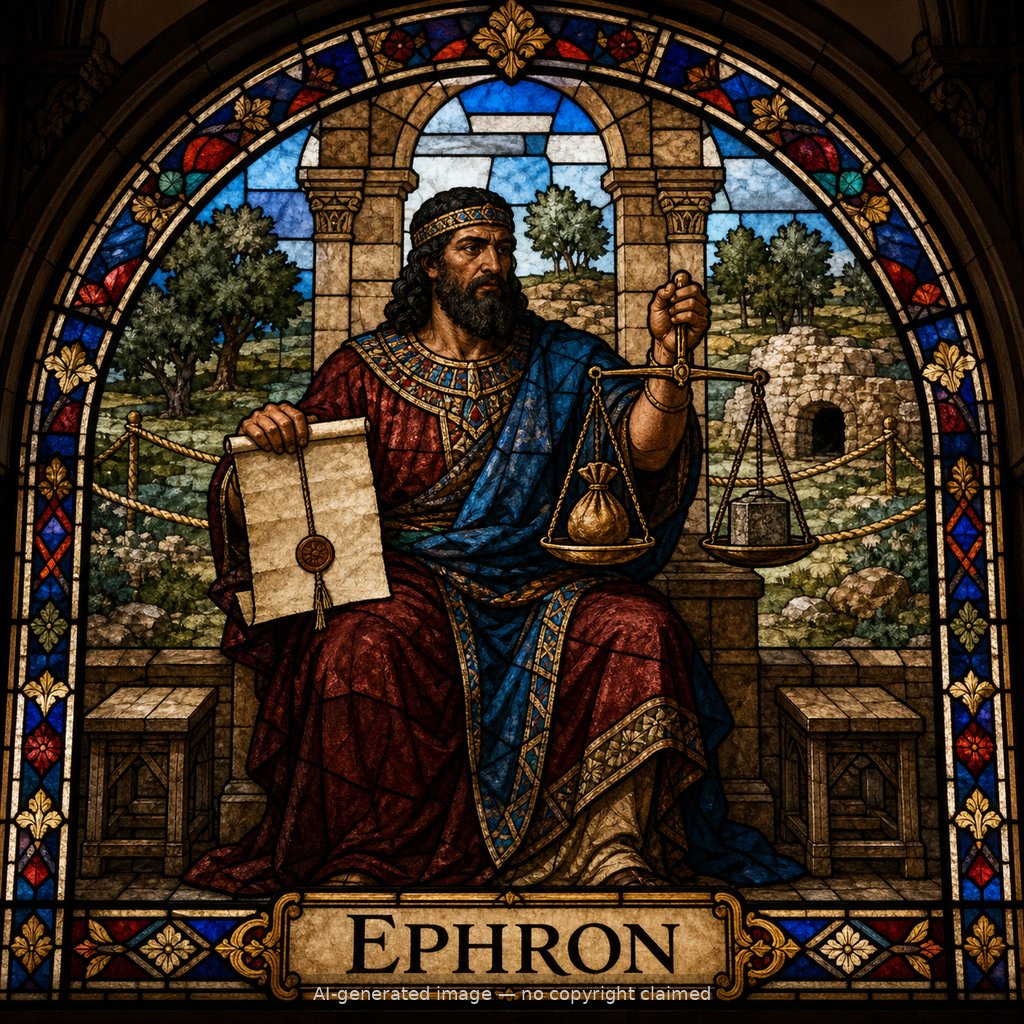
Ephron (M)
First named in Genesis 23:8-17
Ephron the Hittite, son of Zohar, appears in one of Genesis's most carefully narrated business transactions. After Sarah's death at Hebron, Abraham approached the local Hittites, still a landless sojourner in Canaan despite God's promise that the land would belong to his descendants, and asked to purchase a burial site (Genesis 23:3-4). Ephron, present among the elders at the city gate, at first offered the cave of Machpelah and its field to Abraham as a gift: "I give you the field, and I give you the cave that is in it... bury your dead" (23:11). Abraham refused to accept it for free, insisting on paying full price so that the land would be legally and undisputedly his. Ephron then named the price -- four hundred shekels of silver -- and Abraham weighed it out before witnesses, formally securing the field, the cave, and all its trees as a permanent possession (23:14-18). This transaction, recorded with unusual legal precision for Genesis, gave Abraham his only actual landholding in the entire promise-land narrative: the cave of Machpelah became the burial place of Sarah, and later of Abraham himself (25:9), Isaac and Rebekah, Leah, and Jacob, whose sons carried his body back from Egypt to bury him there (49:29-32; 50:13). Ephron's brief but pivotal role secured, in the middle of a story about promises not yet fulfilled, one small and permanent foothold of the promised land.
Thought for Today
Abraham refused to accept the cave of Machpelah as a free gift, insisting on paying full price so the ground would be his without dispute. Jesus paid the full price for us too -- not a bargain or a favor, but a real cost fully paid, so what He secured for us could never be disputed.
References: Genesis 23:8-17; Genesis 25:9; Genesis 49:29-30; Genesis 50:13
Genealogy
Connections
Places
- Cave of Machpelah — the Hittite who sold Abraham this cave as a burial place for Sarah
Genesis 23:8-17
- Hebron — the Hittite of this city who sold Abraham the cave of Machpelah
Genesis 23:8-18