 Lives of Scripture
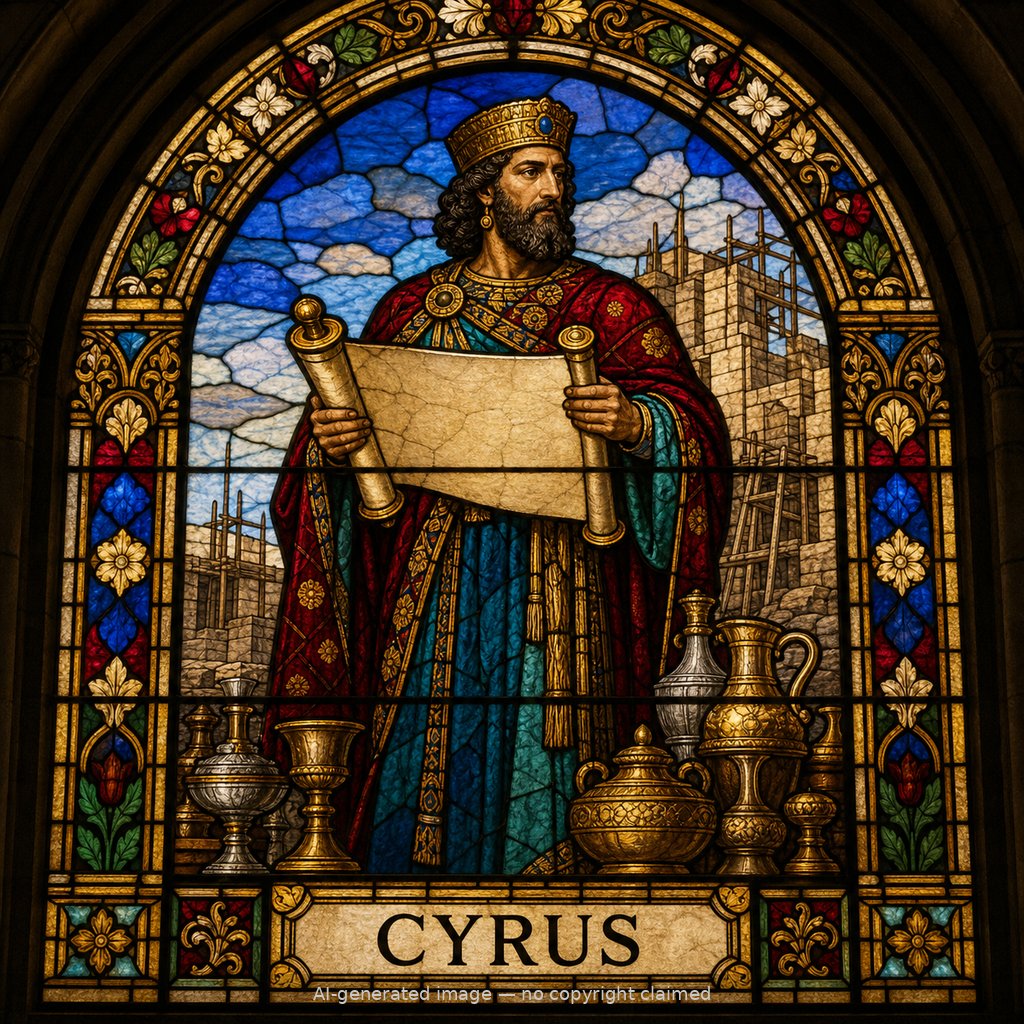
Cyrus (M)
First named in 2 Chronicles 36:22-23
Cyrus the Great became king of Persia and, in 539 BC, conquered Babylon, ending the empire that had carried Judah into exile. Scripture presents his rise as no accident: more than a century earlier, Isaiah had prophesied that the LORD would raise up a king named Cyrus, calling him "My shepherd" and even "His anointed," who would let the exiles go free and command that Jerusalem and the temple be rebuilt (Isaiah 44:28; 45:1). That prophecy found its fulfillment when, in his first year over Babylon, "the LORD stirred up the spirit of Cyrus king of Persia," and he issued a decree: any of the LORD's people among the exiles could return to Jerusalem to rebuild the temple, and he called on their neighbors to support them with silver, gold, goods, and livestock (2 Chronicles 36:22-23; Ezra 1:1-4). Cyrus also returned the gold and silver articles that Nebuchadnezzar had taken from the temple, entrusting them to Sheshbazzar for the journey home (Ezra 1:7-11). Later Persian records confirm and reinforce his original decree when the rebuilding project stalled under local opposition (Ezra 5:13-17; 6:3-5). Daniel, too, lived to see Cyrus's reign (Daniel 1:21; 10:1). Cyrus never worshiped the LORD as his own God, yet Scripture treats his decree as a direct outworking of God's sovereign faithfulness to bring His exiled people home, exactly as promised.
Thought for Today
Isaiah named Cyrus generations before his birth and called him God's anointed, sent to free God's captive people. God's promises find their fullest fulfillment in Jesus.
References: 2 Chronicles 36:22-23; Ezra 1:1-8; Ezra 3:7; Ezra 4:3-5; Ezra 5:13-17; Ezra 6:3-14; Isaiah 44:28; Isaiah 45:1; Daniel 1:21; Daniel 6:28; Daniel 10:1