 Lives of Scripture
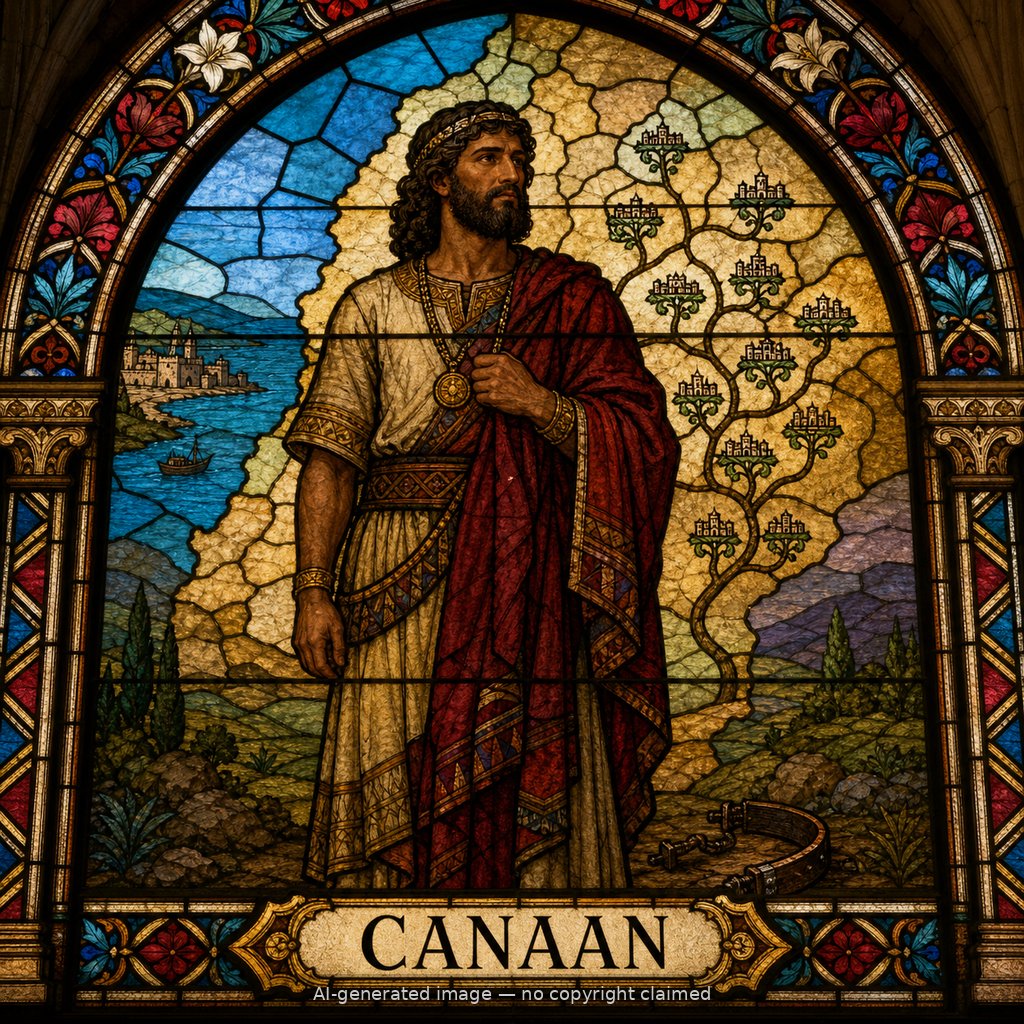
Canaan (M)
First named in Genesis 9:18-27
Canaan was the son of Ham and grandson of Noah (Genesis 9:18; 10:6). After the flood, Noah planted a vineyard, drank its wine, became drunk, and lay uncovered inside his tent. Ham "saw the nakedness of his father" and told his two brothers, Shem and Japheth, who instead walked in backward and covered Noah without looking (9:20-23). When Noah awoke and learned what Ham had done, he pronounced judgment -- not on Ham directly, but on Ham's son: "Cursed be Canaan; a servant of servants he shall be to his brothers," followed by a blessing on Shem and Japheth (9:24-27). Scripture does not explain why the curse fell on Canaan rather than on Ham himself, and interpreters differ over exactly what Ham's offense involved and why his son bore the consequence. This passage has a painful history of misuse -- for centuries it was wrongly invoked to justify the enslavement of Black Africans, a reading the text itself does not support: Canaan's descendants are simply the peoples later called Canaanites who settled the land later promised to Abraham (10:15-19), and the text nowhere mentions skin color or any particular race. Canaan fathered Sidon, Heth, and the ancestors of the Jebusites, Amorites, and other Canaanite peoples (10:15-18), the very nations Israel would later be commanded to dispossess in the conquest of the promised land.
Thought for Today
Canaan carried the weight of a curse spoken because of his father's sin, and later generations wrongly used those words to excuse human slavery. Jesus is the only one who ever carried a curse that truly wasn't His own, taking what our sin deserved so it wouldn't fall on us.
References: Genesis 9:18-27; Genesis 10:6-15; Genesis 28:1-8; Genesis 31:18; Genesis 36:2; 1 Chronicles 1:8-13
Genealogy
Connections
- Ham (M) — begot → Canaan (M)
- Canaan (M) — begot → Sidon (M)
- Canaan (M) — begot → Heth (M)
- Canaan (M) — begot → Jebus (M)
- Canaan (M) — begot → Amor (M)
- Canaan (M) — begot → Girgash (M)
- Canaan (M) — begot → Hivi (M)
- Canaan (M) — begot → Ark (M)
- Canaan (M) — begot → Sini (M)
- Canaan (M) — begot → Arvad (M)
- Canaan (M) — begot → Zemar (M)
- Canaan (M) — begot → Hamath (M)