 Lives of Scripture
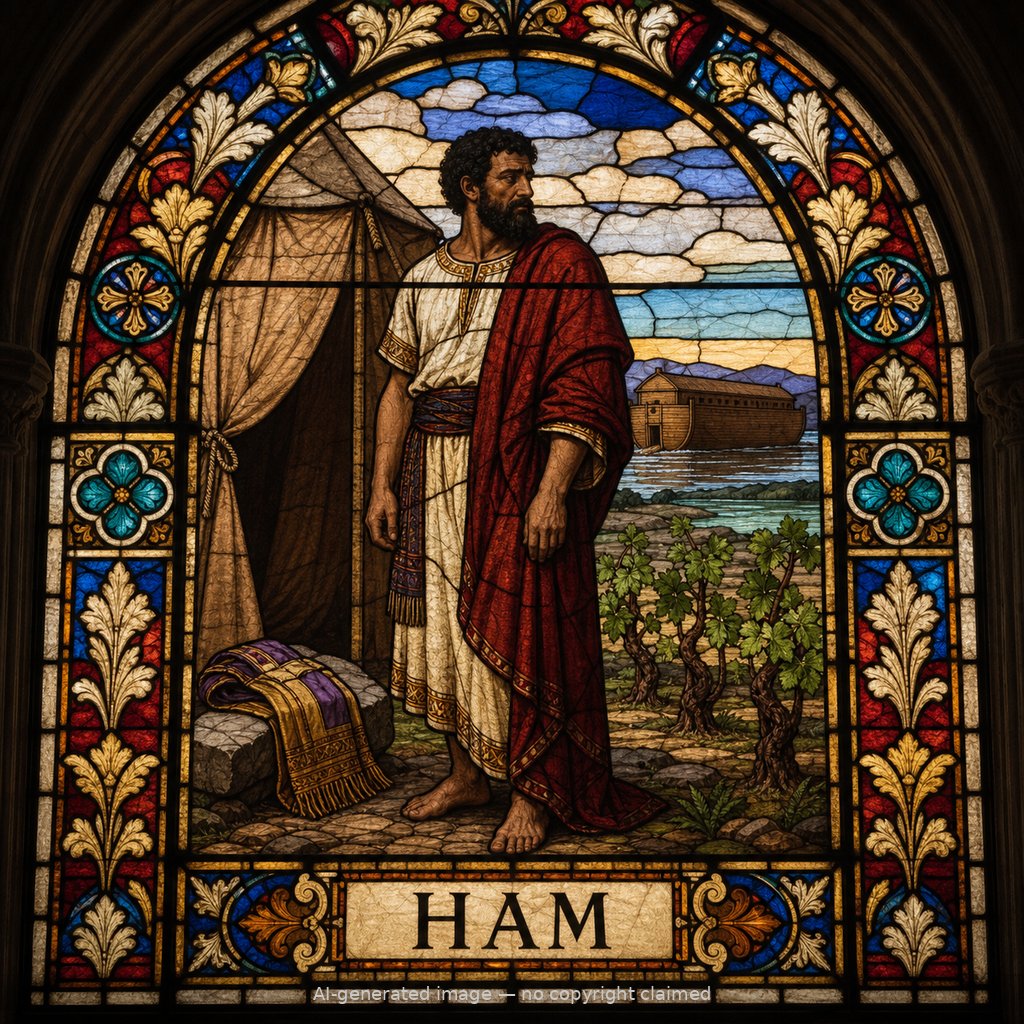
Ham (M)
First named in Genesis 5:32
Ham was one of Noah's three sons -- with Shem and Japheth -- who entered the ark and survived the flood with their wives (Genesis 5:32; 6:10; 7:13). After the waters receded, Noah planted a vineyard, drank its wine, and became drunk, lying uncovered inside his tent. Ham, "the father of Canaan," saw his father's nakedness and went out and told his two brothers rather than covering him (Genesis 9:20-22). Shem and Japheth took a garment, walked in backward, and covered Noah without looking, careful not to add to their father's shame. When Noah awoke and learned what Ham had done, he pronounced a curse -- not on Ham directly, but on Ham's son Canaan, that he would be "a servant of servants" to his brothers, while blessing Shem and Japheth (9:24-27). The episode is framed as a clear failure to honor a parent, in sharp contrast to his brothers' careful discretion. Genesis 10 traces Ham's line into the Table of Nations -- Cush, Mizraim (Egypt), Put, and Canaan -- ancestor of many peoples surrounding Israel, including the Canaanites Israel would later displace (Genesis 10:6-20; 1 Chronicles 1:4-8). Psalm 78:51 later calls Egypt poetically "the tents of Ham," recalling this ancestry when recounting the exodus plagues God struck against Pharaoh's land.
Thought for Today
Ham exposed his father's drunken shame instead of covering it, unlike his brothers who covered him with care. Jesus covers our shame instead of exposing us to judgment.
References: Genesis 5:32; Genesis 6:10; Genesis 7:13; Genesis 9:18-22; Genesis 10:1-20; 1 Chronicles 1:4-8; Psalms 78:51
Genealogy
Connections
Places
- Mesopotamia — a son of Noah who came through the flood
Genesis 7:13