Lives of Scripture
Amasa (M)
First named in 2 Chronicles 28:12
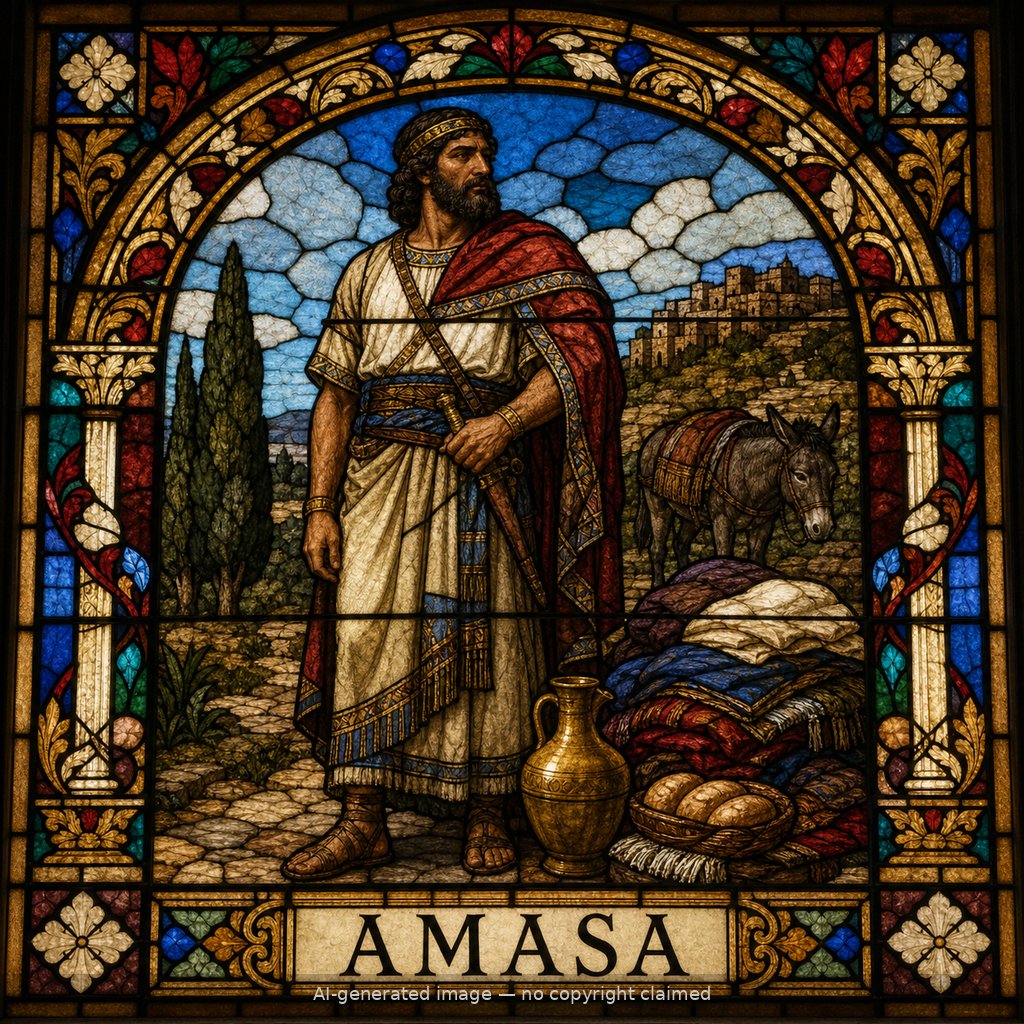
During the reign of King Ahaz, Judah suffered a heavy defeat at the hands of Israel's King Pekah, who killed vast numbers of Judah's soldiers and brought 200,000 women and children north to Samaria as captives, intending to make them slaves (2 Chronicles 28:5-8). The prophet Oded met the returning army and rebuked them sharply: bringing their own kinsmen into slavery would only add to Israel's guilt before the LORD, whose anger already burned against them (28:9-11). Amasa the son of Hadlai was one of four named heads of the tribe of Ephraim -- alongside Azariah, Berechiah, and Jehizkiah -- who took Oded's warning seriously. Together they "arose against those who were coming from the war" and told them plainly, "You must not bring the captives in here, for you are proposing to bring upon us guilt against the LORD, adding to our sins and our guilt" (28:12-13). Their words worked: the soldiers left the captives and plunder before the assembly, and Amasa and the others personally clothed the naked, fed the hungry, anointed the injured with oil, set the weak on donkeys, and escorted the captives all the way home to Jericho, the city of palm trees (28:14-15). In a chapter otherwise dominated by King Ahaz's unfaithfulness, Amasa's stand for mercy is a rare bright spot.
Thought for Today
Amasa clothed, fed, and led home captives his army had planned to enslave. Jesus calls us to that same costly mercy toward people who cannot repay us.
References: 2 Chronicles 28:12