 Lives of Scripture
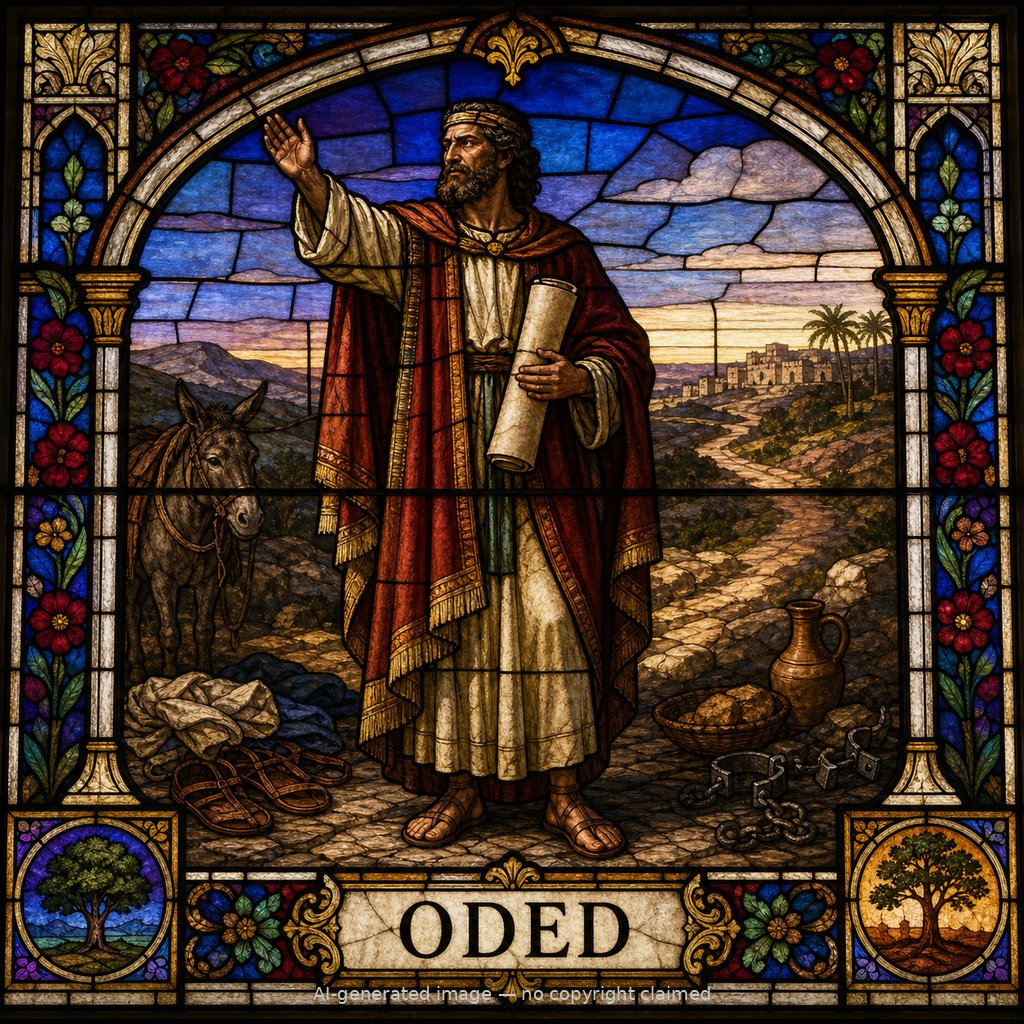
Oded (M)
First named in 2 Chronicles 15:1-8
Oded was a prophet of the LORD in the northern kingdom during the reign of Ahaz, king of Judah -- a time when Israel had just defeated Judah in battle, killing a great many soldiers and marching home with 200,000 Judean women and children as captives along with vast plunder (2 Chronicles 28:5-8). Oded met the returning army at the border of Samaria and confronted them directly: their victory, he said, was the LORD's judgment on Judah for its sins, but Israel's own guilt was no less real, and enslaving their fellow Israelites -- "your relatives" -- would only add to it, provoking God's fierce anger against them too (28:9-11). Several chief men of Ephraim took up Oded's rebuke, confronting the returning soldiers and insisting the captives be released rather than made slaves (28:12-13). The army complied: the captives were clothed from the plunder, given sandals, food, and drink, and the weakest were carried on donkeys, escorted all the way to Jericho, "the city of palm trees," before the Israelites returned home (28:14-15). A different Oded is named earlier in Chronicles only as the father of Azariah, the prophet who encouraged King Asa to reform Judah's worship (2 Chronicles 15:1) -- Scripture records nothing else about that man. This entry's narrative rests on the later prophet's confrontation, one of Scripture's clearest pictures of courageous, compassionate obedience overturning a cruel wartime decision.
Thought for Today
Israel's army marched home with thousands of captives from Judah, ready to make them slaves. The prophet Oded met them at the border and told them to send their own relatives home free. Jesus calls us to that same costly mercy toward people in our power.
References: 2 Chronicles 15:1-8; 2 Chronicles 28:9
Genealogy
Connections
Places
- Samaria — the prophet here who turned back Israel's army with its Judean captives
2 Chronicles 28:9-11