 Lives of Scripture
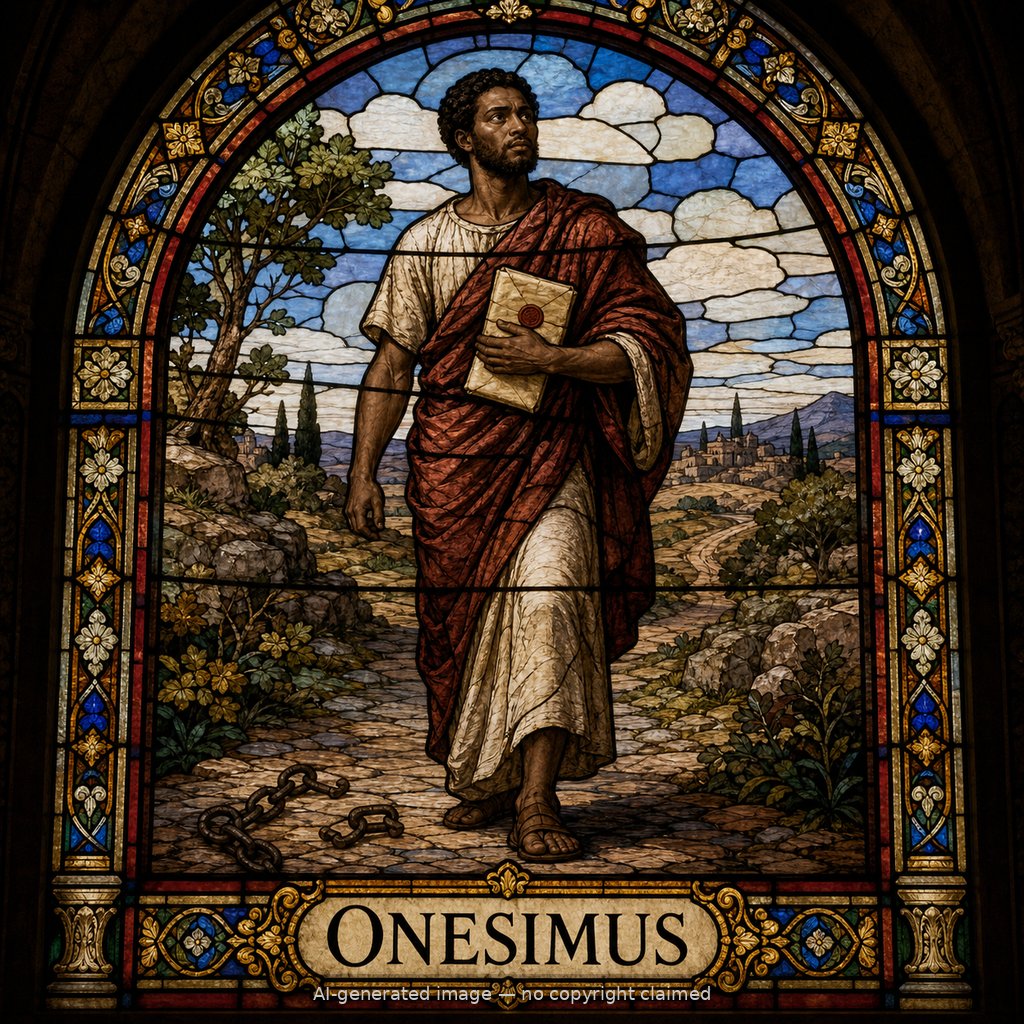
Onesimus (M)
First named in Colossians 4:9
Onesimus was a slave belonging to Philemon, a believer in Colossae whose household hosted a church (Philemon 1:1-2). At some point Onesimus left his master -- the letter implies he may have wronged Philemon or stolen from him (1:18) -- and made his way to Rome, where he encountered the apostle Paul, then imprisoned for the gospel. Under Paul's ministry Onesimus became a believer; Paul calls him "my child, whom I have begotten in my imprisonment" (1:10) and describes him as having become genuinely useful both to Paul and, potentially, to Philemon -- a pointed wordplay, since "Onesimus" means "useful" or "profitable" in Greek (1:11). Paul grew deeply attached to Onesimus, calling him "my very heart," and wanted to keep him as a helper during his imprisonment, but chose instead to send him back to Philemon, doing nothing "without your consent" so that any good done would not be "as it were by compulsion" (1:12-14). Paul's letter to Philemon appeals, with remarkable tact and firmness, for Onesimus to be received back "no longer as a slave, but more than a slave, a beloved brother" (1:16), and even offers to personally repay whatever Onesimus owes (1:18-19). Paul later commends Onesimus by name to the Colossian church as "our faithful and beloved brother, who is one of you" (Colossians 4:9), suggesting Philemon received him well. Onesimus's story is one of the New Testament's clearest pictures of the gospel dissolving social barriers between slave and free through shared standing in Christ.
Thought for Today
Onesimus ran from Philemon but found new life in Christ through Paul, becoming a beloved brother instead of a slave. Jesus turns runaways into family.
References: Colossians 4:9; Philemon 1:10
Genealogy
Father
—Mother
—Spouse(s)
—Children
—New Testament Church
- Colossae — a Colossian, formerly Philemon's slave, sent back "no longer as a slave but... a beloved brother"
Colossians 4:9; Philemon 1:10-16