 Lives of Scripture
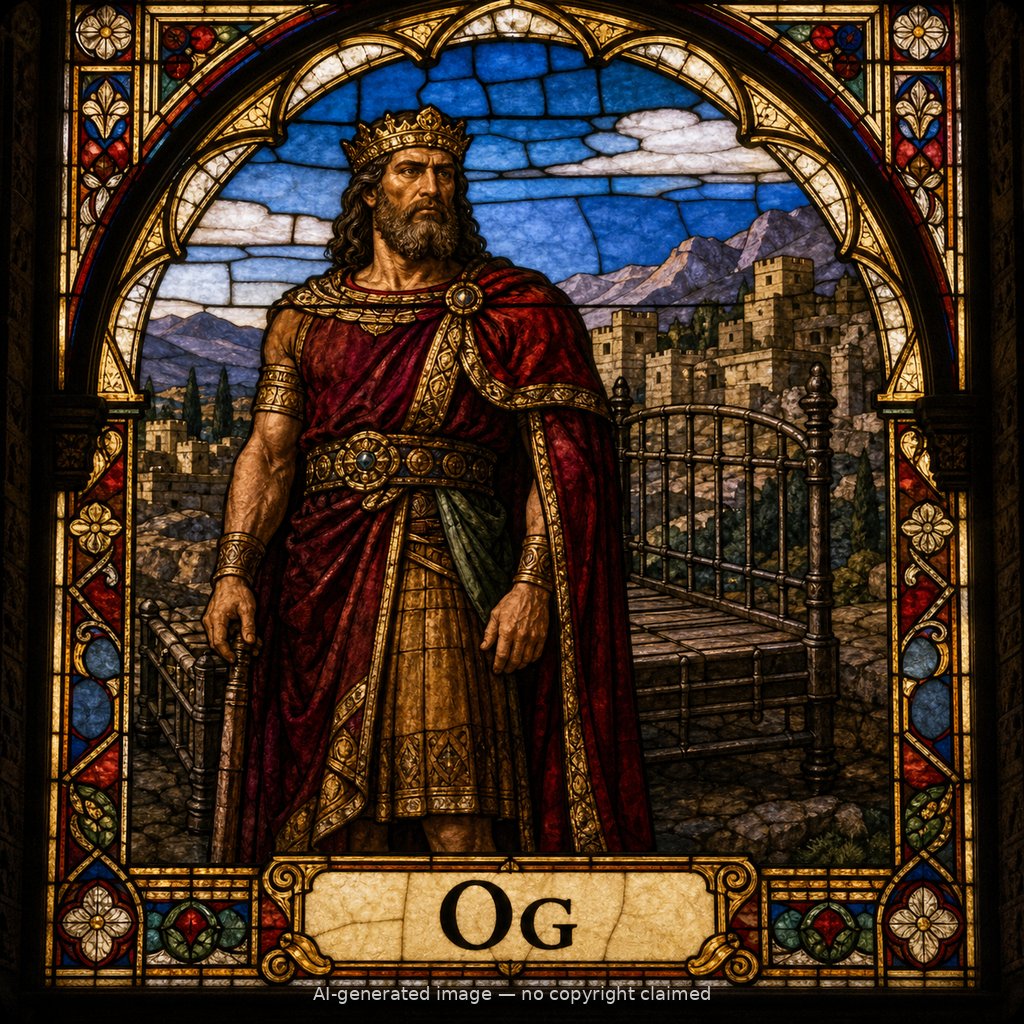
Og (M)
First named in Numbers 21:33
Og, king of Bashan, ruled sixty fortified cities east of the Jordan River when Israel approached his territory near the end of the wilderness years. Scripture identifies him as the last remaining member of the Rephaim, a people remembered for great size and strength; his iron bed -- preserved as a curiosity in Rabbah of the Ammonites -- measured about thirteen and a half feet long and six feet wide by common cubit reckoning (Deuteronomy 3:11). Like Sihon king of the Amorites before him, Og marched out with his army to confront Israel at Edrei rather than let them pass peacefully. The LORD told Moses not to fear him: "I have given him into your hand, and all his people and his land" (Numbers 21:34). Israel struck down Og, his sons, and all his people, leaving no survivor, and took possession of Bashan, later dividing it as inheritance for the half-tribe of Manasseh (Numbers 21:35; Deuteronomy 3:1-13). Og's defeat became one of Israel's touchstone memories of God's power over seemingly unbeatable enemies -- invoked repeatedly afterward alongside Sihon's defeat in Israel's historical recitations and worship (Deuteronomy 29:7; Joshua 2:10; 1 Kings 4:19; Psalm 135:11; 136:20), a recurring reminder that no giant king could stand against the LORD fighting for His people.
Thought for Today
Og, the last giant of the Rephaim, fell because God fought for Israel, not because they were strong. Jesus is that same God who fights our battles too.
References: Numbers 21:33; Numbers 32:33; Deuteronomy 1:4; Deuteronomy 3:1-13; Deuteronomy 4:47; Deuteronomy 29:7; Deuteronomy 31:4; Joshua 2:10; Joshua 9:10; Joshua 12:4; Joshua 13:12-31; 1 Kings 4:19; Nehemiah 9:22; Psalms 135:11; Psalms 136:20