 Lives of Scripture
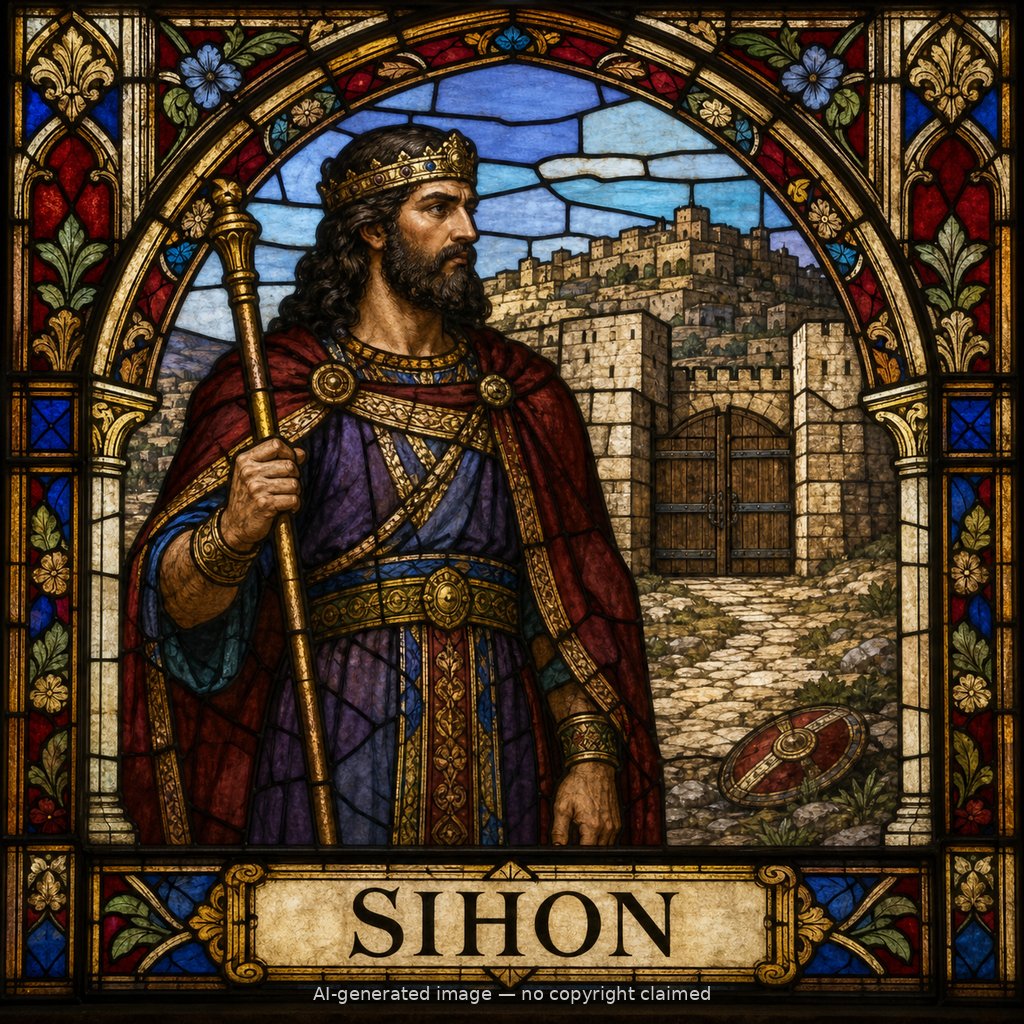
Sihon (M)
First named in Numbers 21:21-34
Sihon was king of the Amorites, ruling from Heshbon over territory east of the Jordan that he had earlier taken from Moab (Numbers 21:26). When Israel, traveling toward Canaan, sent messengers asking to pass peacefully along the King's Highway, promising not to turn aside into field or vineyard, Sihon refused and instead mobilized his entire army to attack Israel at Jahaz (Numbers 21:21-23; Deuteronomy 2:26-32). Moses recounts that the LORD hardened Sihon's spirit and made his heart obstinate in order to hand him over to Israel (Deuteronomy 2:30) -- Israel struck down Sihon, his sons, and all his people, and took possession of his land from the Arnon to the Jabbok (Numbers 21:24-25; Deuteronomy 2:33-36). That territory was later allotted to the tribes of Reuben and Gad (Joshua 13:10, 21). Sihon's defeat became one of the most frequently recalled victories in Israel's collective memory -- cited by Moses, Jephthah, the Psalms, and Nehemiah alike as proof of God's power and faithfulness in giving His people the land He had promised (Psalm 135:11; 136:19; Nehemiah 9:22). Though Sihon himself acted in hostility and refusal, Scripture presents his fall as a demonstration that no earthly king could stand between Israel and the inheritance the LORD had sworn to give them.
Thought for Today
Sihon refused Israel peaceful passage and was defeated, giving Israel the inheritance God had promised. Jesus secures for us an inheritance no earthly power can refuse or take.
References: Numbers 21:21-34; Numbers 32:33; Deuteronomy 1:4; Deuteronomy 2:24-32; Deuteronomy 3:2-6; Deuteronomy 4:46; Deuteronomy 29:7; Deuteronomy 31:4; Joshua 2:10; Joshua 9:10; Joshua 12:2-5; Joshua 13:10-27; Judges 11:19-21; 1 Kings 4:19; Nehemiah 9:22; Psalms 135:11; Psalms 136:19
Genealogy
Father
—Mother
—Spouse(s)
—Children
—Places
- Heshbon
- Transjordan — the Amorite king whose land east of the Jordan Israel took after he attacked them
Numbers 21:21-31