 Lives of Scripture
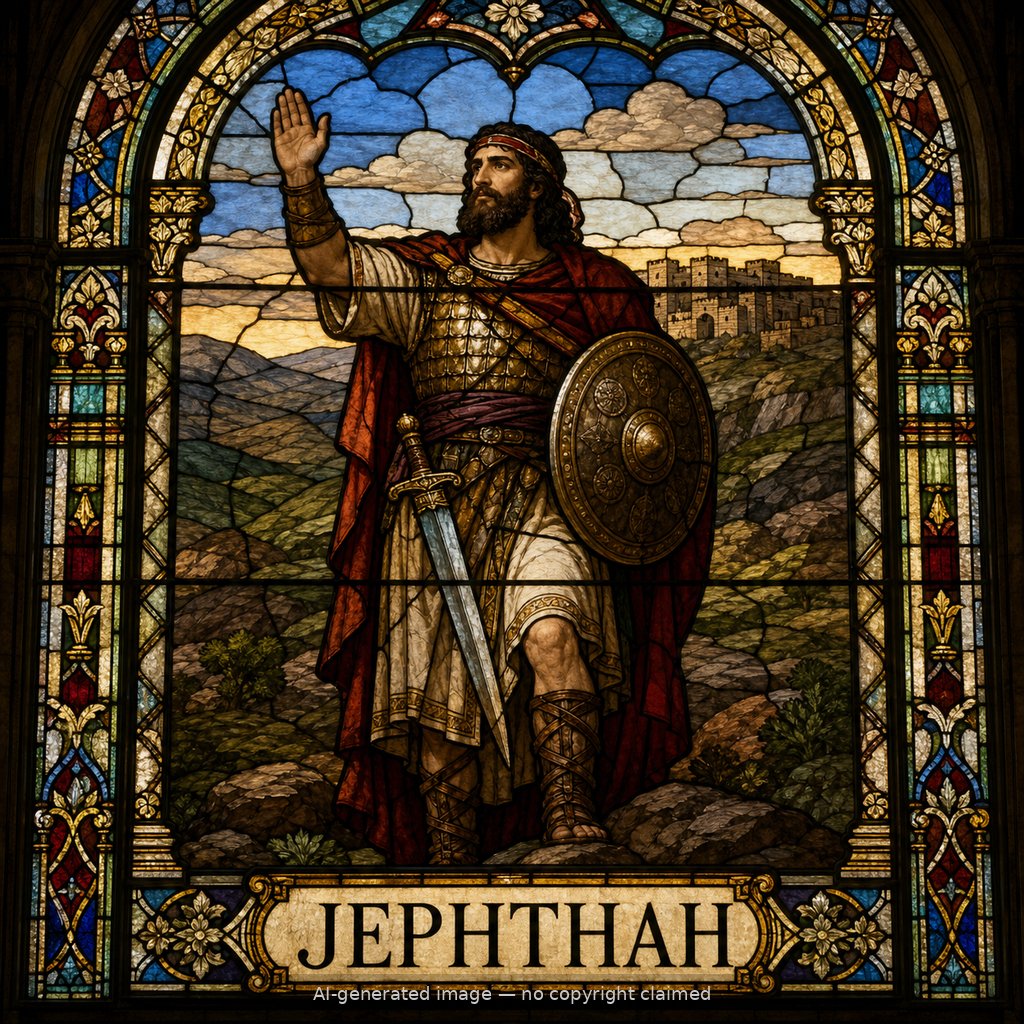
Jephthah (M)
First named in Judges 11:1-40
Jephthah, son of a prostitute, was driven out by his half-brothers so he would not share their father Gilead's inheritance, and he settled among worthless men in the land of Tob (Judges 11:1-3). When Ammon threatened Israel, Gilead's elders came begging the very man they had exiled to lead them, and Jephthah agreed on condition he would remain their head afterward (11:4-11). He first tried diplomacy, sending Ammon's king a detailed historical argument for Israel's right to the land, but war came anyway, and "the Spirit of the LORD came upon Jephthah" as he advanced (11:12-29). Before the battle, he vowed that whatever came out of his house to meet him on his return would be the LORD's, offered as a burnt offering (11:30-31). Israel won decisively -- but it was his only child, his daughter, who came out first, dancing to celebrate him (11:34). Jephthah tore his clothes in anguish, yet held that the vow must be kept; she asked only for two months to grieve with her friends in the hills before he did to her "according to his vow" (11:35-39). Scripture leaves the exact nature of that fulfillment genuinely disputed (see note), but is unambiguous about the lesson: an unconsidered vow, made in haste before God, cannot simply be undone once spoken (Ecclesiastes 5:4-5).
Thought for Today
Jephthah made a vow before battle without thinking through its cost, and then felt bound to keep it even against his own daughter. Jesus never makes a rash promise; every word He speaks to us is already fully weighed, so we can trust His promises without fearing what they might cost us.
References: Judges 11:1-40; Judges 12:1-7; 1 Samuel 12:11; Hebrews 11:32