Lives of Scripture
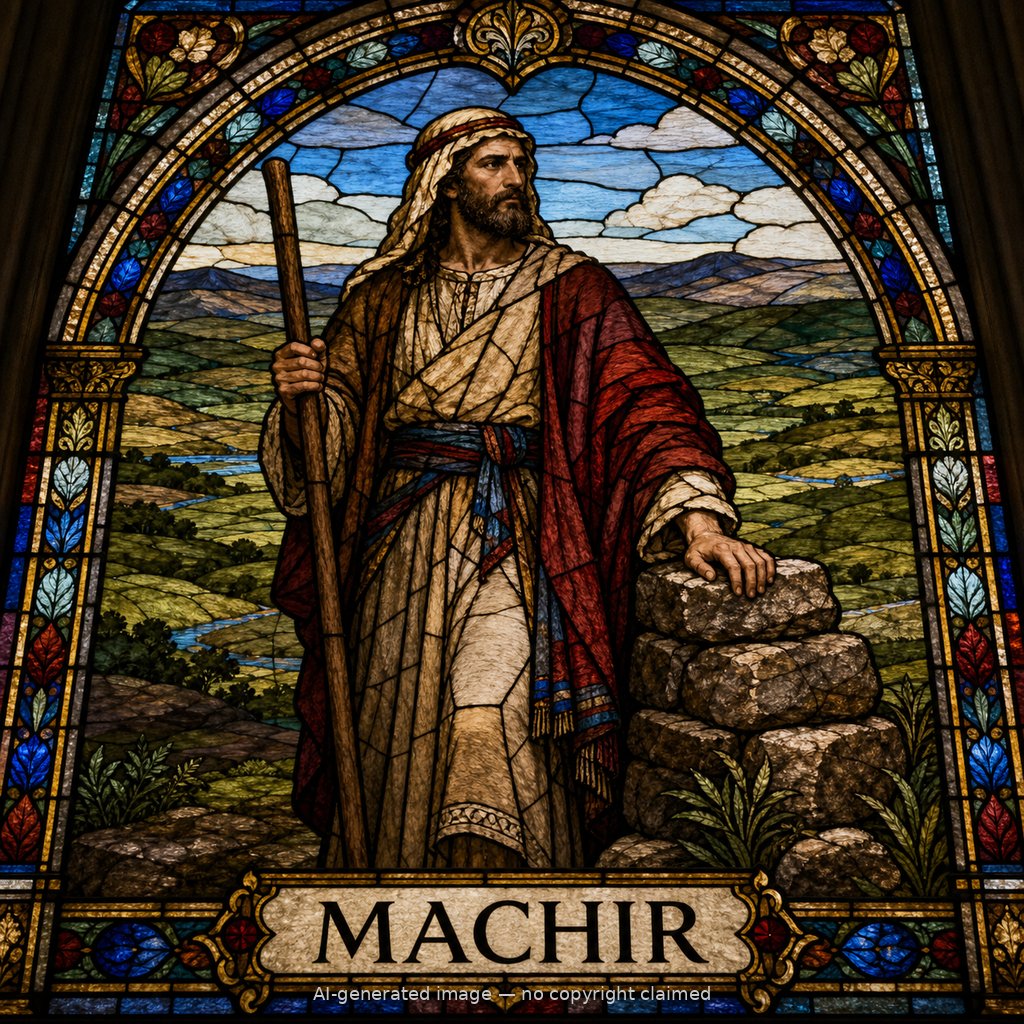
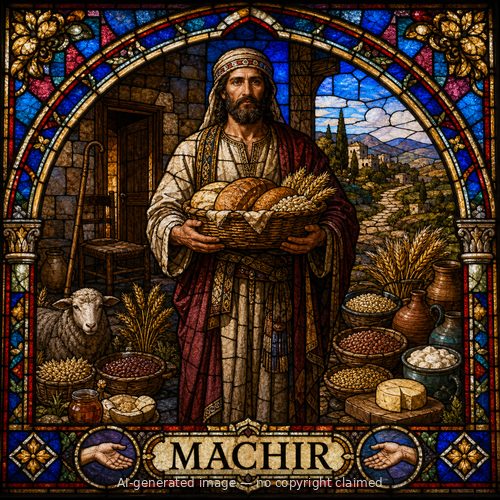
Machir (M)
First named in Genesis 50:23
Machir was the son of Manasseh and grandson of Joseph, born in Egypt during the family's sojourn there -- Joseph "saw the third generation" through him, since "the children of Machir, the son of Manasseh, were born on Joseph's knees" (Genesis 50:23), a mark of the patriarch's long life and blessing. Machir's descendants, called Machirites, grew into a substantial clan within the tribe of Manasseh. Generations later, during Israel's conquest of the territory east of the Jordan, Scripture credits "the sons of Machir the son of Manasseh" with taking Gilead from the Amorites who lived there, after which "Moses gave Gilead to Machir the son of Manasseh, and he lived in it" (Numbers 32:39-40). Joshua 17:1 states the rationale directly: "Machir was the father of Gilead... because he was a man of war, therefore he had Gilead and Bashan." Since the conquest occurred centuries after Joseph's era, most readers understand these later references to Machir as describing his descendants acting and inheriting under his name -- a common pattern in Israel's tribal genealogies, where an ancestor's name stands for the clan he founded. Whether read of the individual or his line, the consistent thread is military strength winning and holding contested territory, and Machir's name became permanently attached to Gilead, a region so identified with his family that "Gilead" and "Machir" function almost interchangeably in later texts (e.g. Judges 5:14).
Thought for Today
Machir's descendants inherited Gilead because he was 'a man of war.' We inherit an eternal home in Jesus not by strength, but by His finished work.
References: Genesis 50:23; Numbers 26:29; Numbers 27:1; Numbers 32:39-40; Numbers 36:1; Deuteronomy 3:15; Joshua 13:31; Joshua 17:1-3; 1 Chronicles 2:21-23; 1 Chronicles 7:14-17