 Lives of Scripture
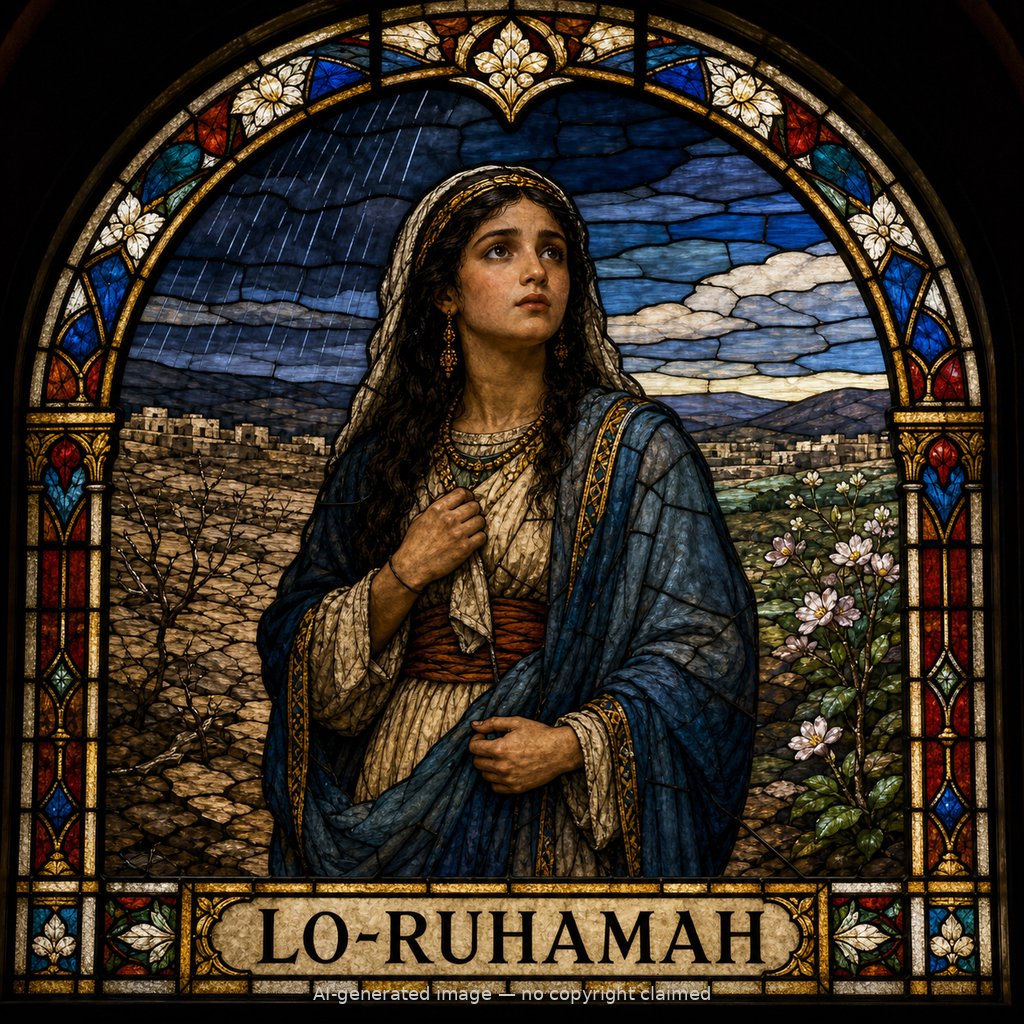
Lo-ruhamah (F)
First named in Hosea 1:6-8
Lo-ruhamah was the second child born in the prophet Hosea's marriage to Gomer, a marriage that itself dramatized God's relationship with unfaithful Israel (Hosea 1:2-3). At her birth, "the LORD said to him, 'Name her Lo-ruhamah, for I will no longer have compassion on the house of Israel, that I would ever forgive them. But I will have compassion on the house of Judah and deliver them by the LORD their God'" (1:6-7). Her name -- meaning "not pitied" or "no compassion" -- made Israel's spiritual crisis unavoidably public: God was declaring that persistent idolatry had, for a time, exhausted the compassion Israel had presumed upon, even while Judah would still be shown mercy. Like her younger brother Lo-ammi ("not My people"), Lo-ruhamah's very existence and name were themselves the prophetic message, a sign-act lived out in a child rather than merely spoken. Yet Hosea does not leave the name as the last word: chapter 2 reverses it explicitly -- "I will have compassion on her who had not obtained compassion, and I will say to those who were not My people, 'You are My people!'" (2:23) -- and the apostle Peter later applies this same reversal to God's mercy shown in Christ toward those who once "had not received mercy, but now have received mercy" (1 Peter 2:10). Lo-ruhamah's hard name pointed toward a withheld mercy that God Himself promised would not last forever.
Thought for Today
God named Hosea's daughter Lo-ruhamah, 'not pitied,' showing His compassion on Israel had run out. Yet God promised to show compassion again on 'not pitied' ones through Jesus.
References: Hosea 1:6-8
Genealogy
Connections
- Gomer (F) — bore → Lo-ruhamah (F)