 Lives of Scripture
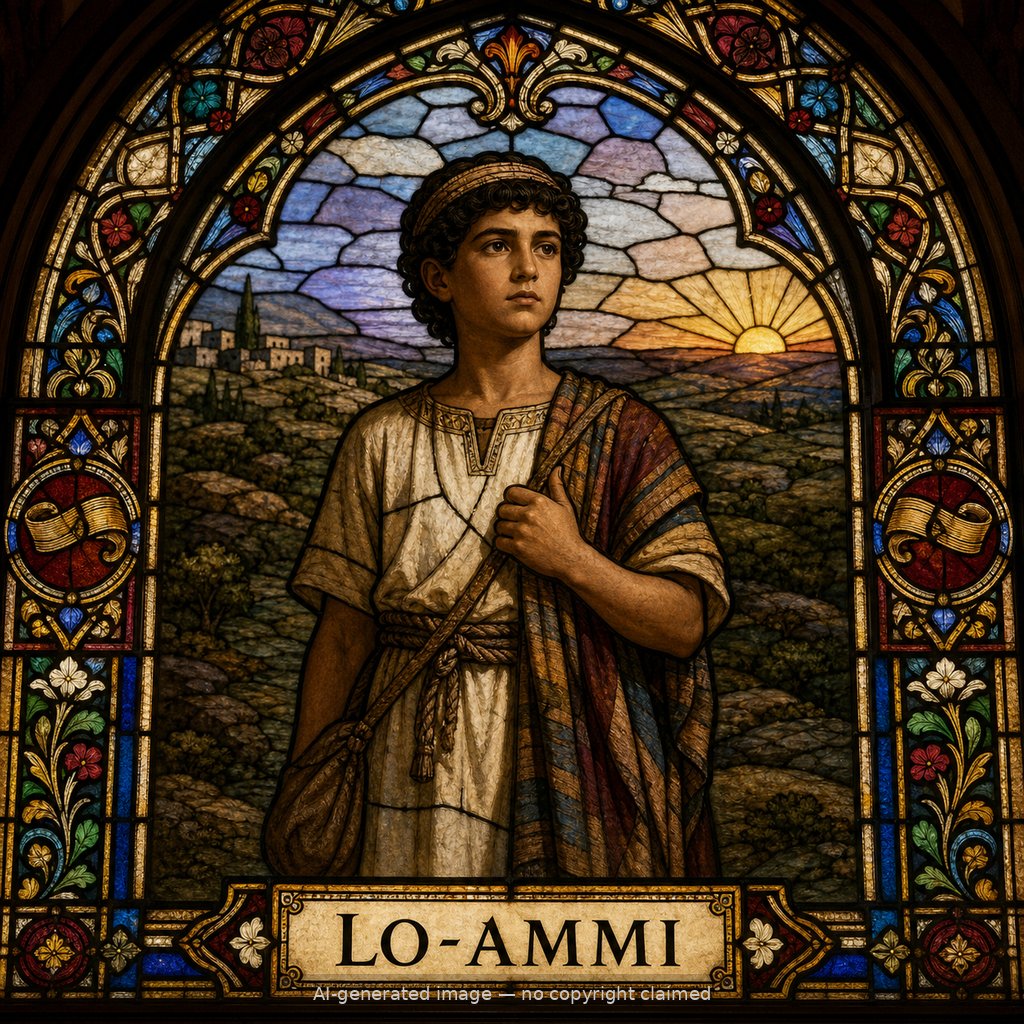
Lo-ammi (M)
First named in Hosea 1:9
Lo-ammi was the third child born in the prophet Hosea's marriage to Gomer, a marriage God had commanded as a living picture of His relationship with unfaithful Israel (Hosea 1:2-3). At the birth of this son, "the LORD said, 'Name him Lo-ammi, for you are not My people and I am not your God'" (1:9) -- following an older sister named Lo-ruhamah, "not pitied." The name itself was the message: God was declaring, through the plainest possible sign-act, that Israel's persistent idolatry had broken the covenant relationship established at Sinai, where God had said "you shall be My people, and I will be your God" (compare Leviticus 26:12). To name a child "not My people" before the watching nation made Israel's spiritual state impossible to miss or explain away. Yet the same passage immediately turns toward hope: "in the place where it is said to them, 'You are not My people,' it will be said to them, 'You are the sons of the living God'" (1:10), and Hosea 2:23 later reverses the name entirely, promising, "I will say to those who were not My people, 'You are My people!'" -- a reversal the apostle Paul later applies to God's mercy toward Gentiles as well as Jews (Romans 9:25-26). Lo-ammi's name was never God's final word, only His warning on the way to a greater promise of restoration.
Thought for Today
God named Hosea's son Lo-ammi, 'not My people,' to show Israel's covenant was broken. Yet God promised the same 'not My people' would become His people through Jesus.
References: Hosea 1:9