Lives of Scripture
Joel (M)
First named in Joel 1:1
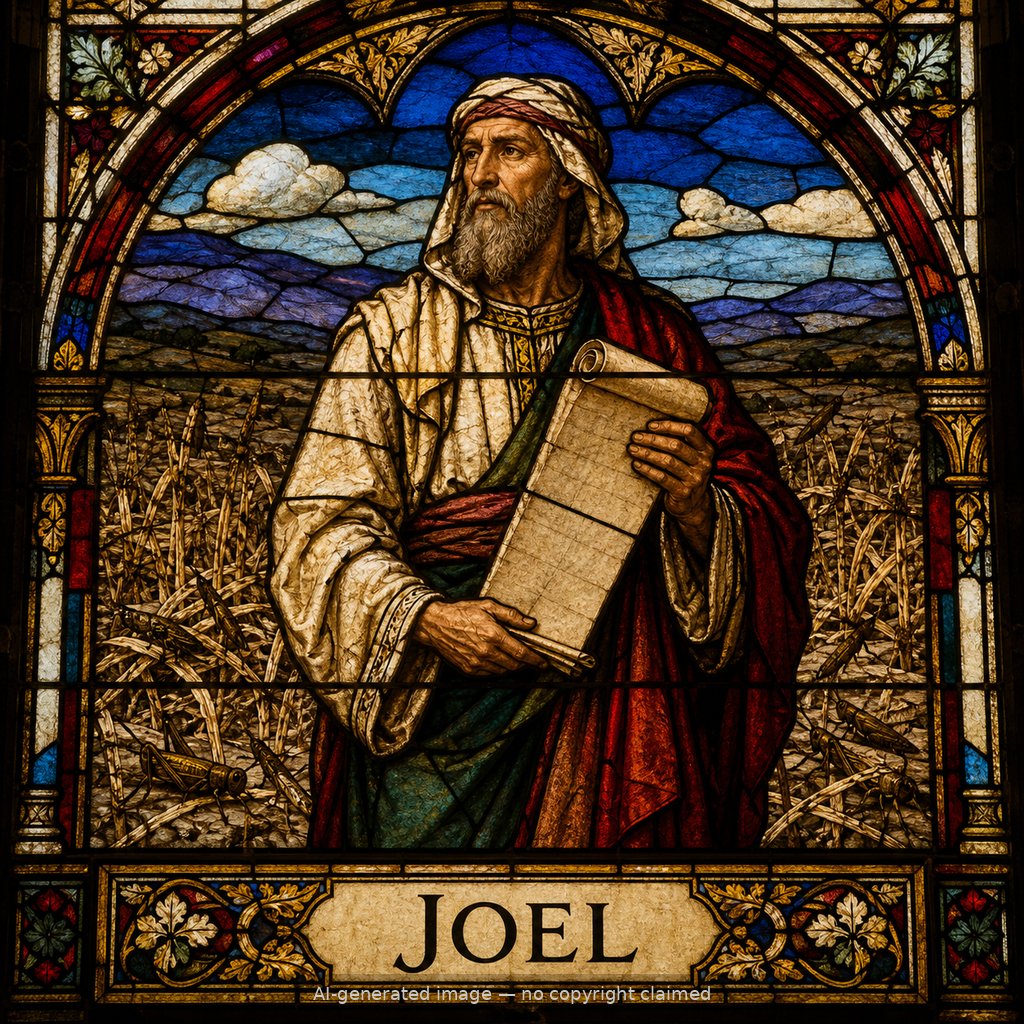
Little is recorded about Joel beyond his father's name, Pethuel (Joel 1:1); his entire message centers on a devastating locust plague that had stripped Judah bare, which he interprets as both a real agricultural disaster and a foretaste of the coming "day of the LORD" (Joel 1:2-2:11). Joel calls the nation to genuine repentance — "rend your hearts and not your garments" — rather than empty ritual, promising that if they returned to the LORD, He would restore what the locusts had eaten (Joel 2:12-13, 25). His book's best-known promise looks far beyond his own day: God would one day "pour out my Spirit on all flesh," so that sons and daughters, young and old, would prophesy (Joel 2:28-32). The apostle Peter quoted this passage directly at Pentecost, declaring it fulfilled as the Holy Spirit was poured out on the early church (Acts 2:16-21). Joel also promises deliverance for "everyone who calls on the name of the LORD," a phrase Paul later applies to salvation available to Jew and Gentile alike (Joel 2:32; Romans 10:13).
Thought for Today
Joel called Judah to 'rend your hearts and not your garments,' urging real repentance rather than empty ritual after a locust plague had stripped the land bare. Jesus looks for that same broken-hearted honesty from us, not performance, when we come to Him.
References: Joel 1:1; Acts 2:16
Genealogy
Connections
Places
Other people named Joel