 Lives of Scripture
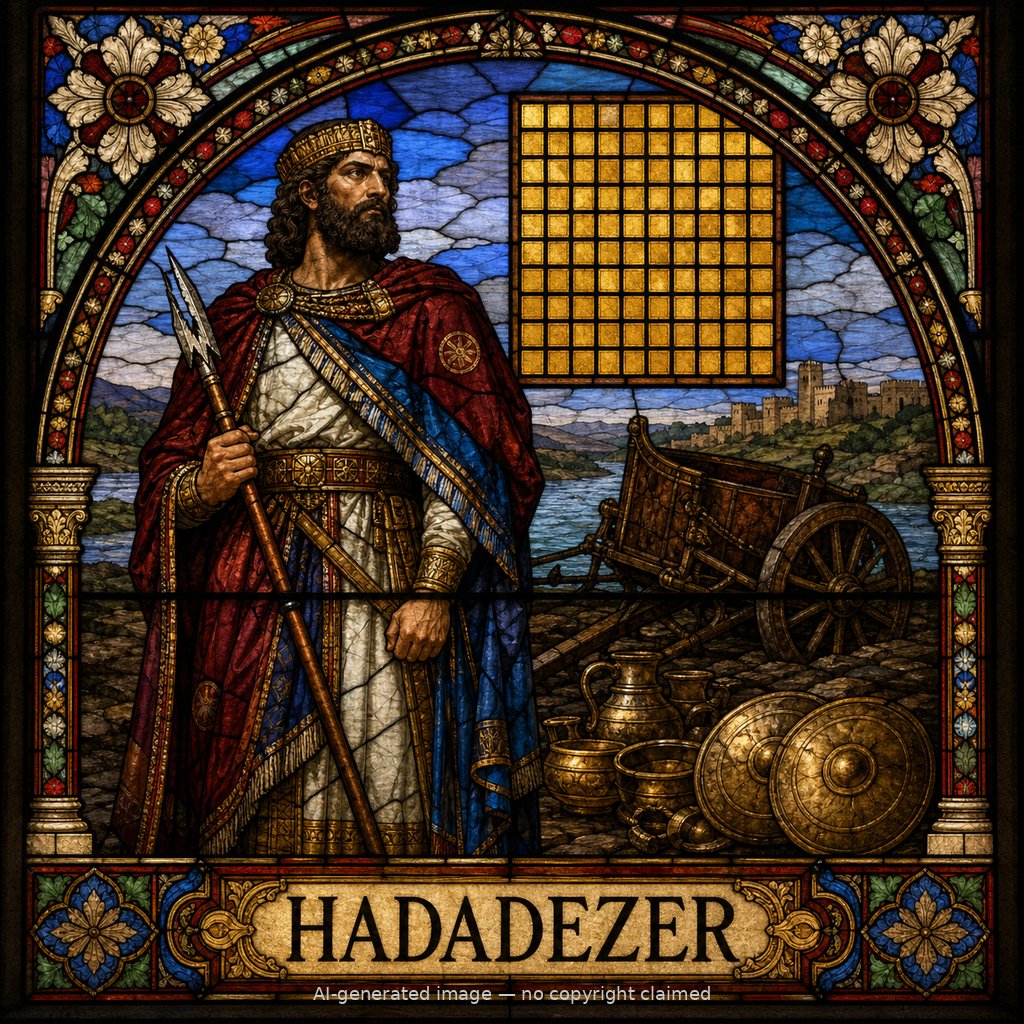
Hadadezer (M)
First named in 2 Samuel 8:3-12
Hadadezer, son of Rehob, was king of Zobah, an Aramean kingdom north of Israel with influence stretching toward the Euphrates River. David defeated him decisively as he "went to restore his rule to the Euphrates River," capturing 1,700 horsemen and 20,000 foot soldiers, hamstringing all but a hundred of his chariot horses, and striking down 22,000 Arameans from Damascus when they came to Hadadezer's aid (2 Samuel 8:3-6). David took the gold shields carried by Hadadezer's officers and a great quantity of bronze from his cities, later dedicating the plunder to the LORD (8:7-12; 1 Chronicles 18:3-10). Some time afterward, when the Ammonites hired Aramean mercenaries to fight Israel, Hadadezer summoned troops from beyond the Euphrates and personally sent his army commander Shobach to lead them against David -- but Israel's forces struck them down again, killing Shobach and forcing Hadadezer's vassal kings to make peace with David and become his subjects instead (2 Samuel 10:15-19; 1 Chronicles 19:16-19). These repeated defeats broke Aramean power in the region and are recorded, alongside David's other victories, as evidence that "the LORD helped David wherever he went" (2 Samuel 8:6, 14) -- part of the historical background to Israel's expanded borders and security under David's reign, later noted again as context for Solomon's own troubles with Aram (1 Kings 11:23).
Thought for Today
David's repeated victories over Hadadezer's powerful army showed that 'the LORD helped David wherever he went.' Jesus, David's greater Son, wins every battle His people ever face.
References: 2 Samuel 8:3-12; 2 Samuel 10:16-19; 1 Kings 11:23; 1 Chronicles 18:3-10; 1 Chronicles 19:16-19