 Lives of Scripture
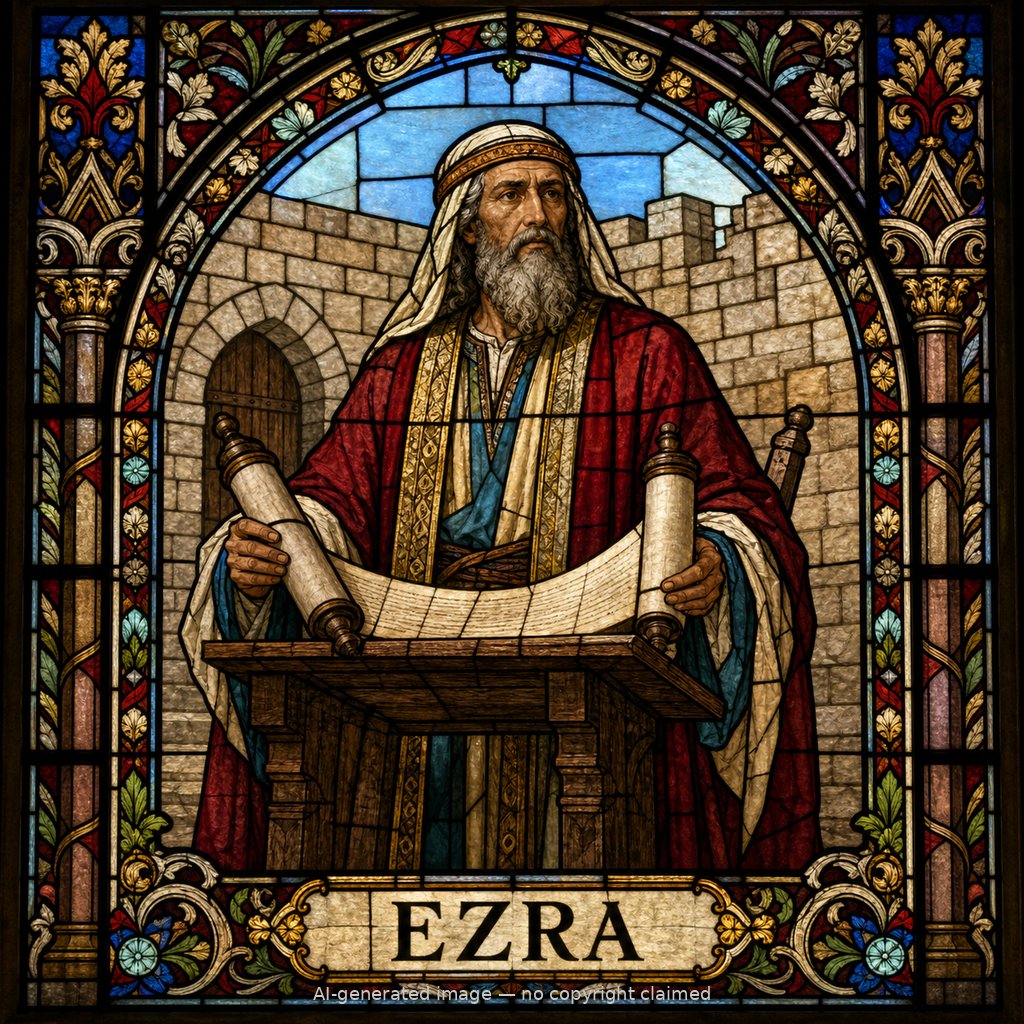
Ezra (M)
First named in Ezra 7:1-25
Ezra was a priest and scribe "skilled in the Law of Moses," who led a second wave of exiles from Babylon back to Jerusalem under authority and resources granted by King Artaxerxes of Persia (Ezra 7:1-26). Rather than requesting a military escort for the dangerous journey, Ezra proclaimed a fast and prayed, later explaining, "I was ashamed to ask the king for soldiers... since we had told him, 'The hand of our God is for good on all who seek him'" (Ezra 8:21-23). On arriving, Ezra discovered that many Israelites, including priests and Levites, had intermarried with surrounding peoples in violation of God's covenant law; Ezra tore his clothes in grief and led the community in a difficult, dramatic public repentance that included sending away the foreign wives (Ezra 9-10). Years later, alongside Nehemiah, Ezra stood on a wooden platform before the assembled people at Jerusalem's Water Gate and read the Law aloud from morning until midday while Levites moved through the crowd explaining its meaning, sparking both weeping and celebration as the people understood God's word freshly (Nehemiah 8:1-12). Later Jewish tradition, though not the biblical text itself, credits Ezra with a far larger role in preserving and shaping the Hebrew Scriptures.
Thought for Today
Ezra refused a royal military escort for the dangerous road to Jerusalem, telling the king instead, 'the hand of our God is for good on all who seek him.' May we trust Jesus with our own exposed, risky obedience the same way, rather than reaching first for protection we can arrange ourselves.
References: Ezra 7:1-25; Ezra 10:1-16; Nehemiah 8:1-13; Nehemiah 12:1-36