 Lives of Scripture
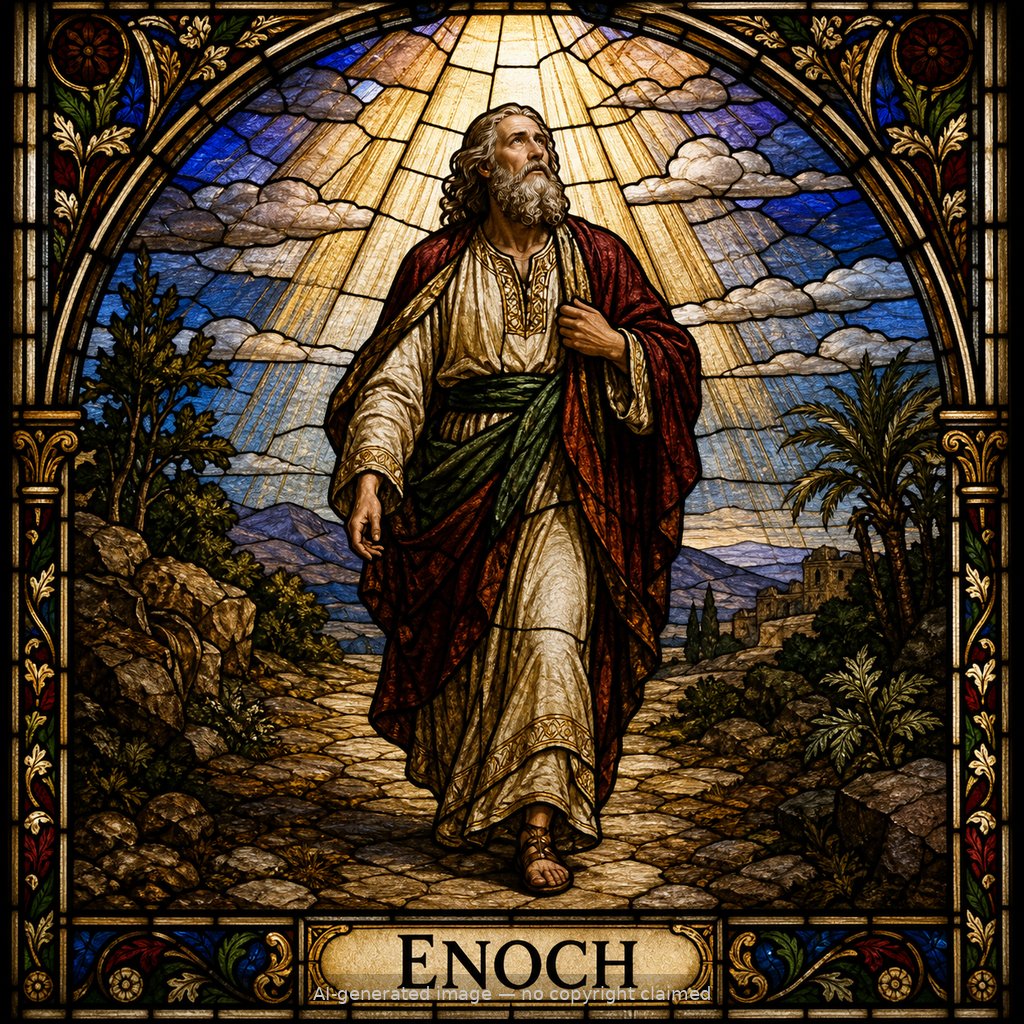
Enoch (M)
First named in Genesis 5:18-24
Enoch appears in the middle of Genesis 5's genealogical chain of Adam's line through Seth, but the text breaks its usual formula to say something remarkable: 'Enoch walked with God' (Genesis 5:22, 24) -- a description used elsewhere only of Noah (Genesis 6:9). After fathering Methuselah, Enoch walked with God 300 more years, fathering other sons and daughters, and then 'was not, for God took him' -- Scripture's way of saying Enoch did not die but was taken directly into God's presence, a distinction shared afterward only by Elijah. Hebrews 11:5 makes the theological point explicit: Enoch was taken up because he pleased God, and 'without faith it is impossible to please Him' -- Enoch stands among the great examples of Old Testament faith in a promise not yet fully revealed. Jude 1:14-15 preserves a prophecy attributed to Enoch about the Lord's coming judgment on the ungodly. Enoch's brief record -- a single paragraph in a genealogy otherwise defined by the repeated refrain 'and he died' -- stands out precisely because death is what it does not say of him, a quiet foretaste of resurrection hope centuries before the gospel made that hope explicit in Christ.
Thought for Today
Genesis simply says Enoch 'walked with God,' and then was not, because God took him -- spared the ordinary ending every other name in that chapter reaches. Jesus is why that same hope of life beyond death is now open to anyone who trusts Him.
References: Genesis 5:18-24; Hebrews 11:5; Jude 1:14-15
Genealogy
Connections
- Ancestor of Christ (Luke 3:37)
- Jared (M) — begot → Enoch (M)
- Enoch (M) — begot → Methuselah (M)
Places
- Mesopotamia — in the line of Seth, who walked with God and was taken without dying
Genesis 5:22-24