 Lives of Scripture
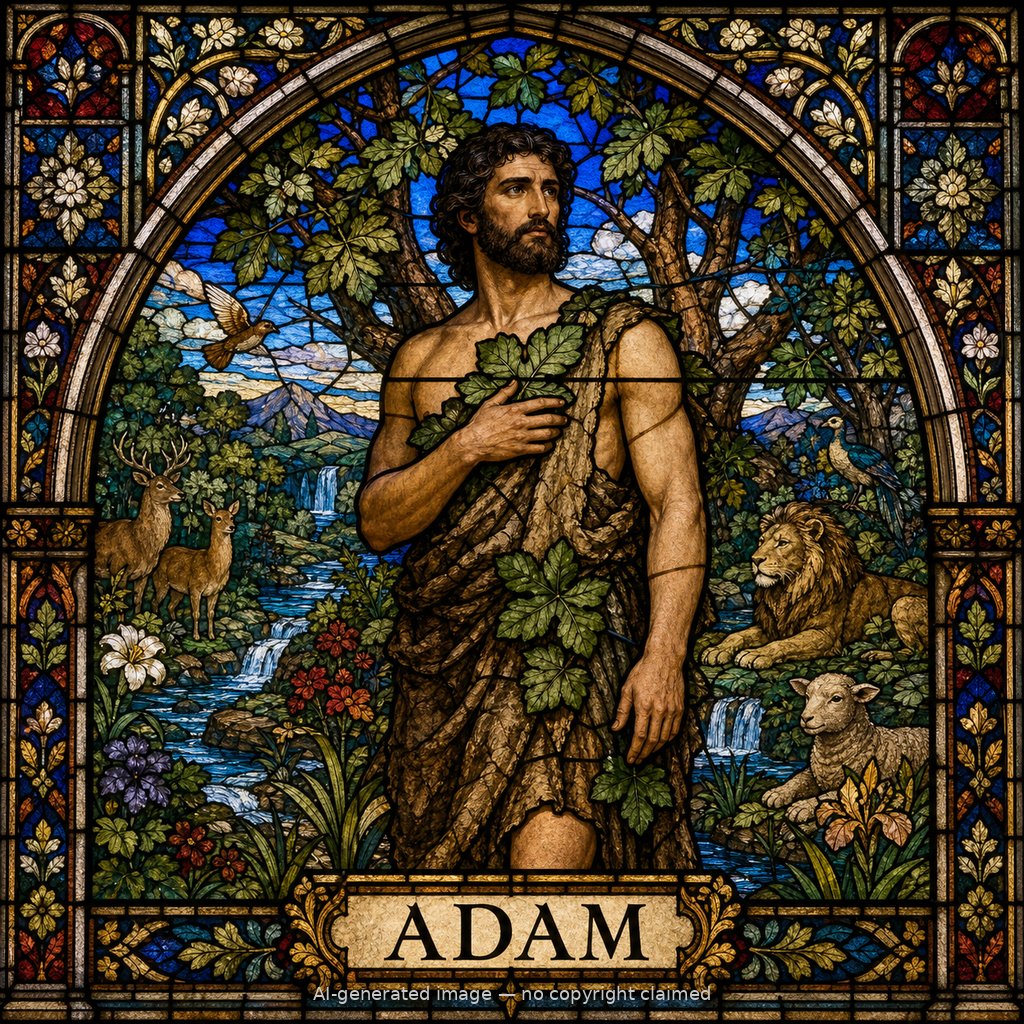
Adam (M)
First named in Genesis 2:20
Adam is formed by God "from the dust of the ground" and given life by God's own breath (Genesis 2:7), placed in the Garden of Eden to cultivate and keep it (2:15). When none of the animals proves a fitting companion, God causes a deep sleep to fall on Adam and builds Eve from his rib; Adam's exclamation over her ("bone of my bones and flesh of my flesh") is Scripture's first recorded human speech (2:18-24). God's one command -- not to eat from the tree of the knowledge of good and evil -- is the boundary Adam is given, and he breaks it: present with Eve when the serpent tempts her, Adam eats the fruit she gives him without recorded protest (3:6), and Romans 5:12-14 lays responsibility for sin entering the world at Adam's feet specifically, even though Eve ate first. Confronted by God, Adam's answer -- blaming both Eve and, implicitly, God himself ("the woman whom You gave to be with me") -- is the first recorded act of human self-justification. Consequences follow: cursed ground, painful labor, death, and exile from Eden (3:17-19, 23-24). Yet even in judgment God clothes Adam and Eve (3:21) and later grants them Seth after Cain kills Abel (4:25). Paul names Adam as the historical head under whom all humanity is bound to sin and death, and, by contrast, as the type of Christ, "the last Adam," whose obedience reverses what Adam's disobedience began (Romans 5:12-19; 1 Corinthians 15:22, 45).
Thought for Today
When God confronted Adam, he blamed Eve and, in effect, blamed God Himself for giving her to him -- the first excuse in human history. We don't have to keep making excuses either; Jesus, the last Adam, took the blame we deserve instead of shifting it onto someone else.
References: Genesis 2:20; Genesis 3:17-21; Genesis 4:25; Genesis 5:1-5; 1 Chronicles 1:1; Job 31:33; Hosea 6:7; Luke 3:38; Romans 5:14; 1 Corinthians 15:22-45; 1 Timothy 2:13-14; Jude 1:14
Genealogy
Connections
Places
- Garden of Eden — formed by God and placed here to work and keep the garden
Genesis 2:8; Genesis 2:15