 Lives of Scripture
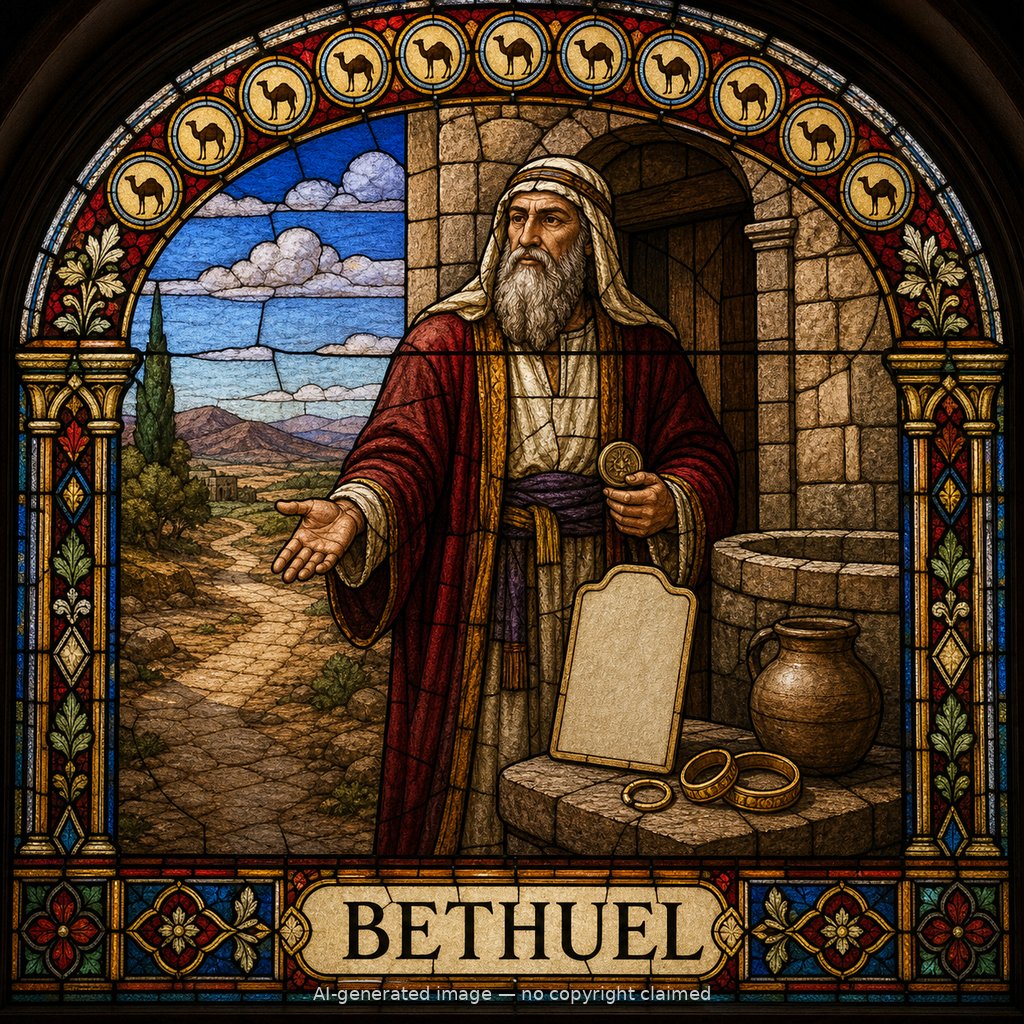
Bethuel (M)
First named in Genesis 22:22-23
Bethuel, son of Nahor and Milcah, lived in Paddan-aram (also called Haran) and was the father of Laban and Rebekah (Genesis 22:20-23; 24:15, 24). When Abraham sent his servant to find a wife for Isaac from his own kindred rather than the Canaanites, the servant prayed for a sign and met Rebekah at the town well, where she watered his camels exactly as he had asked God to confirm (24:1-27). Rebekah brought him to her family, and the servant recounted the entire providential chain of events to Bethuel and Laban (24:28-49). Their response acknowledged what had happened: "The matter comes from the LORD; so we cannot speak to you bad or good. Here is Rebekah before you, take her and go, and let her be the wife of your master's son, as the LORD has spoken" (24:50-51). Bethuel's role in the negotiation is brief -- Laban is the more active voice throughout the chapter -- but Bethuel is named as the one giving consent alongside his son, and the family ultimately left the final choice to Rebekah herself, who agreed to go (24:57-58). Bethuel is later remembered simply as the ancestral link connecting Isaac's line back to Abraham's brother Nahor (25:20; 28:2-5), grounding Israel's patriarchs in a real, specific extended family rather than a legendary one.
Thought for Today
When Abraham's servant explained the remarkable chain of events that led him to Rebekah, Bethuel could only say, "The matter comes from the LORD." We can trust that same quiet providence is still at work, guiding history toward Jesus even when we can't yet see the whole plan.
References: Genesis 22:22-23; Genesis 24:15-50; Genesis 25:20; Genesis 28:2-5
Genealogy
Connections
Places
- Haran — an Aramean of this region who consented to Rebekah's marriage to Isaac
Genesis 24:50
- Paddan-aram — the Aramean of this region, father of Rebekah and Laban
Genesis 25:20