 Lives of Scripture
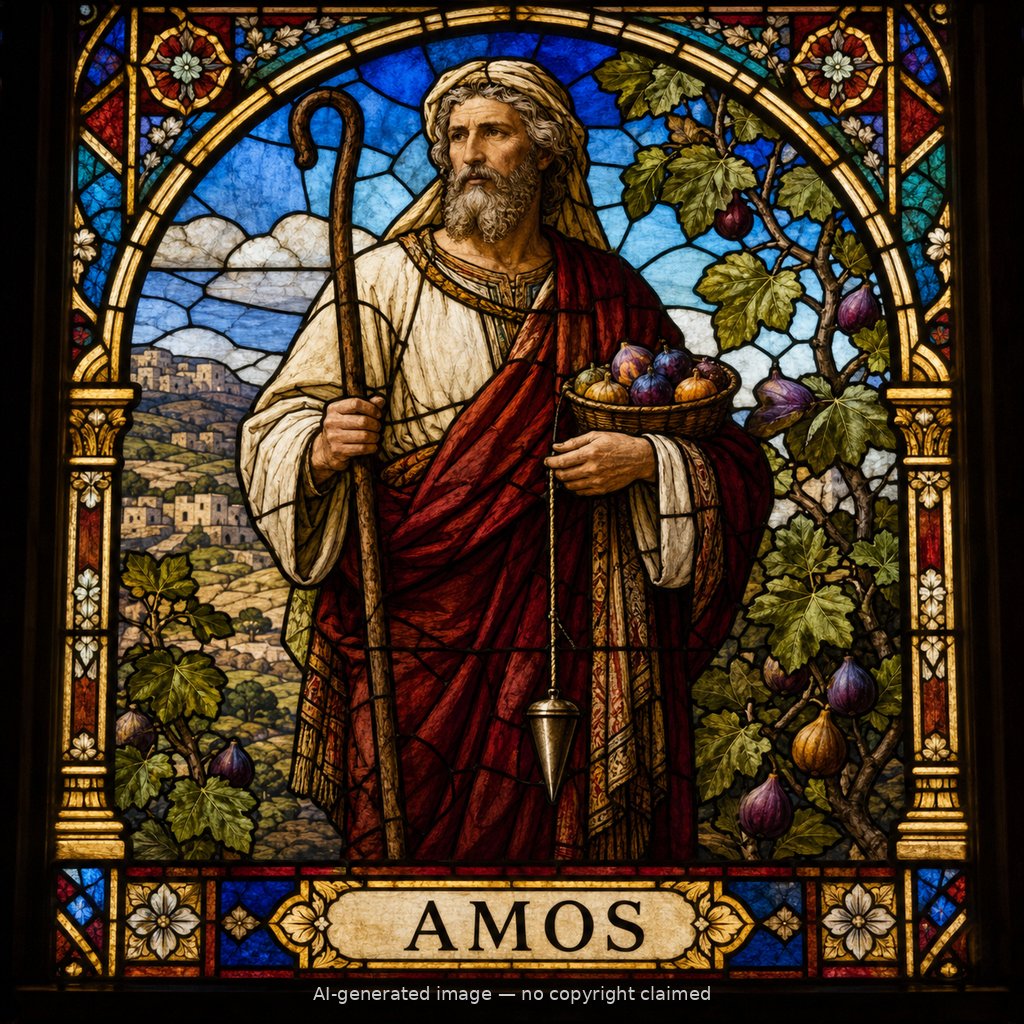
Amos (M)
First named in Amos 1:1
Amos was a shepherd and sycamore-fig farmer from Tekoa in Judah, with no prophetic training or pedigree — "I was no prophet, nor a prophet's son... but the LORD took me from following the flock" — yet God sent him north to prophesy against Israel during the prosperous reign of Jeroboam II (Amos 1:1; 7:14-15). Amos's message confronts a nation that maintained its rituals while its wealthy oppressed the poor, "selling the righteous for silver, and the needy for a pair of sandals," and demanded instead, "let justice roll down like waters, and righteousness like an ever-flowing stream" (Amos 2:6; 5:24). His preaching provoked Amaziah, the priest at Bethel's royal shrine, who ordered Amos back to Judah; Amos refused to be silenced and pronounced judgment on Amaziah's own household in response (Amos 7:10-17). Amos catalogued Israel's neighbors' sins before turning the same standard on Israel and Judah themselves, insisting that being God's chosen people made them more accountable for injustice, not exempt from it (Amos 1-2; 3:2). Though his book is largely judgment, it closes with a promise beyond exile: God would restore "David's fallen tent" (Amos 9:11-12) — a promise James quoted at the Jerusalem council as fulfilled in Gentiles being welcomed into God's people through Christ (Acts 15:13-17).
Thought for Today
Amos was just a shepherd and fig farmer, not a trained prophet, yet God sent him to demand "let justice roll down like waters, and righteousness like an ever-flowing stream" from a nation going through the religious motions. Jesus cares just as much about how we treat the poor as about what we say we believe.
References: Amos 1:1; Amos 7:8-14; Amos 8:2
Genealogy
Father
—Mother
—Spouse(s)
—Children
—Places
- Bethel — confronted here by the priest and ordered to prophesy elsewhere
Amos 7:12-15
- Kingdom of Israel — a shepherd sent from Judah to prophesy against this kingdom
Amos 7:14-15
- Tekoa