 Lives of Scripture
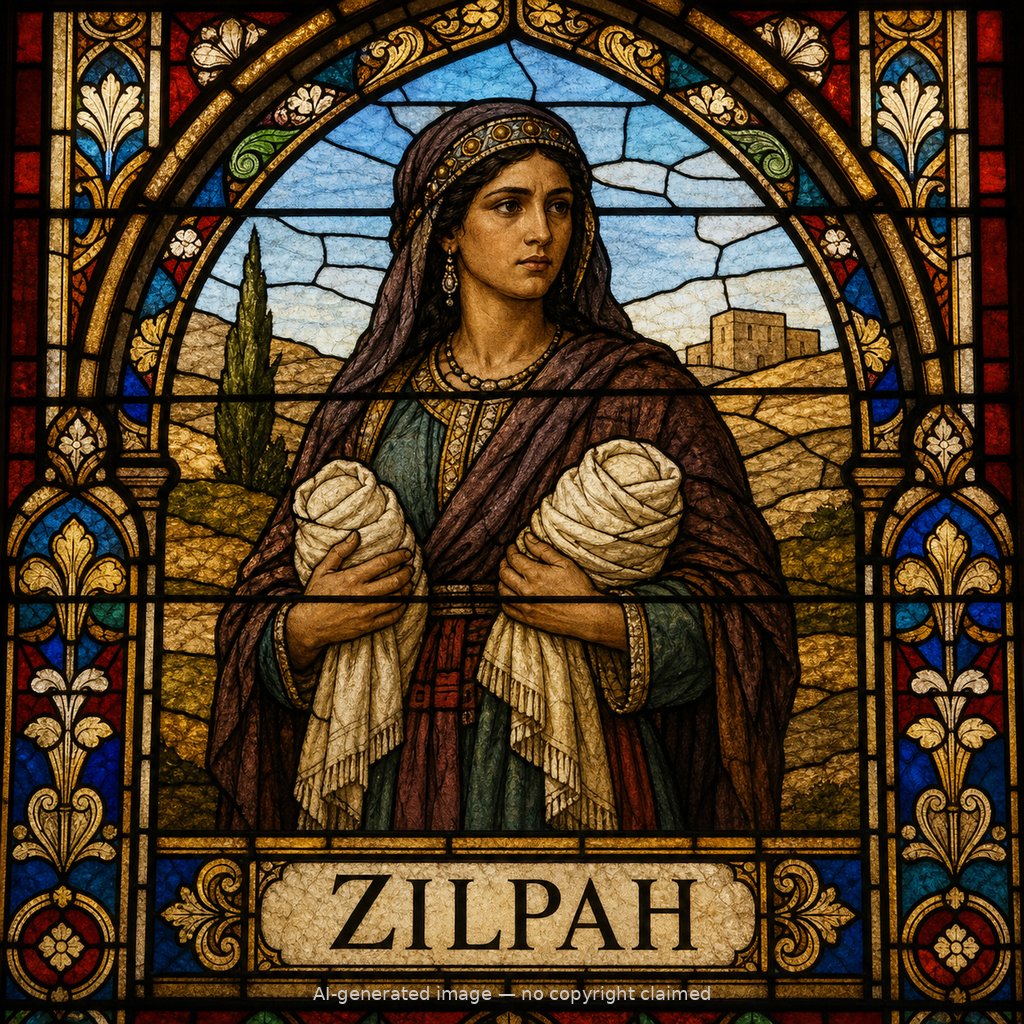
Zilpah (F)
First named in Genesis 29:24
Zilpah was given to Leah by her father Laban as a maidservant at Leah's wedding to Jacob (Genesis 29:24). When Leah's childbearing paused after her first four sons, she followed Rachel's earlier example and gave Zilpah to Jacob as a wife so Zilpah's children would count as Leah's own (30:9). Zilpah bore Gad, whose name Leah connected to good fortune, and Asher, whose name Leah tied to being called happy by other women (30:10-13). Both sons became founders of two of the twelve tribes of Israel, later listed among Jacob's household who went down to Egypt (46:18) and again among those Jacob blessed before his death (49:19-20). Scripture records no words of Zilpah's own and no individual scene devoted to her the way it does for Leah, Rachel, or even Bilhah; she appears strictly within the framework of the family's childbearing rivalry between the two sisters. Her inclusion among the mothers of Israel's tribes, alongside Bilhah, underscores a consistent pattern in Genesis: the twelve tribes that would become the nation of Israel, and eventually the people from whom the Messiah would come, were built not only from the free matriarchs but from servant women whose social status gave them little standing of their own, yet whom God wove fully into His covenant family.
Thought for Today
Zilpah has no recorded words and no scene of her own, only sons folded into a rivalry between two sisters who weren't even her own choice. Jesus notices and includes the overlooked exactly like this -- not the ones the story remembers, but the ones God still counts.
References: Genesis 29:24; Genesis 30:9-13; Genesis 35:26; Genesis 46:18
Genealogy
Connections
Places
- Canaan
- Paddan-aram — Leah's servant here, who bore Gad and Asher to Jacob
Genesis 30:9-13