 Lives of Scripture
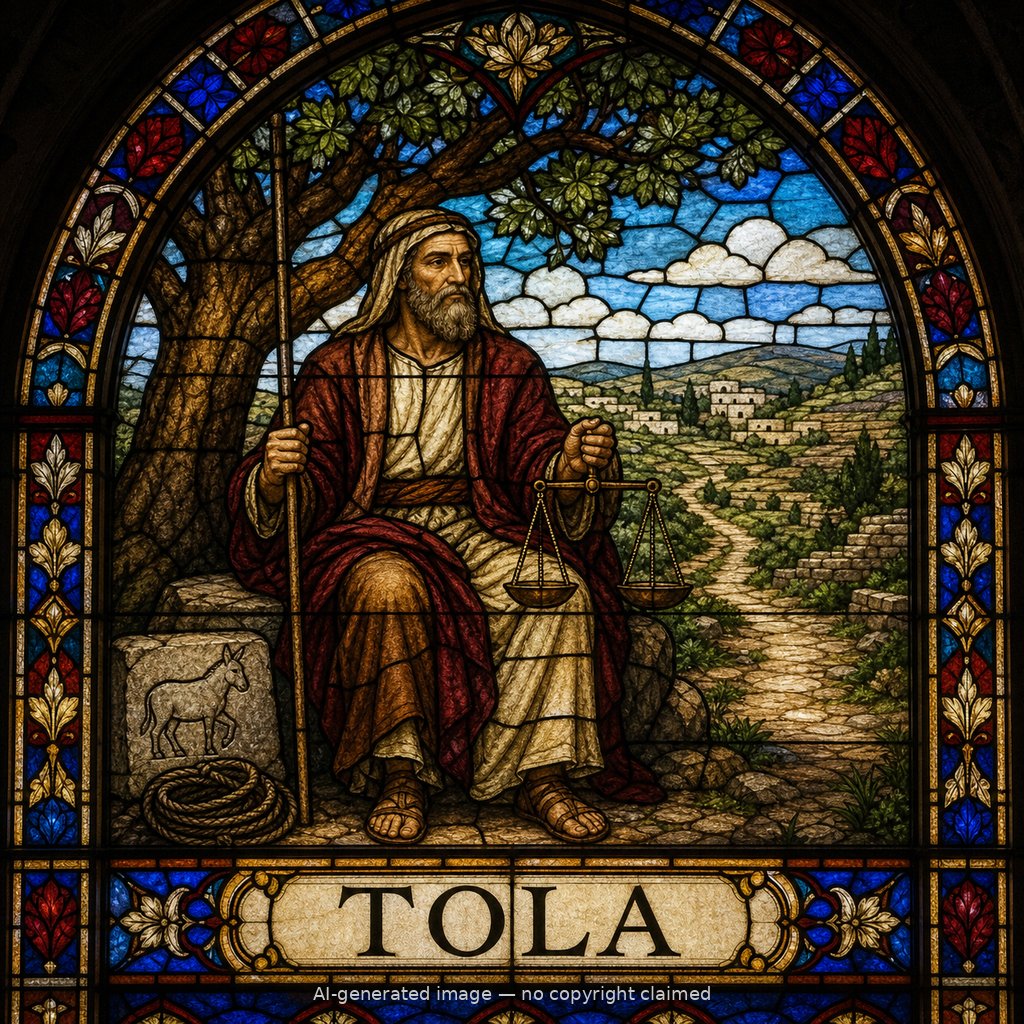
Tola (M)
First named in Genesis 46:13
Tola, of the tribe of Issachar, "arose to save Israel" after the violent and short-lived kingship of Abimelech, who had massacred his own brothers and was eventually killed by a millstone dropped from a tower (Judges 9:1-57; 10:1). Tola lived in Shamir in the hill country of Ephraim and judged Israel for twenty-three years before he died and was buried there (10:1-2). No battle, deliverance, or moral failure is recorded of him at all -- his entire account is two verses. Coming directly after Abimelech's brutal and self-serving reign, Tola's long, unremarkable tenure reads as a deliberate contrast: after chaos and bloodshed, Israel simply had two decades of a judge who is remembered for nothing except that he "saved Israel" and then quietly served out his years. Scripture does not need every faithful life to be dramatic to record it as significant.
Thought for Today
After Abimelech's bloody, self-serving reign, Tola simply judged Israel faithfully for twenty-three quiet years and then died -- no battle, no drama, just two verses. Jesus doesn't need our lives to be dramatic to call them significant; faithful and unnoticed is still faithful to Him.
References: Genesis 46:13; Numbers 26:23; 1 Chronicles 7:1-2