 Lives of Scripture
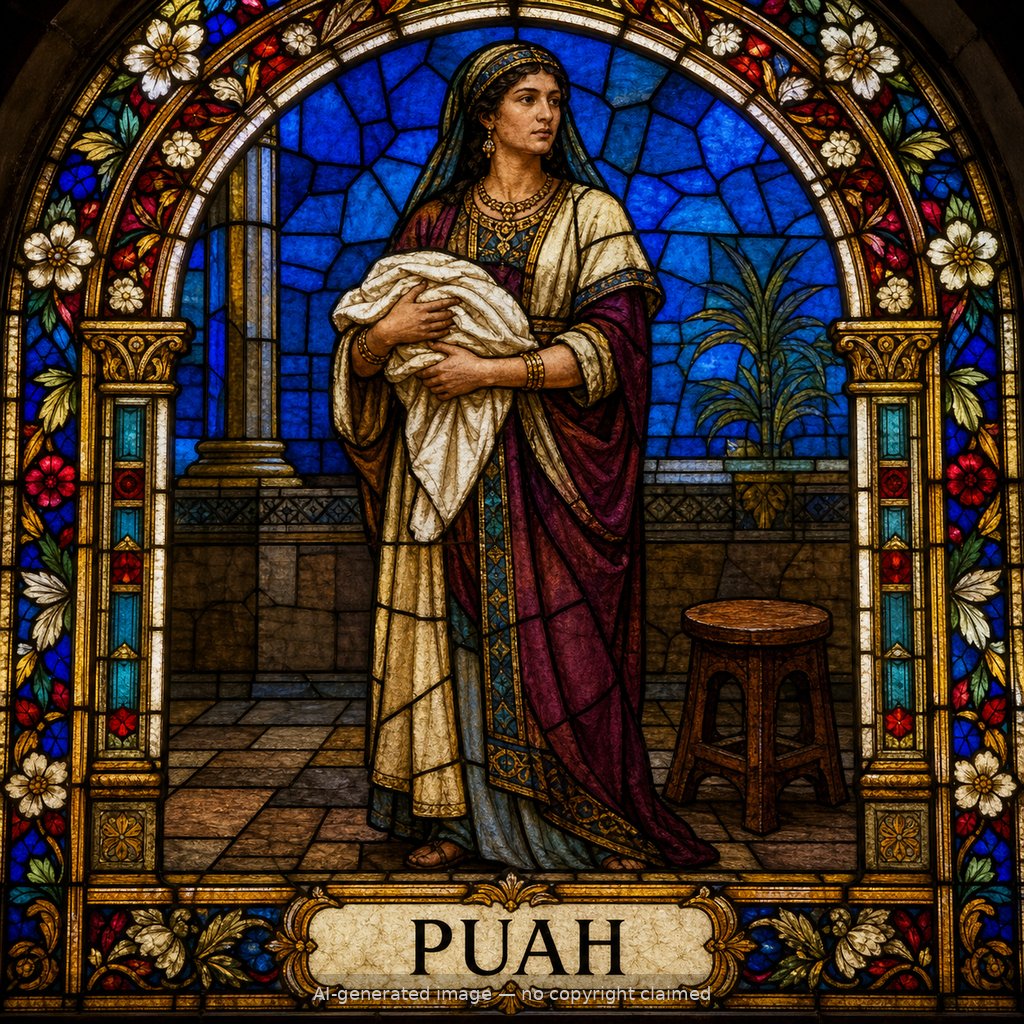
Puah (F)
First named in Exodus 1:15-21
Puah is named alongside Shiphrah as one of the Hebrew midwives Pharaoh ordered to kill every Hebrew baby boy at the moment of birth, out of fear that Israel's growing population posed a threat to Egypt (Exodus 1:15-16). Scripture states directly that 'the midwives feared God, and did not do as the king of Egypt had commanded them, but let the boys live' (1:17) -- an act of open civil disobedience against the most powerful ruler in the region, undertaken by two women with no political standing of their own. When Pharaoh confronted them about why the boys kept surviving, they answered that Hebrew women gave birth too quickly for the midwives to arrive in time -- an explanation the text neither confirms nor condemns as strictly true, but records as their bold, protective response under direct royal pressure (1:18-19). God's verdict on their action is unambiguous: 'God was good to the midwives... and because the midwives feared God, He established households for them' (1:20-21). Puah's defiance sits at the very hinge of Exodus, the first recorded act of resistance against the Egyptian oppression that Moses would later be raised up to end entirely -- proof that God's deliverance of Israel began not with a prince or a plague, but with the quiet, dangerous courage of two midwives who feared God more than Pharaoh.
Thought for Today
Puah feared God more than she feared Pharaoh, saving Hebrew babies at real risk to herself. May we fear and obey Jesus first too, whatever it costs us.
References: Exodus 1:15-21
Genealogy
Father
—Mother
—Spouse(s)
—Children
—Places
- Egypt — a midwife here who feared God and spared the Hebrew baby boys
Exodus 1:15-17