 Lives of Scripture
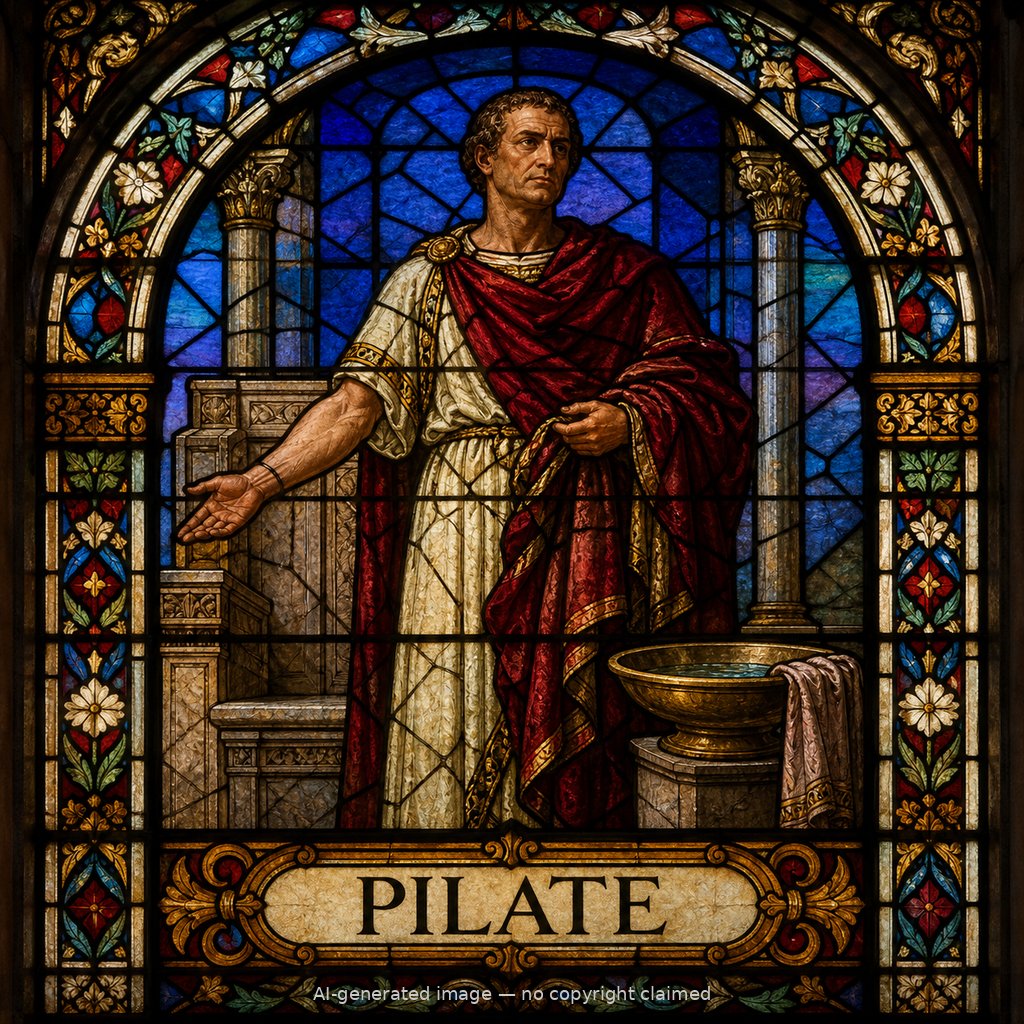
Pilate (M)
First named in Matthew 27:2-65
Pontius Pilate, Rome's governor over Judea, presided over Jesus' trial after Jewish leaders brought Him bound before him, since only Rome could carry out execution (John 18:28-31). Pilate questioned Jesus about His kingship; Jesus answered that His kingdom was 'not of this world' and that He had come 'to testify to the truth,' to which Pilate replied, 'What is truth?' and declared, 'I find no guilt in Him' (John 18:33-38). Learning Jesus was a Galilean, Pilate briefly sent Him to Herod Antipas before Jesus was returned (Luke 23:6-11). Pilate tried repeatedly to release Jesus -- offering the crowd a Passover choice between Jesus and the insurrectionist Barabbas, and having Jesus scourged, perhaps hoping that would satisfy them -- but the chief priests stirred the crowd to demand crucifixion instead (Matthew 27:15-23; John 19:1-6). Warned by his wife's troubling dream and his own conscience, Pilate still caved to the threat that releasing Jesus made him 'no friend of Caesar,' washed his hands before the crowd to declare himself innocent of Jesus' blood, and handed Him over to be crucified (Matthew 27:19,24; John 19:12-16). He ordered the inscription 'King of the Jews' placed over the cross and refused to change it despite the priests' objection (John 19:19-22), and later let Joseph of Arimathea take the body for burial (Mark 15:43-45). Pilate's decision, made against his own stated judgment, stands as Scripture's starkest picture of a man who knew the right thing to do and chose the expedient thing instead.
Thought for Today
Pilate declared, 'I find no guilt in Him,' yet handed Jesus over to please the crowd. Jesus went willingly to an unjust cross to save us all.
References: Matthew 27:2-65; Mark 15:1-44; Luke 3:1; Luke 13:1; Luke 23:1-52; John 18:29-38; John 19:1-38; Acts 3:13; Acts 4:27; Acts 13:28; 1 Timothy 6:13