 Lives of Scripture
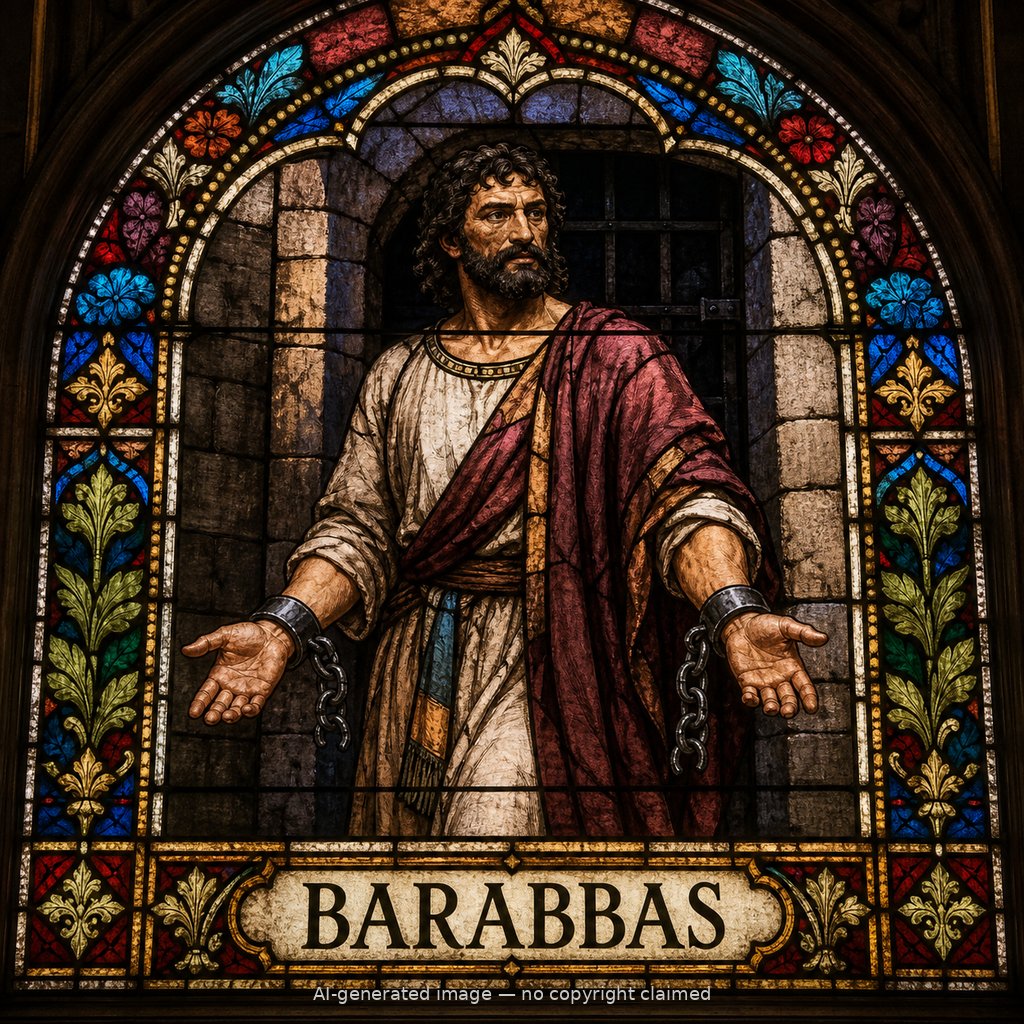
Barabbas (M)
First named in Matthew 27:16-26
Barabbas was a notorious prisoner, described as an insurrectionist who had committed murder during a rebellion, held in custody in Jerusalem at the time of Jesus's trial (Mark 15:7; Luke 23:19). It was customary for the Roman governor to release one prisoner chosen by the crowd during the Passover festival, and Pilate, recognizing Jesus's innocence and likely hoping to avoid executing Him, offered the crowd a choice between Jesus, "called Christ," and Barabbas (Matthew 27:15-18). Some manuscripts of Matthew preserve Barabbas's full name as "Jesus Barabbas," meaning "son of the father" -- a detail, if original, that would sharpen an already stark irony: the crowd was asked to choose between a false "son of the father" guilty of real violence and the true Son of the Father who was innocent (27:16-17). Stirred up by the chief priests and elders, the crowd demanded Barabbas's release and Jesus's crucifixion; Pilate, unable or unwilling to resist the pressure, granted their demand (27:20-26). Barabbas simply walked free, his guilt never atoned for by his own suffering, while the innocent Jesus was condemned to die in the very manner Barabbas himself might have faced for his crimes. Scripture records nothing further of Barabbas's life afterward, but his release stands as one of the Gospels' most direct, literal pictures of substitution -- an innocent man dying so a guilty one could go free.
Thought for Today
Pilate offered the crowd a choice between Barabbas, a convicted murderer, and Jesus, and the crowd chose to free the guilty man and crucify the innocent one. That's not just history -- it's the gospel in miniature: Jesus died in the exact place the guilty deserved to stand.
References: Matthew 27:16-26; Mark 15:7-15; Luke 23:18; John 18:40