 Lives of Scripture
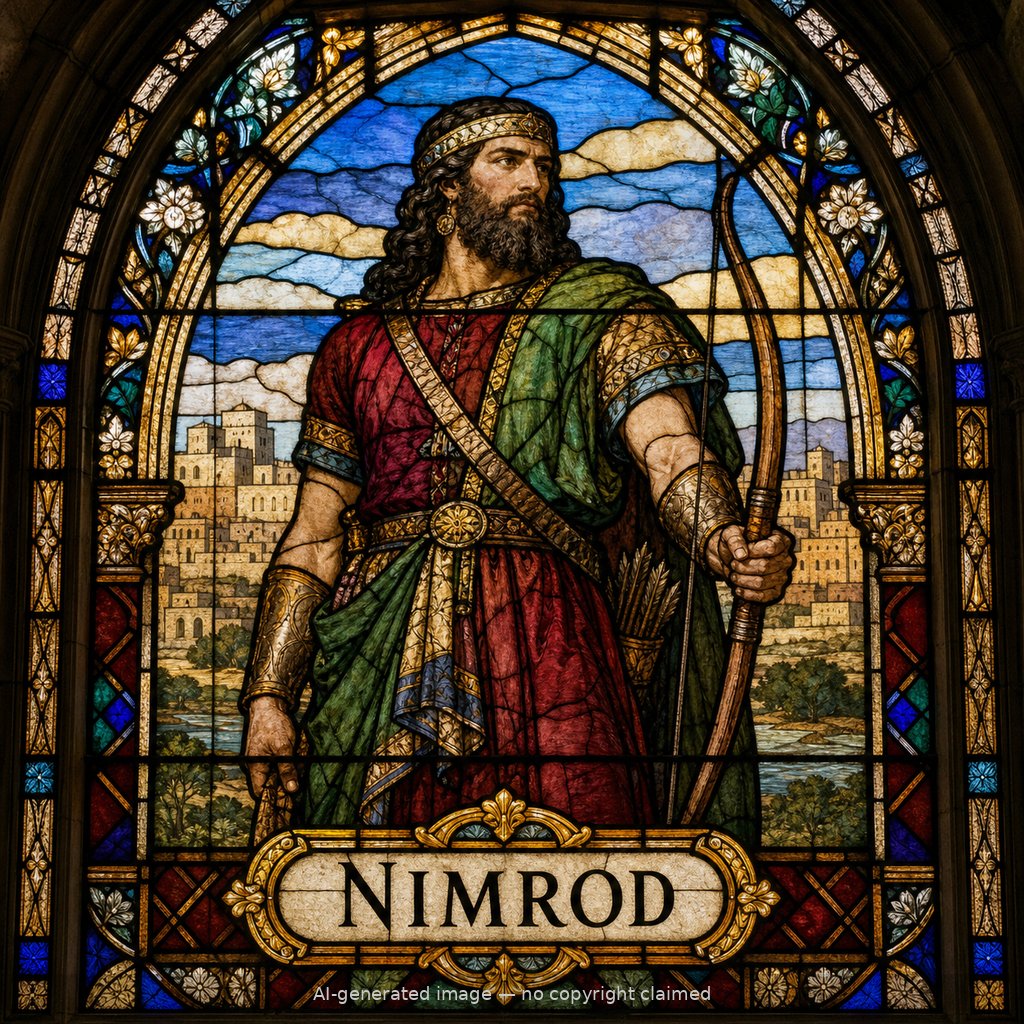
Nimrod (M)
First named in Genesis 10:8-12
Nimrod appears in the Table of Nations as a grandson of Ham through Cush, described as 'a mighty one on the earth' and 'a mighty hunter before the LORD,' a phrase whose tone -- honor or irony -- interpreters read differently (Genesis 10:8-9). The beginning of his kingdom was Babel, Erech, Accad, and Calneh in the land of Shinar, from which he went to Assyria and built Nineveh and other cities (10:10-12). Nimrod is Scripture's first person described in terms of an empire -- not a family or tribe but consolidated political power across multiple cities and territories. His prominence in Shinar sets the geographical and thematic stage for Genesis 11's very next episode, the tower of Babel, where humanity in that same region says 'let us make for ourselves a name' and attempts to build a tower to the heavens rather than scatter and fill the earth as God had commanded (Genesis 9:1; 11:1-9). Genesis never states that Nimrod personally built the tower, but his kingdom-building ambition in the same place and among the same early post-flood population frames Babel as the natural outgrowth of the drive to self-glorifying power his story represents -- a warning, in the middle of Genesis's earliest chapters, that human ambition unmoored from trust in God tends toward pride and eventual judgment.
Thought for Today
Nimrod built an empire of cities in Shinar, the very region where humanity next tried to 'make for ourselves a name' by building a tower to the heavens instead of trusting God. Jesus is the name actually worth being known by, freely given rather than seized by our own ambition.
References: Genesis 10:8-12; 1 Chronicles 1:10; Micah 5:6