 Lives of Scripture
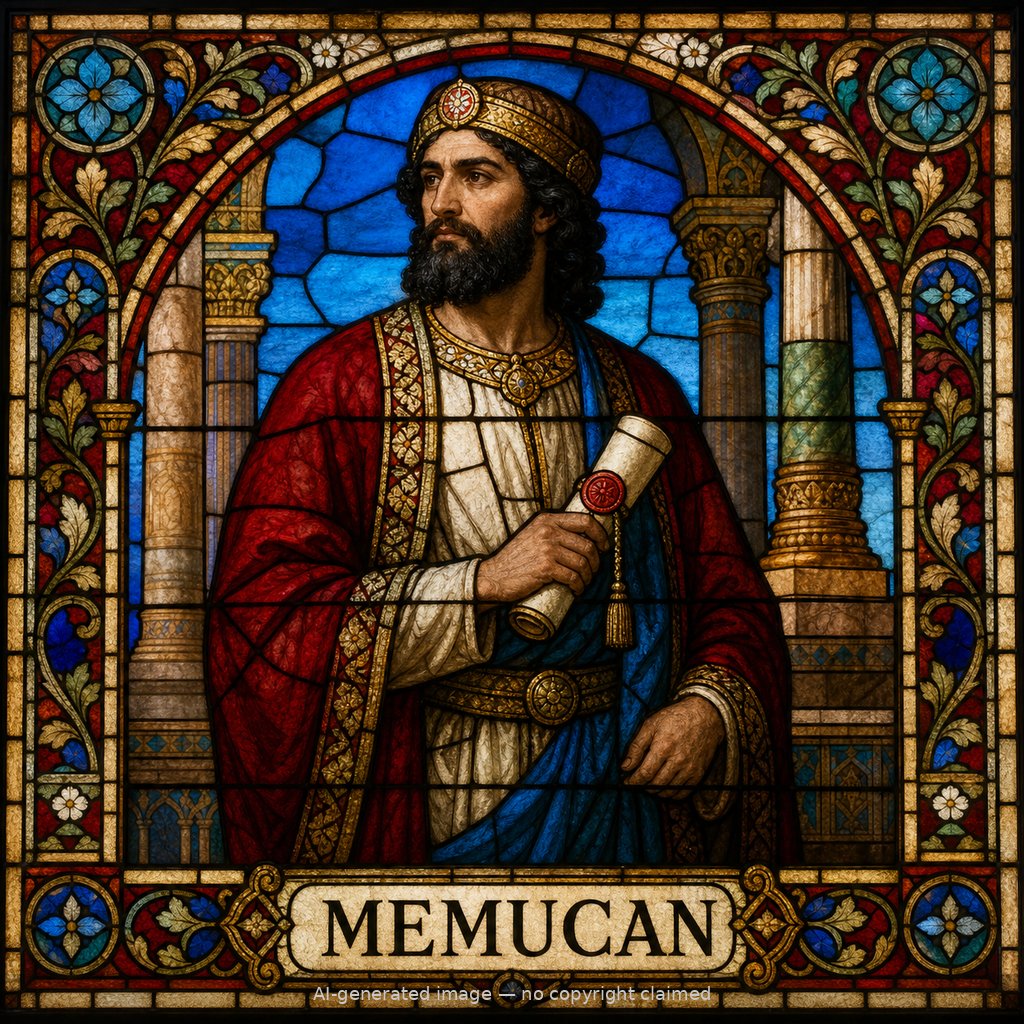
Memucan (M)
First named in Esther 1:14-21
Memucan was one of seven princes of Persia and Media who 'had access to the king's presence' and were skilled in 'law and justice' (Esther 1:13-14). When King Ahasuerus, in a fit of anger after Queen Vashti refused his summons during a lavish banquet, asked his wise men what should legally be done to her, Memucan was the one who answered. He argued that Vashti's defiance was not a private matter but a public danger: 'the queen's conduct will become known to all the women, causing them to look with contempt on their husbands' (1:17), and he urged the king to issue an irrevocable royal decree removing Vashti from her position and giving her royal position to another, 'so that all women will give honor to their husbands, great and small' (1:20). The king and his princes followed Memucan's counsel, and letters were sent throughout the empire in every language, declaring that every man should be master in his own house (1:21-22). Memucan's advice, whatever its underlying anxieties about wounded male pride, set in motion the search for a new queen that eventually brought Esther, a Jewish exile, into the palace -- positioning her providentially to intercede for her people when Haman later plotted their destruction.
Thought for Today
Memucan's counsel to depose Vashti set in motion the search that brought Esther to the palace to save her people. God works through flawed decisions toward His purposes.
References: Esther 1:14-21
Genealogy
Father
—Mother
—Spouse(s)
—Children
—Places
- Susa — the prince here who advised deposing Queen Vashti
Esther 1:16-21