 Lives of Scripture
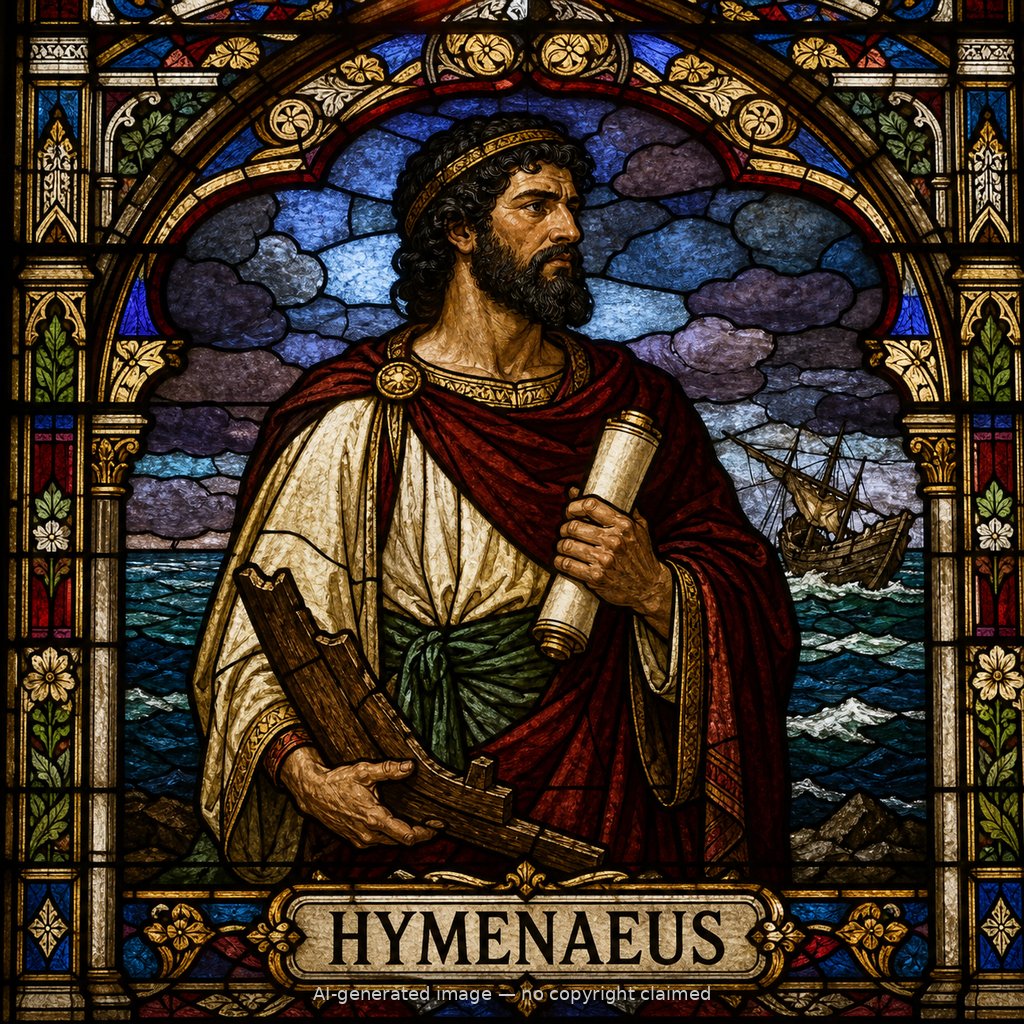
Hymenaeus (M)
First named in 1 Timothy 1:18-20
Hymenaeus appears twice in Paul's letters to Timothy, both times as a warning example of doctrinal shipwreck. In the first letter, Paul charges Timothy to fight the good fight, 'keeping faith and a good conscience, which some have rejected and suffered shipwreck in regard to their faith,' naming Hymenaeus and Alexander specifically as men Paul had 'handed over to Satan, so that they will be taught not to blaspheme' (1 Timothy 1:18-20) -- language describing a serious act of church discipline, likely expulsion from the fellowship of believers, intended for their correction rather than mere punishment. In the second letter, Paul warns Timothy to avoid 'worldly and empty chatter,' since it leads to further ungodliness, 'and their talk will spread like gangrene, among whom are Hymenaeus and Philetus, men who have gone astray from the truth saying that the resurrection has already taken place, and thus they upset the faith of some' (2 Timothy 2:16-18). This specific false teaching -- that the resurrection was already a completed, purely spiritual event with no future bodily reality yet to come -- struck at a core Christian hope and evidently gained enough traction to genuinely destabilize other believers' faith. Paul's comparison of this teaching to spreading gangrene captures how seriously he viewed the danger: not a minor disagreement, but a corrosive error requiring direct confrontation and correction to protect the wider church.
Thought for Today
Hymenaeus taught that the resurrection had already happened, denying the future hope Jesus promised His followers. We can trust Jesus' own resurrection guarantees ours is still to come.
References: 1 Timothy 1:18-20; 2 Timothy 2:16-18
Genealogy
Father
—Mother
—Spouse(s)
—Children
—New Testament Church
- Ephesus — faith "shipwrecked"; handed over to Satan for blasphemy, and later taught the resurrection had already occurred
1 Timothy 1:18-20; 2 Timothy 2:16-18
Places
- Ephesus — handed over to Satan for the ruin of his faith, and later denied here
1 Timothy 1:19-20