 Lives of Scripture
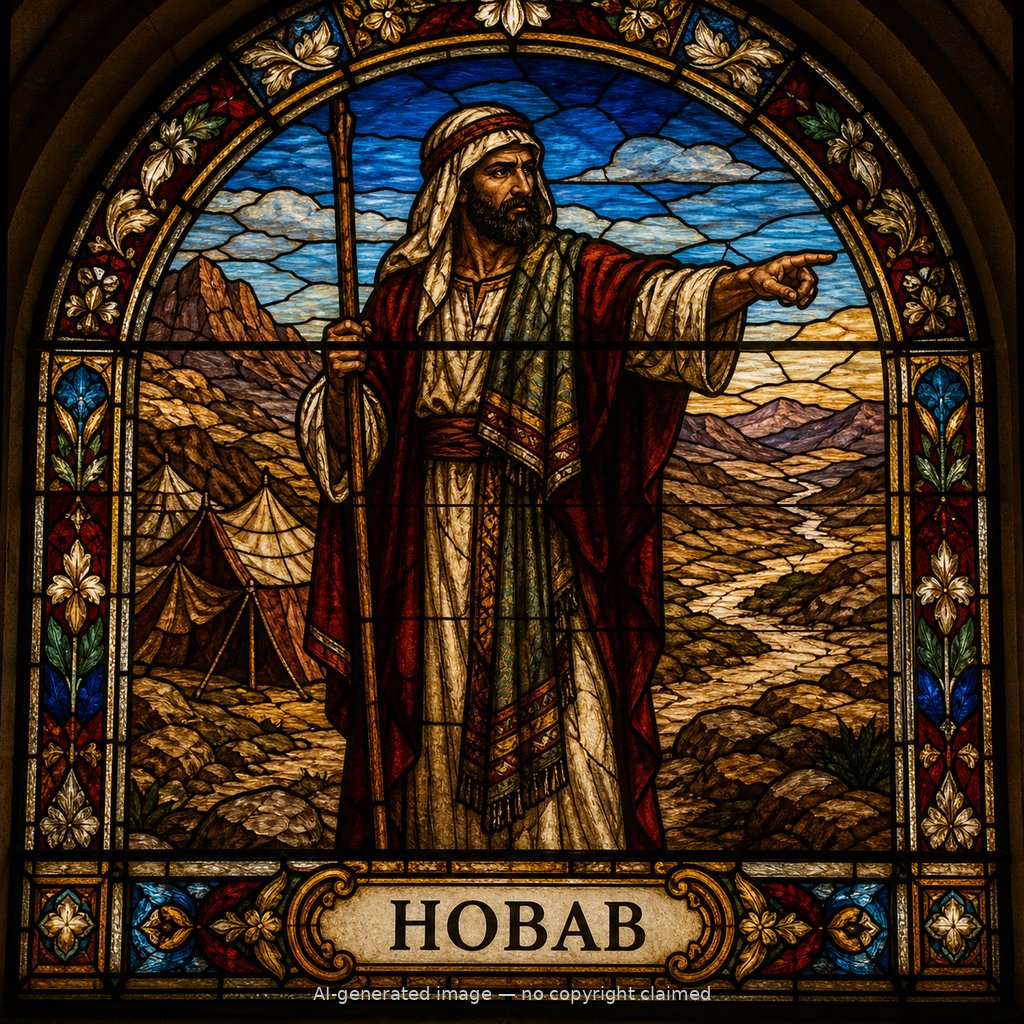
Hobab (M)
First named in Numbers 10:29
Hobab appears in Numbers 10 as Israel breaks camp at Sinai to begin the journey toward the promised land. He is identified as "the son of Reuel the Midianite, Moses' father-in-law" -- a phrase Scripture itself leaves ambiguous, since elsewhere Hobab, not Reuel, is called Moses' father-in-law (Judges 4:11), leading to long-standing uncertainty over whether Hobab and Jethro/Reuel are the same man under different names or two different relatives. Moses asked Hobab to travel with Israel: "We are setting out to the place... Come with us and we will do you good, for the LORD has promised good concerning Israel" (10:29). Hobab initially refused, wanting to return to his own land and relatives (10:30). Moses pressed him again, appealing to his practical value -- "you know where we should camp in the wilderness, and you will be as eyes for us" -- and promised to share with him whatever good the LORD did for Israel (10:31-32). Numbers does not record Hobab's final decision, but later texts describing Kenite descendants of Moses' father-in-law living among Israel (Judges 1:16; 4:11) suggest that he, or at least his family, did go along. Whatever the outcome, the exchange shows Israel depending on ordinary human knowledge and relationships even while following God's own pillar of cloud and fire.
Thought for Today
Moses valued Hobab's wisdom even while Israel followed God's pillar of cloud and fire. God still guides us through His Spirit and the people He places around us.
References: Numbers 10:29
Genealogy
Connections
Places
- Mount Sinai — asked by Moses to guide Israel onward from this mountain
Numbers 10:29-31