 Lives of Scripture
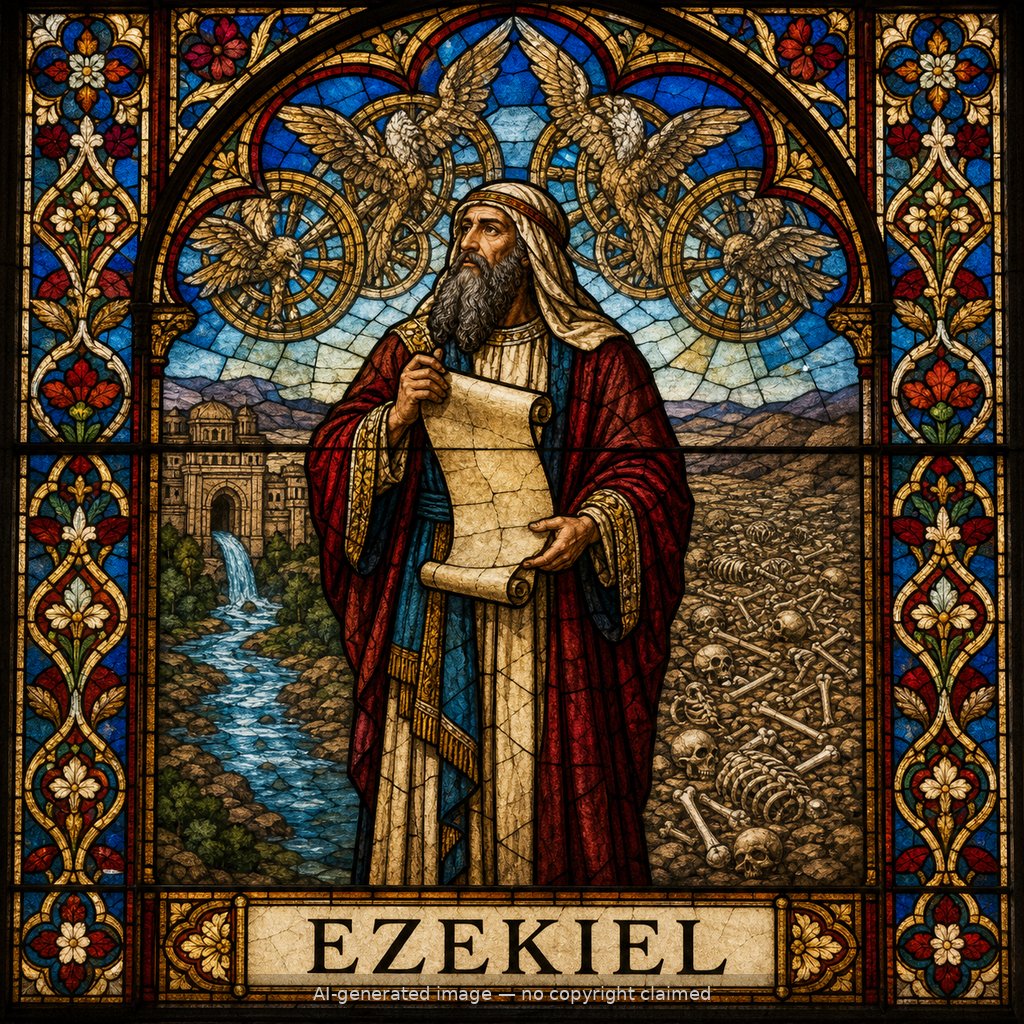
Ezekiel (M)
First named in Ezekiel 1:3
Ezekiel, a priest exiled to Babylon with King Jehoiachin in 597 BC, received his prophetic call beside the Chebar River through an overwhelming vision of God's throne-chariot — wheels within wheels, four living creatures, and blazing glory — after which he ate a scroll of lament and was appointed "a watchman for the house of Israel" (Ezekiel 1-3). His ministry was marked by dramatic symbolic acts: he lay on his side for over a year to bear Israel's guilt, ate rationed food to depict coming siege and famine, shaved his head and divided the hair to picture Jerusalem's judgment, and packed an exile's bag and dug through a wall to act out the coming captivity (Ezekiel 4-5; 12:1-7). When his wife suddenly died, God forbade Ezekiel to mourn openly, making his own restrained grief a sign to the exiles of the greater loss coming to Jerusalem (Ezekiel 24:15-24). Ezekiel saw the glory of the LORD deliberately depart from a defiled temple before Jerusalem's fall, and later saw it return in a vision of restoration (Ezekiel 10-11; 43:1-5). His best-known vision, a valley of dry bones brought back to life, pictures God restoring not just land but Israel's very spirit (Ezekiel 37:1-14). His closing chapters describe an elaborate future temple whose meaning remains genuinely debated among careful readers (Ezekiel 40-48).
Thought for Today
Ezekiel saw dry bones come alive at God's word. Jesus does the same in us, breathing life into the places we thought were dead.
References: Ezekiel 1:3; Ezekiel 2:1-8; Ezekiel 3:1-25; Ezekiel 4:1-16; Ezekiel 5:1; Ezekiel 6:2; Ezekiel 7:2; Ezekiel 8:5-15; Ezekiel 11:2-15; Ezekiel 12:2-22; Ezekiel 13:2; Ezekiel 14:3-13; Ezekiel 15:2; Ezekiel 16:2; Ezekiel 20:3-27; Ezekiel 21:2-28; Ezekiel 22:2-24; Ezekiel 23:2-36; Ezekiel 24:2-25; Ezekiel 25:2; Ezekiel 26:2; Ezekiel 27:2; Ezekiel 28:2-21; Ezekiel 29:2-18; Ezekiel 30:2-21; Ezekiel 31:2; Ezekiel 32:2-18; Ezekiel 33:2-30; Ezekiel 34:2; Ezekiel 35:2; Ezekiel 36:1-17; Ezekiel 37:3-16; Ezekiel 38:2; Ezekiel 39:1; Ezekiel 40:4; Ezekiel 43:7-18; Ezekiel 44:5; Ezekiel 47:6
Genealogy
Connections
Places
- Babylon — prophesied among the exiles by the Chebar canal near this city
Ezekiel 1:1-3
- Chebar River