 Lives of Scripture
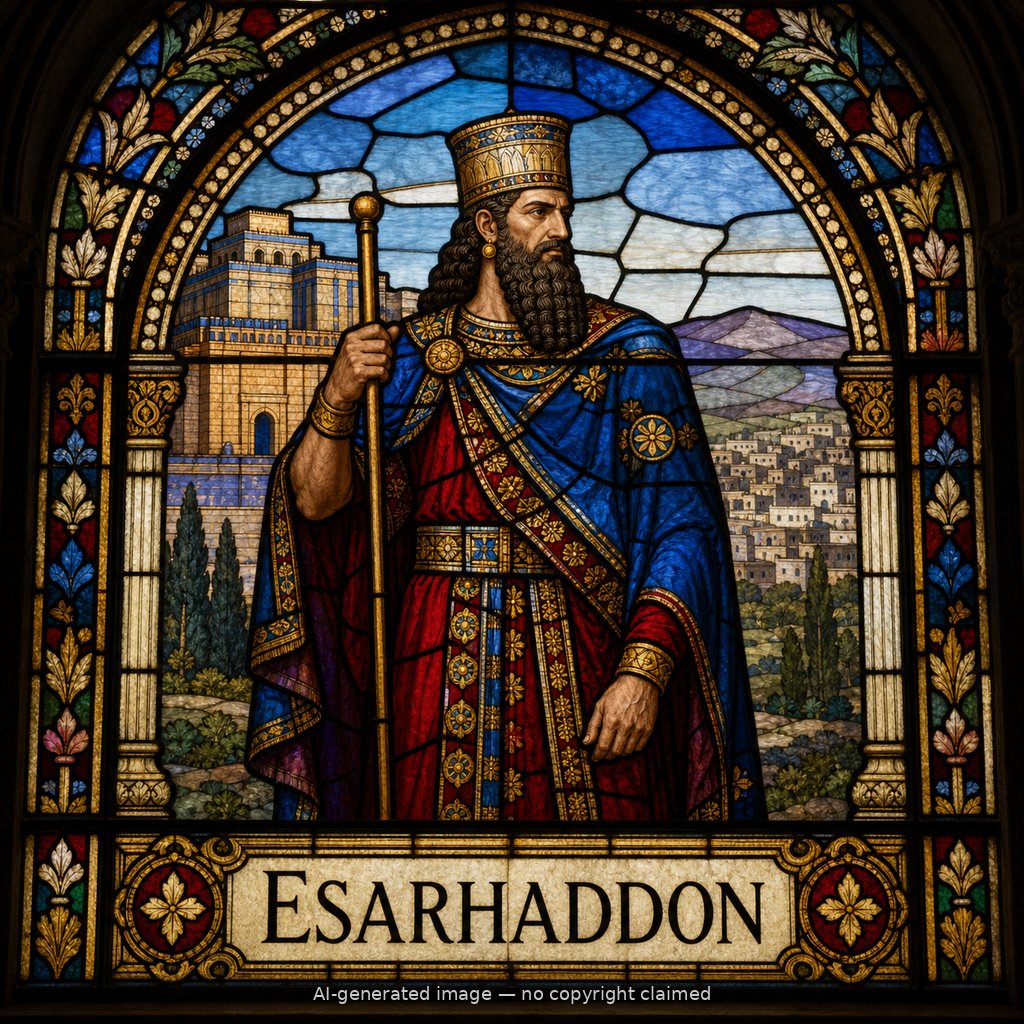
Esarhaddon (M)
First named in 2 Kings 19:37
Esarhaddon became king of Assyria after his father, Sennacherib, was assassinated by two of his own sons, Adrammelech and Sharezer, while worshiping in the temple of his god Nisroch; the assassins fled to Ararat, and "Esarhaddon his son became king in his place" (2 Kings 19:37; Isaiah 37:38). Esarhaddon ruled the Assyrian empire at the height of its power in the seventh century BC. His only other biblical mention with independent content comes generations later: when the returned exiles began rebuilding the Jerusalem temple, the peoples already settled in the land approached them claiming shared worship, saying, "we... have been sacrificing to Him since the days of Esarhaddon king of Assyria, who brought us up here" (Ezra 4:2) -- a reference to Esarhaddon's policy, common to Assyrian kings, of resettling conquered and deported populations across the empire, including into the territory of the former northern kingdom of Israel. Some historians also connect Esarhaddon to the Assyrian king who captured Judah's King Manasseh "with hooks" and carried him to Babylon (2 Chronicles 33:11), though that verse itself does not name him, leaving the exact identification uncertain.
Thought for Today
Esarhaddon rose to Assyria's throne only because assassins had murdered his father in his own temple -- yet Scripture records his reign without any suggestion God was surprised or absent from it. Jesus's throne, unlike Esarhaddon's, was never won by violence and can never be taken from Him by it either.
References: 2 Kings 19:37; 2 Chronicles 33:11; Ezra 4:2; Isaiah 37:38
Genealogy
Connections
- Sennacherib (M) — begot → Esarhaddon (M)