 Lives of Scripture
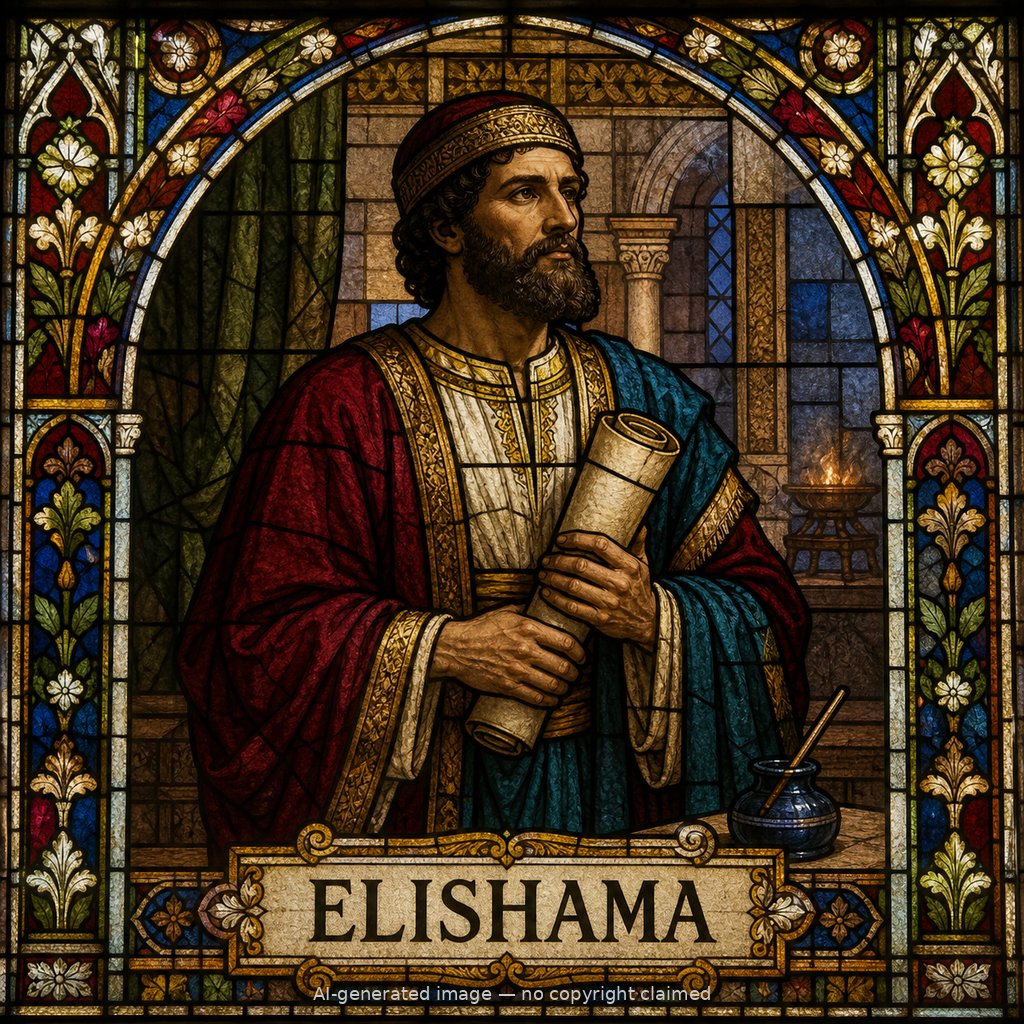
Elishama (M)
First named in Jeremiah 36:12-21
Elishama was a scribe in the court of King Jehoiakim of Judah, one of the officials with his own chamber in the royal palace in Jerusalem (Jeremiah 36:12). In the fourth year of Jehoiakim's reign, God commanded Jeremiah to dictate all his prophecies to his scribe Baruch on a scroll; barred from the temple himself, Jeremiah sent Baruch to read it publicly there (36:1-8). When Micaiah, who had heard the reading, reported it, the king's officials -- including Elishama -- summoned Baruch and had him read the scroll again in their hearing (36:11-15). Alarmed by its contents, the officials told Baruch and Jeremiah to go into hiding, then went to inform the king, first depositing the scroll "in the chamber of Elishama the scribe" for safekeeping (36:19-20). The king sent his officer Jehudi to retrieve it from Elishama's chamber and read it aloud in his winter house. As each section was read, Jehoiakim cut it from the scroll with a scribe's knife and threw it into the fire, until the entire scroll was consumed, unmoved by the pleas of some officials not to burn it (36:21-25). God then had Jeremiah dictate the scroll again, with further words added against the king who had destroyed it (36:27-32). Elishama's chamber -- meant simply as a place to keep an official document safe -- became, briefly, the last resting place of God's word before a king's defiant contempt for it.
Thought for Today
King Jehoiakim burned Jeremiah's scroll from Elishama's chamber, but God simply had it rewritten. No fire can destroy God's word or His plan to send Jesus.
References: Jeremiah 36:12-21