 Lives of Scripture
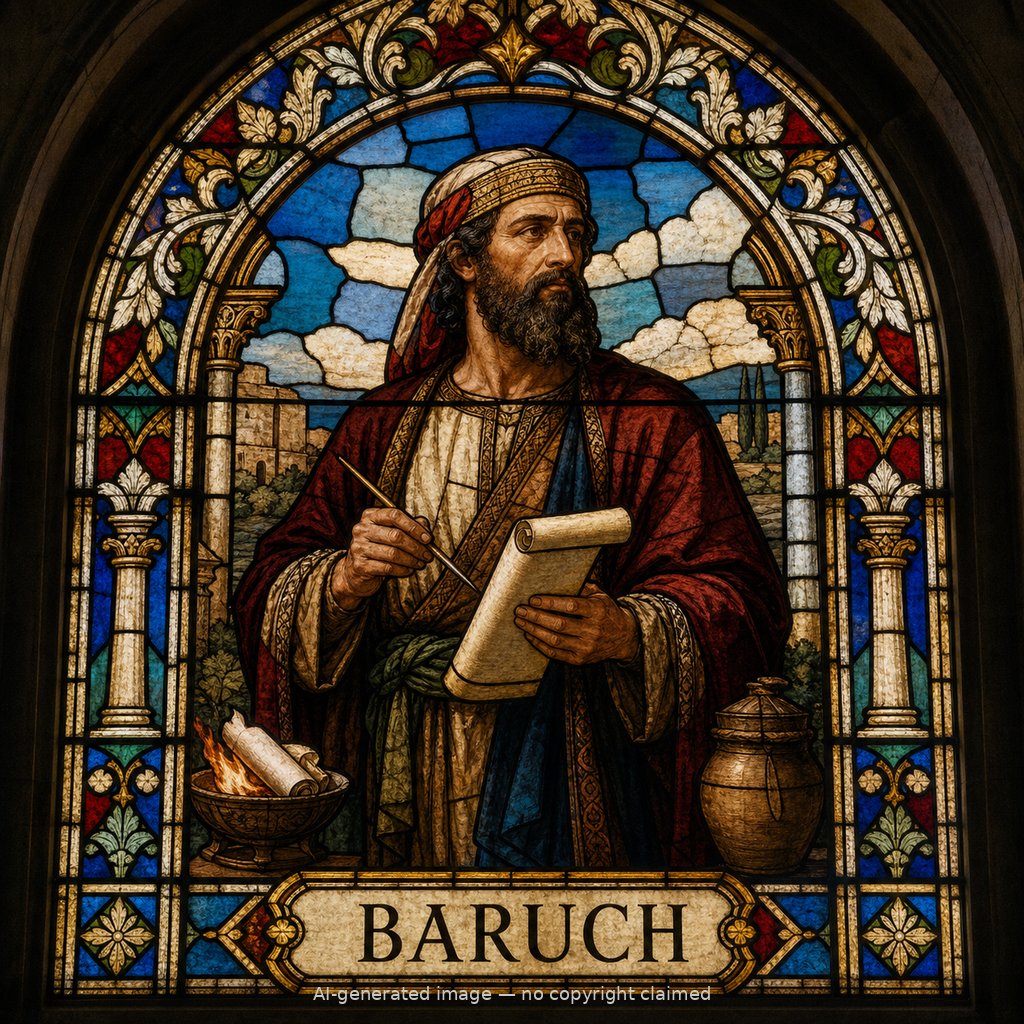
Baruch (M)
First named in Jeremiah 32:12-16
Baruch, son of Neriah, served as Jeremiah's scribe and closest companion through the final, darkest years of the kingdom of Judah. At Jeremiah's dictation he wrote down the prophet's collected warnings on a scroll and read them publicly in the temple, since Jeremiah himself was barred from going there (Jeremiah 36:4-10). When King Jehoiakim heard the scroll read, he cut it apart column by column and burned it in a firepot -- so Jeremiah dictated the whole message to Baruch again, "and many similar words were added to them" (36:21-32). Baruch also served as the legal witness when Jeremiah, under siege and imprisoned, bought a field from his cousin as a prophetic sign that houses, fields, and vineyards would again be bought in the land (32:12-16). Jeremiah 45 records a personal word to Baruch alone, after he complained of grief and exhaustion added to his own sorrow -- God promised to spare his life wherever he went, though not to grant him great things for himself. After Jerusalem fell and Gedaliah was assassinated, the frightened remnant accused Baruch of turning Jeremiah against them and dragged them both to Egypt against the LORD's explicit command (43:1-7). Baruch's story is one of costly faithfulness to an unpopular word: no throne, no vindication in his lifetime, only the honor of having God's word survive the fire because he kept writing it down.
Thought for Today
Baruch faithfully wrote and read Jeremiah's hard words even when it endangered his life. Jesus calls us to that same obedience, even when His word costs us comfort.
References: Jeremiah 32:12-16; Jeremiah 36:4-32; Jeremiah 43:3-6; Jeremiah 45:1-2