 Lives of Scripture
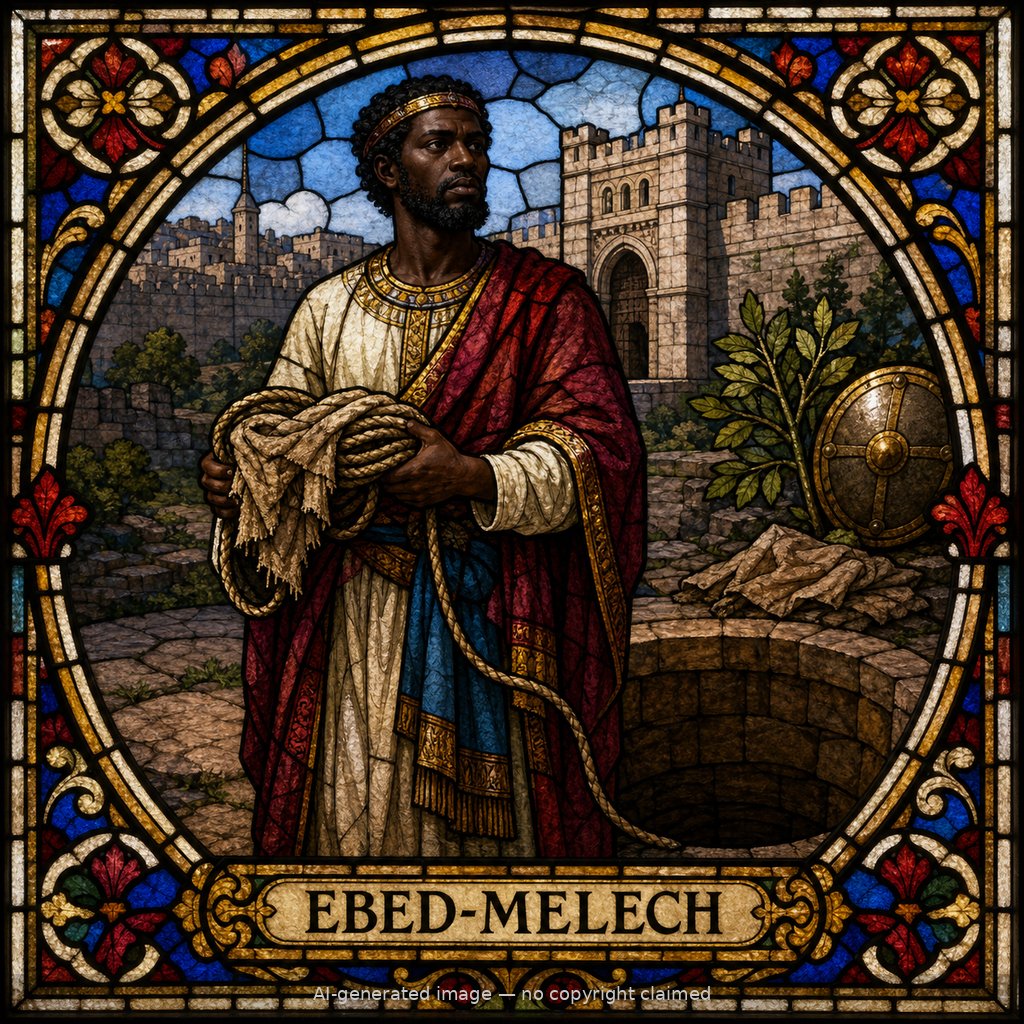
Ebed-melech (M)
First named in Jeremiah 38:7-12
Ebed-Melech, a Cushite (Ethiopian) eunuch serving in King Zedekiah's palace, heard that Judah's officials, furious at Jeremiah's prophecies urging surrender to Babylon, had thrown the prophet into an empty cistern to die in its mud, since striking him directly might have seemed too openly violent (Jeremiah 38:4-6). Ebed-Melech went immediately to Zedekiah, who was sitting at the Benjamin Gate, and pleaded on Jeremiah's behalf, calling the officials' act evil (38:7-9). Zedekiah authorized him to act, and Ebed-Melech took thirty men, gathered old rags and worn-out clothes to cushion the ropes under Jeremiah's arms so they would not cut into him, and carefully drew the prophet up out of the mud (38:10-13) -- a detail of genuine, practical compassion Scripture takes care to record. Afterward, God gave Jeremiah a specific personal word for Ebed-Melech: because he had trusted in the LORD, his life would be spared and he would not fall by the sword when Jerusalem was captured, even amid the citywide catastrophe about to come (39:15-18). Ebed-Melech's brief but vivid account is one of Scripture's clearest illustrations that courageous compassion toward God's servant, even from an outsider with no covenant status of his own, does not go unnoticed or unrewarded by God.
Thought for Today
Ebed-melech drew Jeremiah up out of the mud of a deadly cistern with careful, costly compassion. Jesus lifts us out of a pit we could never climb ourselves.
References: Jeremiah 38:7-12; Jeremiah 39:16