 Lives of Scripture
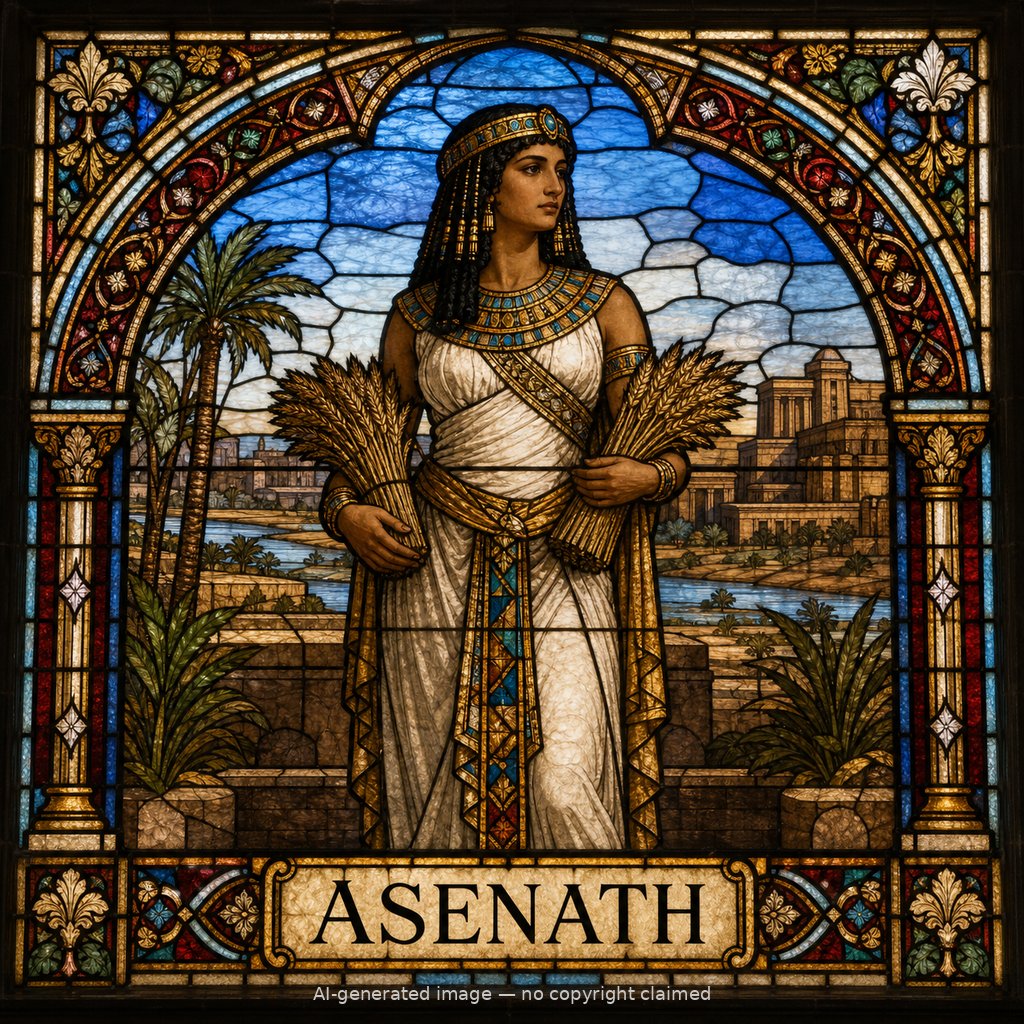
Asenath (F)
First named in Genesis 41:45
Asenath, daughter of Potiphera, priest of On (Heliopolis), was given to Joseph in marriage by Pharaoh himself after Joseph correctly interpreted Pharaoh's dreams and was elevated to rule over all Egypt under Pharaoh (Genesis 41:37-45). As an Egyptian from a priestly family with no prior connection to Abraham's covenant line, Asenath's marriage to Joseph is Genesis's first instance of a patriarch's son marrying an Egyptian, a detail the text records without commentary. She bore two sons before the seven years of famine arrived: Manasseh, whose name Joseph explained as 'God has made me forget all my trouble and all my father's household,' and Ephraim, meaning 'God has made me fruitful in the land of my affliction' (41:50-52) -- names that turn Joseph's own painful history of betrayal and slavery into a public testimony of God's providence rather than bitterness. Asenath and her sons went down with Joseph's household into further security once Jacob's family relocated to Egypt during the famine (46:20). Manasseh and Ephraim were later personally adopted and blessed by the aging Jacob as full tribes of Israel in their own right, equal to his own sons (48:1-20), meaning Asenath, an outsider by birth to the covenant family, became through her sons the mother of two of the twelve tribes that would carry forward God's promises to Abraham.
Thought for Today
Asenath's sons carried names that turned Joseph's suffering into public testimony: Manasseh, because "God has made me forget all my trouble," and Ephraim, because "God has made me fruitful in the land of my affliction." Jesus does the same with our hardest chapters, turning them into evidence of grace, not just wounds we carry.
References: Genesis 41:45; Genesis 41:50-52; Genesis 46:20
Genealogy
Connections
Places
- Egypt — the Egyptian priest's daughter given to Joseph as his wife here
Genesis 41:45