 Lives of Scripture
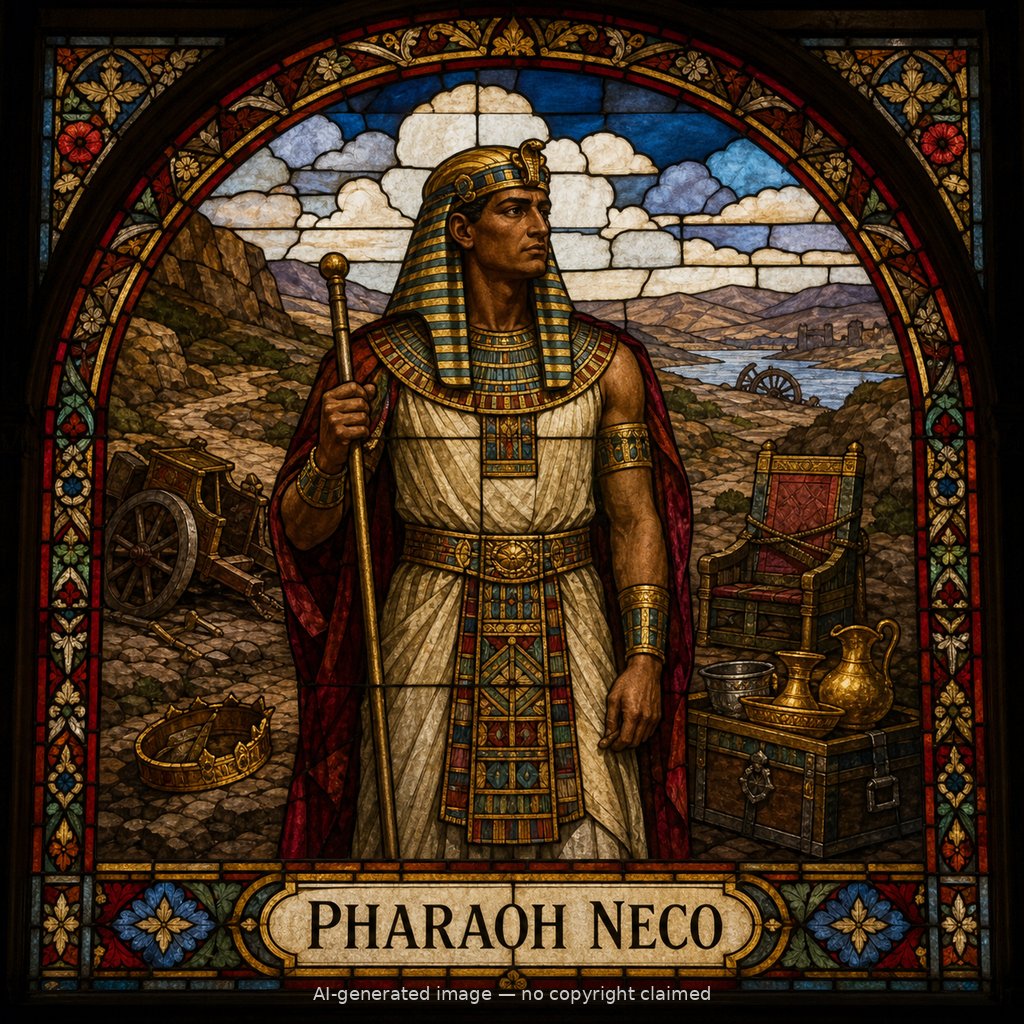
Pharaoh Neco (M)
First named in 2 Kings 23:29-35
Neco II, king of Egypt, marched north in 609 BC to aid Assyria against the rising power of Babylon. King Josiah of Judah moved to intercept him at Megiddo, though Neco sent word that he had no quarrel with Judah and claimed to be acting at God's command (2 Chronicles 35:21-22). Josiah disguised himself and went into battle anyway, was struck by archers, and died -- a devastating end to Judah's last reforming king, mourned in laments still remembered generations later (2 Chronicles 35:22-25). With Judah now vulnerable, Neco deposed Josiah's son Jehoahaz after only three months on the throne, took him captive to Egypt where he died, and installed his brother Eliakim as a puppet king, renaming him Jehoiakim and imposing a heavy tribute of silver and gold on the land (2 Kings 23:31-35). For several years Judah existed as an Egyptian vassal state. But Neco's ambitions collapsed in 605 BC at the battle of Carchemish, where Nebuchadnezzar of Babylon decisively crushed the Egyptian army; Neco never again ventured past his own border, and Babylon replaced Egypt as the power controlling Judah's fate (2 Kings 24:7; Jeremiah 46:2). Neco's brief dominance shows how thoroughly Judah's political fortunes, even under its best kings, had become hostage to the great empires surrounding it -- Josiah's death effectively closed the door on national reform and set the stage for Judah's slide into Babylonian exile.
Thought for Today
Neco's brief dominance over Judah, following godly Josiah's death, still couldn't overturn God's larger plan for His people. Jesus's kingdom outlasts every empire that has ever ruled.
References: 2 Kings 23:29-35; 2 Kings 24:7; 2 Chronicles 35:20-22; 2 Chronicles 36:3-4; Jeremiah 46:2
Genealogy
Father
—Mother
—Spouse(s)
—Children
—Places
- Egypt — its king, who killed Josiah and made Judah a tribute-paying vassal
2 Kings 23:29; 2 Kings 23:34
- Kingdom of Judah
- Megiddo — Egypt's king, who killed King Josiah in battle here
2 Chronicles 35:20-24