 Lives of Scripture
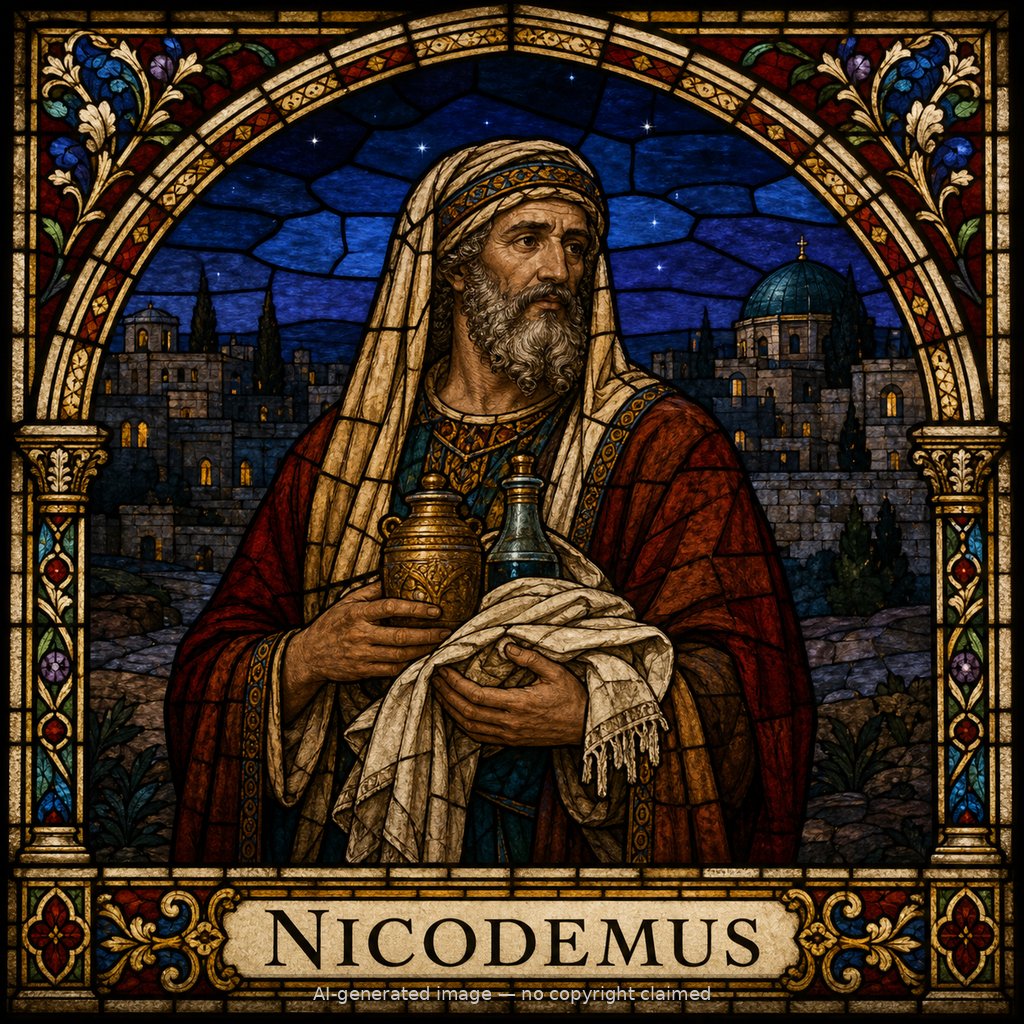
Nicodemus (M)
First named in John 3:1-9
Nicodemus, a Pharisee and "a ruler of the Jews" -- likely a member of the Sanhedrin -- came to Jesus by night, an approach that suggests either caution about being seen with Him publicly or simply a preference for uninterrupted conversation (John 3:1-2). He opened respectfully, acknowledging Jesus as "a teacher come from God," and Jesus responded with one of His most foundational teachings: "unless one is born again, he cannot see the kingdom of God" (3:2-3). Nicodemus, a recognized "teacher of Israel," struggled to grasp the spiritual meaning, asking how a grown man could enter his mother's womb a second time, and Jesus clarified He meant a birth "of water and the Spirit," a work of God's Spirit rather than human effort or heritage (3:4-10). The conversation includes what may be Jesus's own words or John's commentary building toward the Gospel's most quoted verse: "For God so loved the world, that He gave His only begotten Son..." (3:16). Nicodemus reappears twice more, each time showing gradually more open courage: he cautioned his fellow Sanhedrin members against condemning Jesus without a fair hearing, provoking their scorn (7:50-52), and after the crucifixion, he came openly in daylight with about seventy-five pounds of myrrh and aloes to help Joseph of Arimathea prepare Jesus's body for burial (19:39-40). Nicodemus's arc, from secretive nighttime visitor to public participant in Jesus's burial, traces a quiet but real growth from curiosity into costly devotion.
Thought for Today
Nicodemus first came to Jesus secretly, by night, unsure what 'born again' even meant. He ended up in broad daylight, spending a small fortune on spices to help bury Jesus's body -- proof that a hesitant question can grow into open, costly love.
References: John 3:1-9; John 7:50; John 19:39
Genealogy
Father
—Mother
—Spouse(s)
—Children
—Places
- Jerusalem — a ruler of the Jews here who came to Jesus by night
John 3:1-2