Lives of Scripture
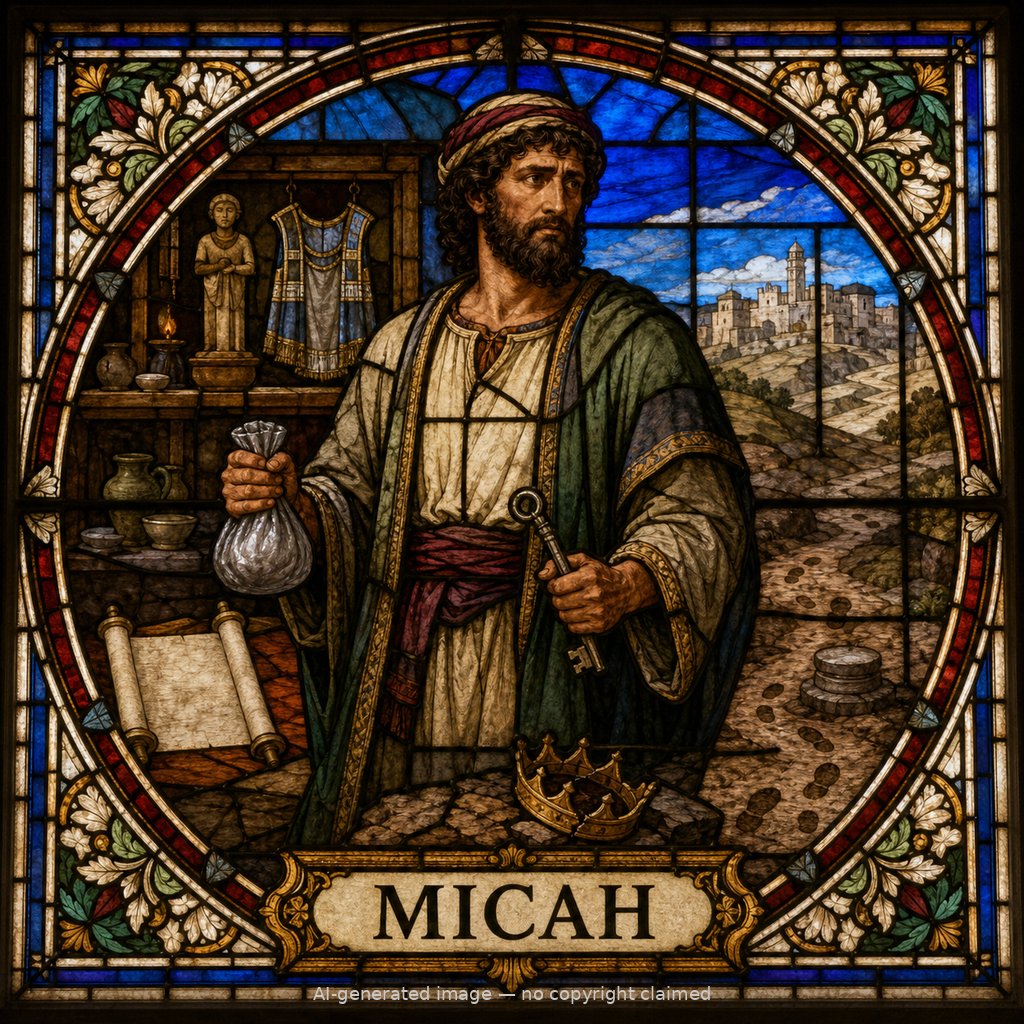
Micah (M)
First named in Judges 17:1-13
Micah, from the hill country of Ephraim, opens Judges' closing section by confessing to his mother that he had stolen eleven hundred pieces of silver from her; she blessed him and dedicated the silver to the LORD, but then had part of it made into a carved and a cast image anyway, which ended up in Micah's own house alongside an ephod and household idols he had already made, with one of his sons serving as priest (Judges 17:1-5). The narrator interrupts to explain the moral chaos of the period plainly: 'In those days there was no king in Israel; everyone did what was right in his own eyes' (17:6). When a wandering Levite from Bethlehem passed through, Micah hired him as a live-in household priest, believing this would secure the LORD's blessing on him -- an entirely self-styled, unauthorized arrangement (17:7-13). Soon after, warriors from the tribe of Dan, searching for territory to settle, passed through, recognized the Levite, and persuaded him to become priest for their whole tribe instead, taking Micah's idols and ephod by force despite his protests that they were leaving him with nothing (18:14-26). Dan then set up Micah's images for organized tribal worship at Laish, a corruption of true worship that Judges notes continued for generations (18:27-31). Micah's entire story -- confession, restitution, and immediate relapse into idolatry -- captures Judges' broader portrait of Israel improvising its own religion in the absence of faithful, God-centered leadership.
Thought for Today
Micah invented his own worship — a homemade idol, a hired priest — sure God would bless it. Jesus alone is the true way to God.
References: Judges 17:1-13; Judges 18:1-31
Genealogy
Father
—Mother
—Spouse(s)
—Children
—Places
- Dan — the Ephraimite whose stolen idol and hired priest the Danites carried off and set up here
Judges 18:27-31
- Hill Country of Ephraim — the Ephraimite of these hills who made an idol and a shrine
Judges 17:1-5
Other people named Micah