 Lives of Scripture
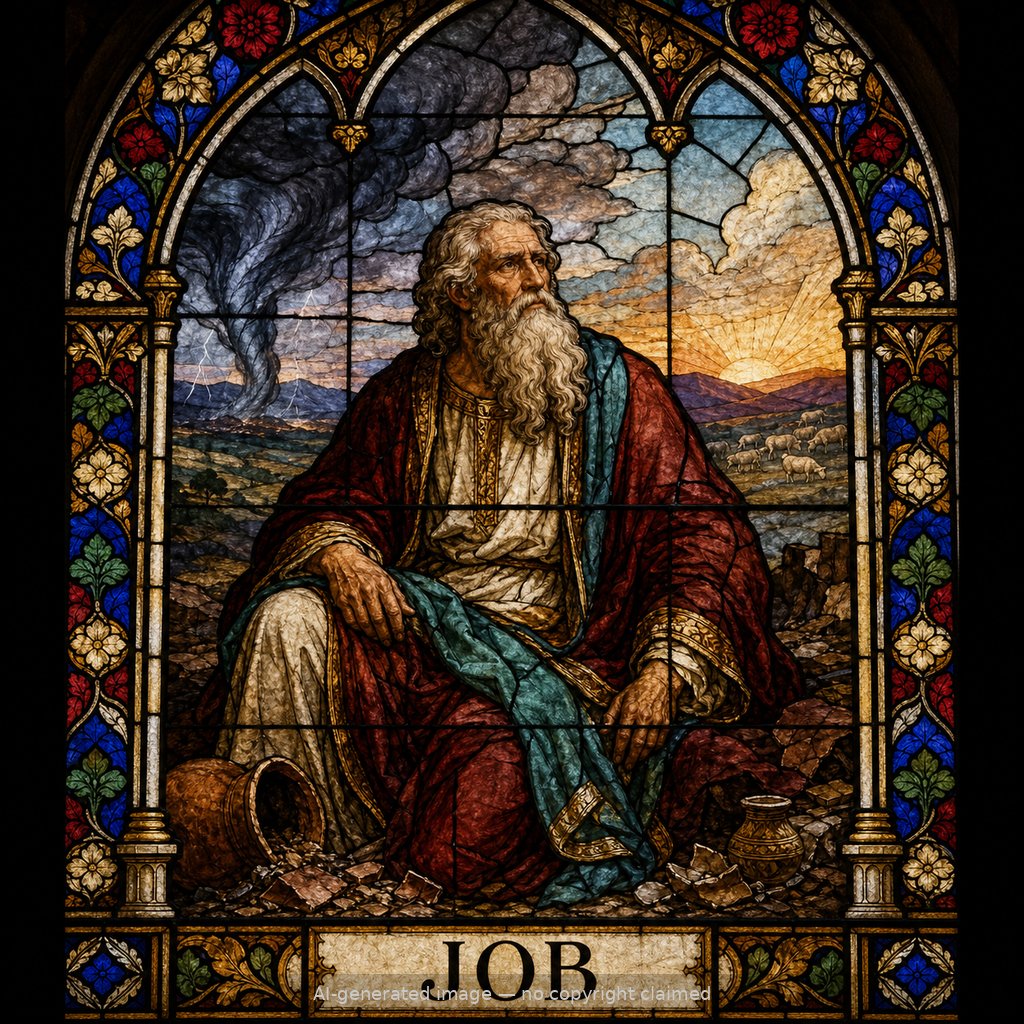
Job (M)
First named in Job 1:1-22
Job was "blameless, upright, fearing God and turning away from evil," a wealthy man of the land of Uz with seven sons and three daughters (Job 1:1-3). In the book's opening scene, Satan appears before the LORD and challenges whether Job's righteousness is genuine or merely bought by blessing; God permits Satan to strip Job of his wealth and children, then his health, but forbids taking his life (1:6-2:6). Job loses everything in a single day and is afflicted with agonizing sores from head to foot, yet responds, "Shall we indeed accept good from God and not accept adversity?" (2:10). His wife tells him to "curse God and die"; he refuses (2:9). Three friends -- Eliphaz, Bildad, and Zophar -- arrive to comfort him, but their long speeches insist his suffering must be deserved, provoking Job into raw, anguished protest: he curses the day of his birth (3:1-3), demands an audience with God to plead his innocence, and refuses to accept his friends' simplistic formula that suffering always equals guilt. A younger man, Elihu, speaks next, defending God's justice without fully answering Job's questions. Finally God Himself answers Job out of a whirlwind (38:1) -- not with an explanation of why Job suffered, but with an overwhelming display of His own wisdom and power in creation, before which Job repents "in dust and ashes" (42:6). God rebukes the three friends for misrepresenting Him, vindicates Job, and restores him with double his former wealth and a new family (42:7-17).
Thought for Today
Job lost everything, and still he could say, 'shall I accept good from God, and not adversity?' May we hold onto that same trust on our hardest days.
References: Job 1:1-22; Job 2:3-11; Job 3:1-2; Job 6:1; Job 9:1; Job 12:1; Job 16:1; Job 19:1; Job 21:1; Job 23:1; Job 26:2; Job 27:1; Job 29:1; Job 31:40; Job 32:1-12; Job 33:1-31; Job 34:5-36; Job 35:16; Job 37:14; Job 38:1; Job 40:1-6; Job 42:1-17; Ezekiel 14:14-20; James 5:11
Genealogy
Connections
- Job (M) — begot → Jemimah (F)
- Job (M) — begot → Keziah (F)
- Job (M) — begot → Keren-happuch (F)
- Eliphaz (M) ↔ accused him of hidden sin ↔ Job (M)
Eliphaz, the first of Job's three friends to speak, argued that Job's suffering must be punishment for hidden sin, eventually accusing him outright of oppressing widows and orphans; God later rebuked Eliphaz for not speaking rightly about Him and required Job to pray for him.
Job 4:7-8; Job 22:5-9; Job 42:7-9
- Zophar (M) — accused him of hidden sin → Job (M)
Zophar bluntly told the suffering Job that God was punishing him less than his sin deserved and later described in vivid detail the destruction awaiting the wicked, wrongly assuming Job's suffering proved his guilt; God later rebuked Zophar along with Job's other two friends for not speaking rightly of Him, requiring a sacrifice and Job's intercession before restoring them.
Job 11:1-20; Job 20:1-29; Job 42:7-9
- Bildad (M) ↔ argued Job's suffering was deserved punishment ↔ Job (M)
Bildad, one of Job's three friends, insisted across several speeches that God never perverts justice and that Job's children's deaths and his own suffering must reflect hidden sin, a charge Job rejected as he protested his innocence; God later rebuked Bildad for misrepresenting Him and required a sacrifice, which Job himself offered on his behalf.
Job 8:1-22; Job 18:1-21; Job 42:7-9
- Elihu (M) — confronted his self-justification at length → Job (M)
After Job's three friends ran out of answers, the younger Elihu spoke at length across four chapters, angry that Job had justified himself rather than God and that the friends had condemned Job without answering him; he argued that God is greater than any human accuser and uses suffering to instruct rather than merely punish.
Job 32:1; Job 37:24
Places
- Uz — the blameless man of this land who lost everything and was restored twofold
Job 1:1-3; Job 42:10-12