 Lives of Scripture
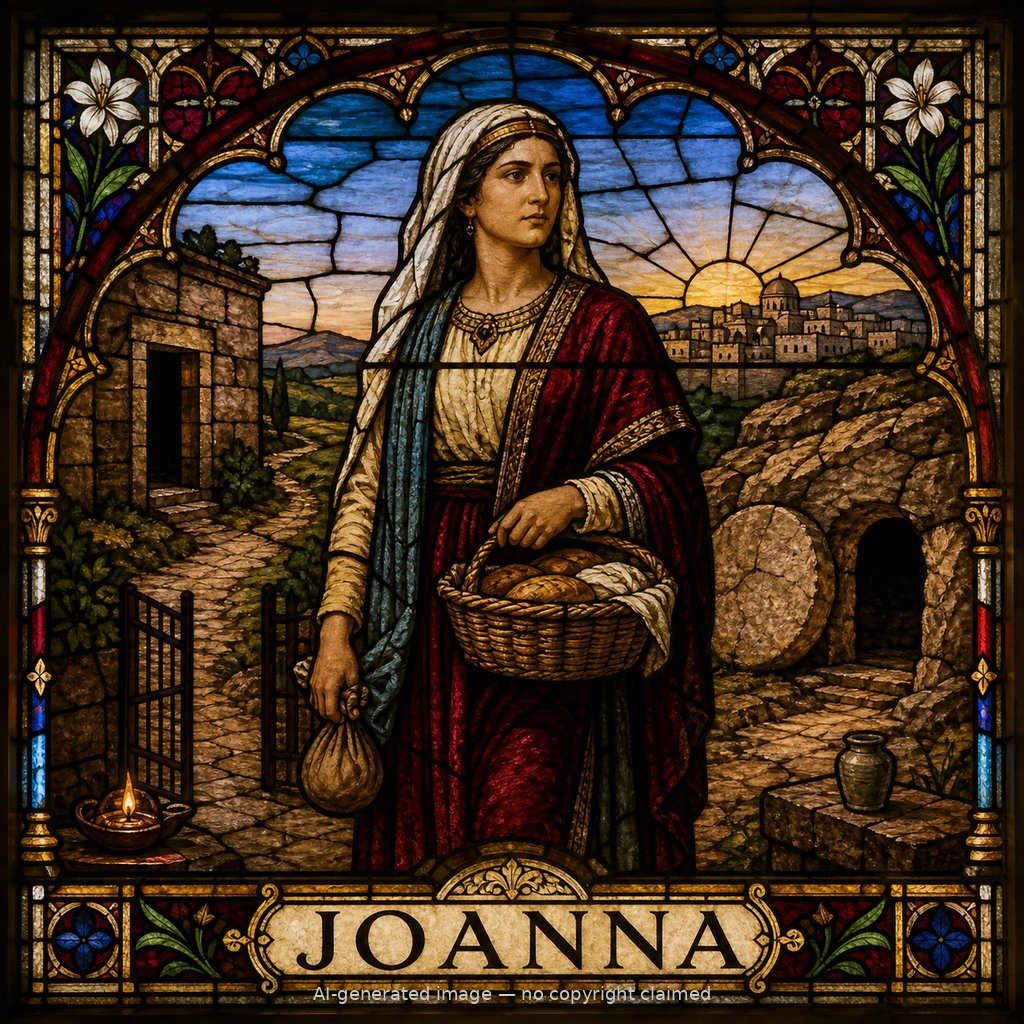
Joanna (F)
First named in Luke 8:3
Joanna appears twice in Luke's Gospel, both times among a small group of named women. She is introduced as "the wife of Chuza, Herod's steward" -- a position of real standing in Herod Antipas's court -- who, along with Mary Magdalene, Susanna, and many others, traveled with Jesus and the Twelve and "were contributing to their support out of their private means" (Luke 8:1-3). Her wealth and connections funded an itinerant ministry that had no other income, a quiet but essential form of discipleship. Luke names her again after the crucifixion: Joanna is among the women who came to Jesus's tomb at dawn, found the stone rolled away and the body gone, and were told by two angelic figures, "He is not here, but He has risen" (24:1-7). She and the other women ran and told this to the eleven apostles and the rest, "but these words appeared to them as nonsense, and they would not believe them" (24:9-11). Joanna's discipleship spans the whole arc of Luke's Gospel -- from financing Jesus's Galilean ministry out of her own resources to being among the very first witnesses of His resurrection and the first to carry that news, unbelieved, to the very apostles who would later preach it to the world.
Thought for Today
Joanna used her own wealth and standing at Herod's court to help fund Jesus's ministry. Jesus welcomes whatever we have to offer, however unlikely the source.
References: Luke 8:3; Luke 24:10