Lives of Scripture

Hanani (M)
First named in Nehemiah 1:2
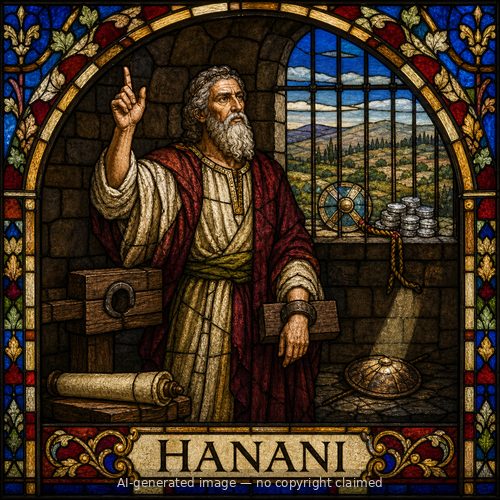
Hanani was Nehemiah's brother, and it was his visit to the Persian capital of Susa, along with men from Judah, that set Nehemiah's whole mission in motion. Nehemiah asked them about Jerusalem, and Hanani reported: "The remnant there in the province who survived the captivity are in great distress and reproach, and the wall of Jerusalem is broken down and its gates are burned with fire" (Nehemiah 1:2-3). The news devastated Nehemiah -- he sat down, wept, mourned, fasted, and prayed for days before approaching King Artaxerxes for permission to go rebuild the city (1:4-11; 2:1-8). Once Jerusalem's wall was completed, Nehemiah placed Hanani in charge of the city alongside Hananiah the commander of the fortress, explicitly "because he was a faithful man and feared God more than many" (7:2) -- a rare, direct commendation of character. A Hanani also appears leading part of the procession of musicians at the wall's dedication ceremony, though Scripture does not state whether this is certainly the same man (12:36). Though he speaks only once in the narrative, Hanani's honest, grieving account of Jerusalem's condition is the hinge on which the entire book of Nehemiah turns, and his trustworthiness under Nehemiah's own testimony makes him a quiet model of faithful, God-fearing service.
Thought for Today
Hanani's honest report on Jerusalem's ruins moved Nehemiah to pray and act, and he was praised for fearing God. May we be as faithful wherever Jesus places us.
References: Nehemiah 1:2; Nehemiah 7:2; Nehemiah 12:36
Genealogy
Father
—Mother
—Spouse(s)
—Children
—Places
Other people named Hanani