 Lives of Scripture
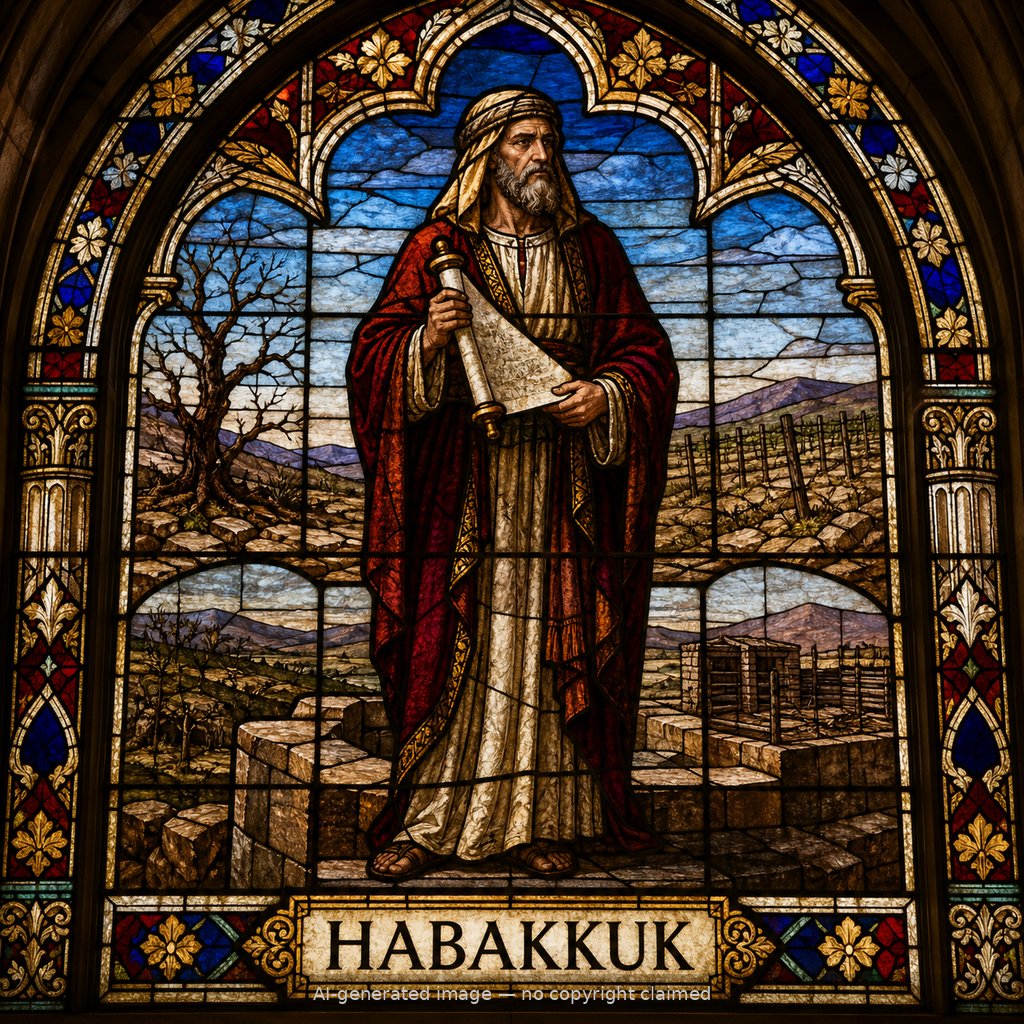
Habakkuk (M)
First named in Habakkuk 1:1
Habakkuk is unusual among the prophets: rather than delivering God's message to the people, his book is a dialogue directly with God, wrestling honestly with hard questions. He opens by crying out over injustice and violence within Judah itself: "How long, O LORD, will I call for help, and You will not hear?" (Habakkuk 1:2-4). God's answer troubles him further — He is raising up the Babylonians, a nation "more wicked," to bring judgment (Habakkuk 1:5-11). Habakkuk pushes back: how can a holy God use a nation even more corrupt than Judah as His instrument? (Habakkuk 1:12-2:1). God's second answer becomes one of Scripture's most important verses: "the righteous shall live by his faith" — a life of trust in God, not visible outcomes, is what genuine righteousness looks like — quoted twice by Paul and once in Hebrews as foundational to the gospel (Habakkuk 2:4; Romans 1:17; Galatians 3:11; Hebrews 10:38). God also promises Babylon's own pride and violence will eventually be judged in turn (Habakkuk 2:6-20). Habakkuk's book closes not with resolved circumstances but with resolved faith: even if every crop fails and every flock dies, "yet I will rejoice in the LORD; I will take joy in the God of my salvation" (Habakkuk 3:17-19).
Thought for Today
God's answer to Habakkuk's hardest question became one of Scripture's most quoted lines: 'the righteous shall live by his faith.' Paul and the writer of Hebrews both anchor the gospel itself on that same verse, since trusting Jesus, not visible outcomes, is what real righteousness has always looked like.
References: Habakkuk 1:1; Habakkuk 3:1
Genealogy
Father
—Mother
—Spouse(s)
—Children
—Places
- Kingdom of Judah — prophesied to this kingdom of the coming Babylonian judgment
Habakkuk 1:1-6