 Lives of Scripture
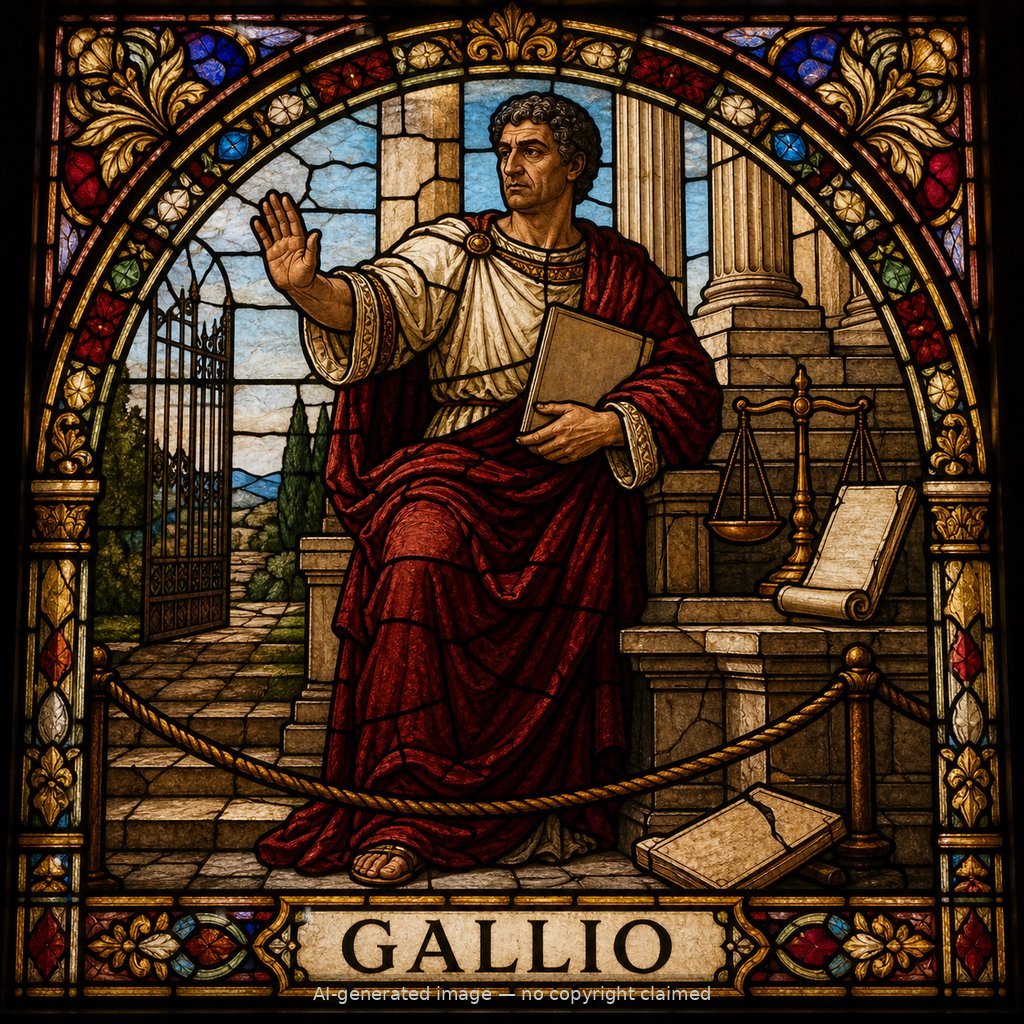
Gallio (M)
First named in Acts 18:12-17
Gallio, the Roman proconsul of the province of Achaia, presided at Corinth when Jewish leaders united to bring Paul before his judgment seat, accusing him of "persuading men to worship God contrary to the law" (Acts 18:12-13). Before Paul could even offer a defense, Gallio cut the proceedings short, ruling that since the charge involved "words and names and your own law," it fell outside Roman jurisdiction: "I am unwilling to be a judge of these matters... I do not wish to be a judge of these things" (18:14-15). He drove the accusers away from the judgment seat (18:16). Immediately afterward, the crowd seized Sosthenes, a synagogue official, and beat him in front of the tribunal, "but Gallio was not concerned about any of these things" (18:17). Gallio's studied indifference to the whole dispute was not sympathy for Paul's message -- he shows no interest in the theological content at all -- but his ruling had the practical effect of establishing, in a major Roman province, that Christian preaching was not a punishable civil offense, a precedent that likely protected early Christian missionaries from similar legal harassment elsewhere in the empire. Gallio is identified in Roman records as the brother of the philosopher Seneca, and an inscription discovered at Delphi dating his proconsulship has become a key fixed point for dating Paul's ministry in Corinth.
Thought for Today
Gallio's ruling that Christian preaching broke no Roman law protected early believers, though he had no interest in Christ. God can use indifferent rulers to protect Jesus' gospel.
References: Acts 18:12-17
Genealogy
Father
—Mother
—Spouse(s)
—Children
—Places
- Corinth — the proconsul who dismissed the Jews' charges against Paul here
Acts 18:12-16