 Lives of Scripture
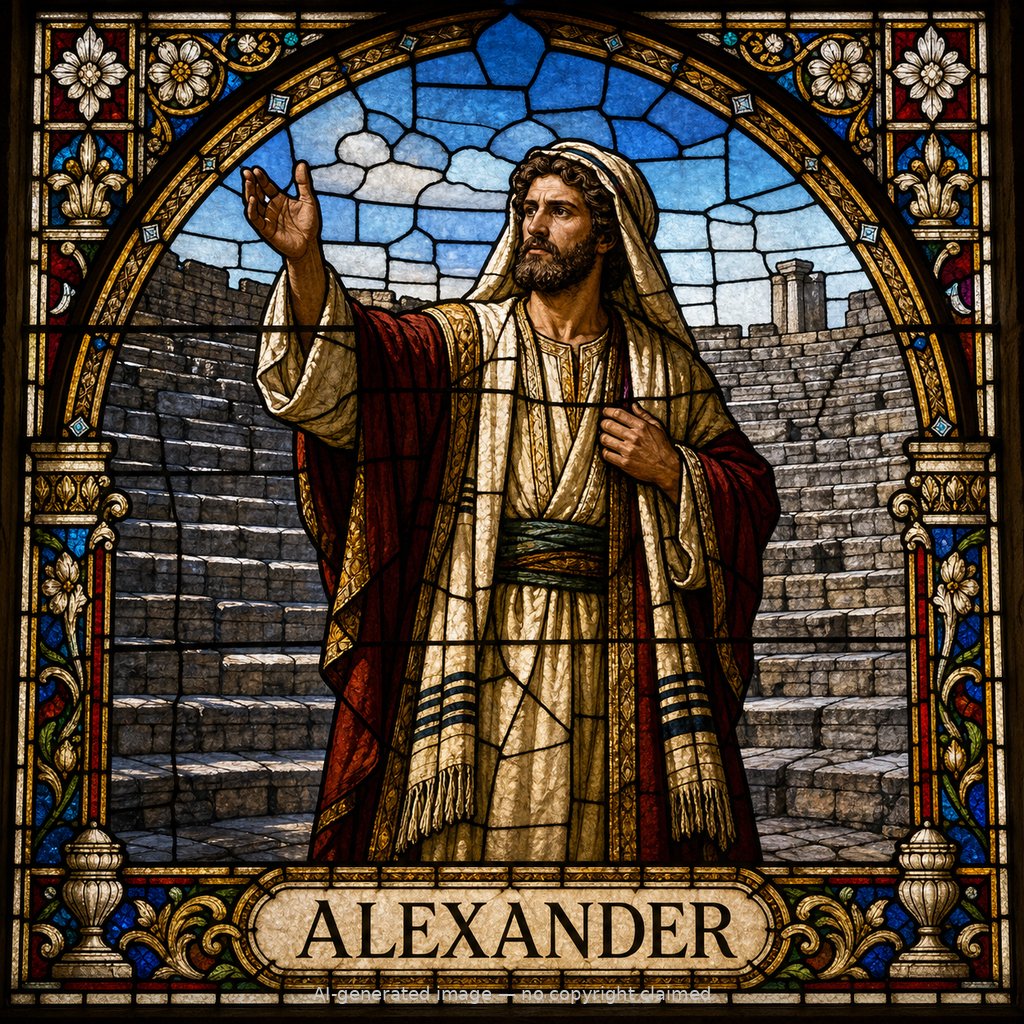
Alexander (M)
First named in Acts 19:33
During Paul's lengthy ministry in Ephesus, a silversmith named Demetrius incited a riot among craftsmen whose profitable trade in silver shrines of Artemis was threatened by the spread of the gospel (Acts 19:23-27). A mob seized two of Paul's traveling companions and dragged them into the city's great theater, where confused shouting continued for hours, "for the assembly was in confusion, and the majority did not know for what reason they had come together" (19:32). In the chaos, "some of the crowd concluded it was Alexander, since the Jews had put him forward; and having motioned with his hand, Alexander was intending to make a defense to the assembly" (19:33). What he meant to say is not recorded -- perhaps an attempt to separate Ephesus's Jewish community from the Christian preaching the crowd blamed for their economic losses. He never got the chance: "when they recognized that he was a Jew, a single outcry arose from them all as they shouted for about two hours, 'Great is Artemis of the Ephesians!'" (19:34). The riot only ends when the city clerk warns the crowd that Rome could hold the whole city accountable for the disorder (19:35-41). Alexander disappears from the narrative as abruptly as he entered it -- a man silenced before he could speak.
Thought for Today
Alexander tried to speak but the crowd shouted him down for two hours. Unlike Alexander, the gospel of Jesus could not be silenced in Ephesus.
References: Acts 19:33
Genealogy
Father
—Mother
—Spouse(s)
—Children
—Places
- Ephesus — the Jew pushed forward by the crowd during the silversmiths' riot here
Acts 19:33