Lives of Scripture
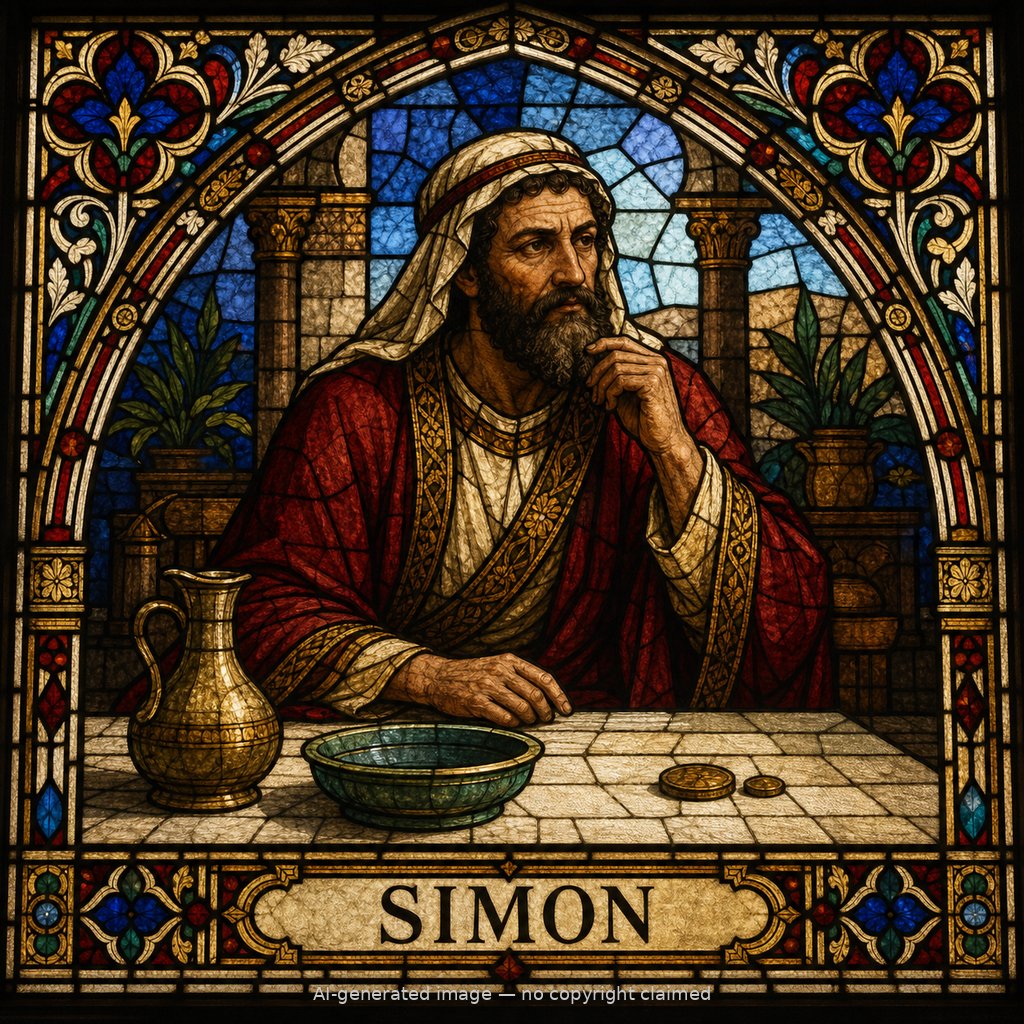
Simon (M)
First named in Luke 7:40-44
Simon was a Pharisee who invited Jesus to dine at his home, an invitation Jesus accepted (Luke 7:36). During the meal, a woman of the town known for sin entered uninvited, wept at Jesus's feet, wiped them with her hair, kissed them, and anointed them with perfume -- a scandalous public display. Simon's reaction was silent judgment, both of the woman and of Jesus: "If this man were a prophet He would know who and what sort of person this woman is... for she is a sinner" (7:39). Jesus, perceiving his thoughts, addressed him directly by name and told a brief parable of two debtors, one forgiven five hundred denarii and one fifty, then asked which would love the moneylender more. Simon answered correctly -- "I suppose the one whom he forgave more" -- and Jesus used his own answer to expose his failure of ordinary hospitality (no water for Jesus's feet, no kiss of greeting, no oil for His head) set against the woman's extravagant devotion (7:40-46). Jesus then declared her sins, many as they were, forgiven, "for she loved much," while the one forgiven little loves little (7:47). Simon is never shown responding further; Scripture leaves his story as a pointed, unresolved rebuke to religious respectability that judges sinners while missing its own need for grace.
Thought for Today
Simon quietly judged a sinful woman while missing his own need for forgiveness. Jesus taught him that those forgiven much love much in return.
References: Luke 7:40-44
Genealogy
Father
—Mother
—Spouse(s)
—Children
—Other people named Simon