Lives of Scripture
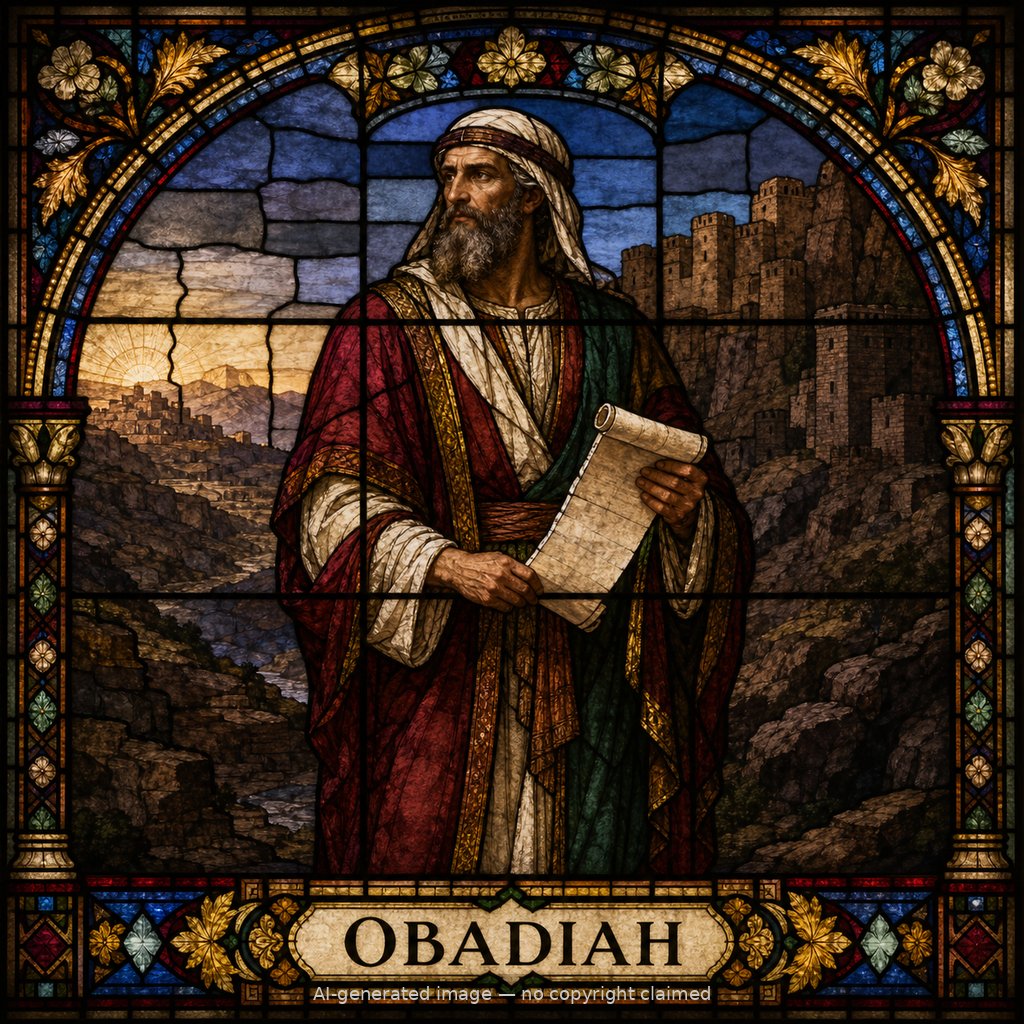
Obadiah (M)
First named in Obadiah 1:1
Obadiah's book is the shortest in the Old Testament — just twenty-one verses — and almost nothing is recorded about the man himself beyond his name, which means "servant of the LORD," a common name shared by several Old Testament figures. His entire message is a judgment against Edom, descendants of Jacob's brother Esau, for standing aside or actively helping when foreigners looted Jerusalem, gloating over their kinsman nation's disaster (Obadiah 1:10-14). Obadiah reminds Edom that pride in their mountain strongholds would not save them: "Though you soar aloft like the eagle... I will bring you down" (Obadiah 1:3-4). Because Edom took joy in Jacob's calamity instead of showing family loyalty, Obadiah declares "as you have done, it shall be done to you" (Obadiah 1:15). The book closes by looking beyond judgment to hope: deliverance would come to Mount Zion, God's people would possess their inheritance again, and ultimately "the kingdom shall be the LORD's" (Obadiah 1:17-21) — a brief but firm assurance that human cruelty and pride do not have the final word in God's redemptive plan.
Thought for Today
Edom felt safe high in their mountain strongholds, and they gloated while enemies looted Jerusalem instead of helping. Obadiah told them their fortresses would not save them. Jesus reminds us that no wall and no success can hide us from God.
References: Obadiah 1:1
Genealogy
Father
—Mother
—Spouse(s)
—Children
—Places
Other people named Obadiah