 Lives of Scripture
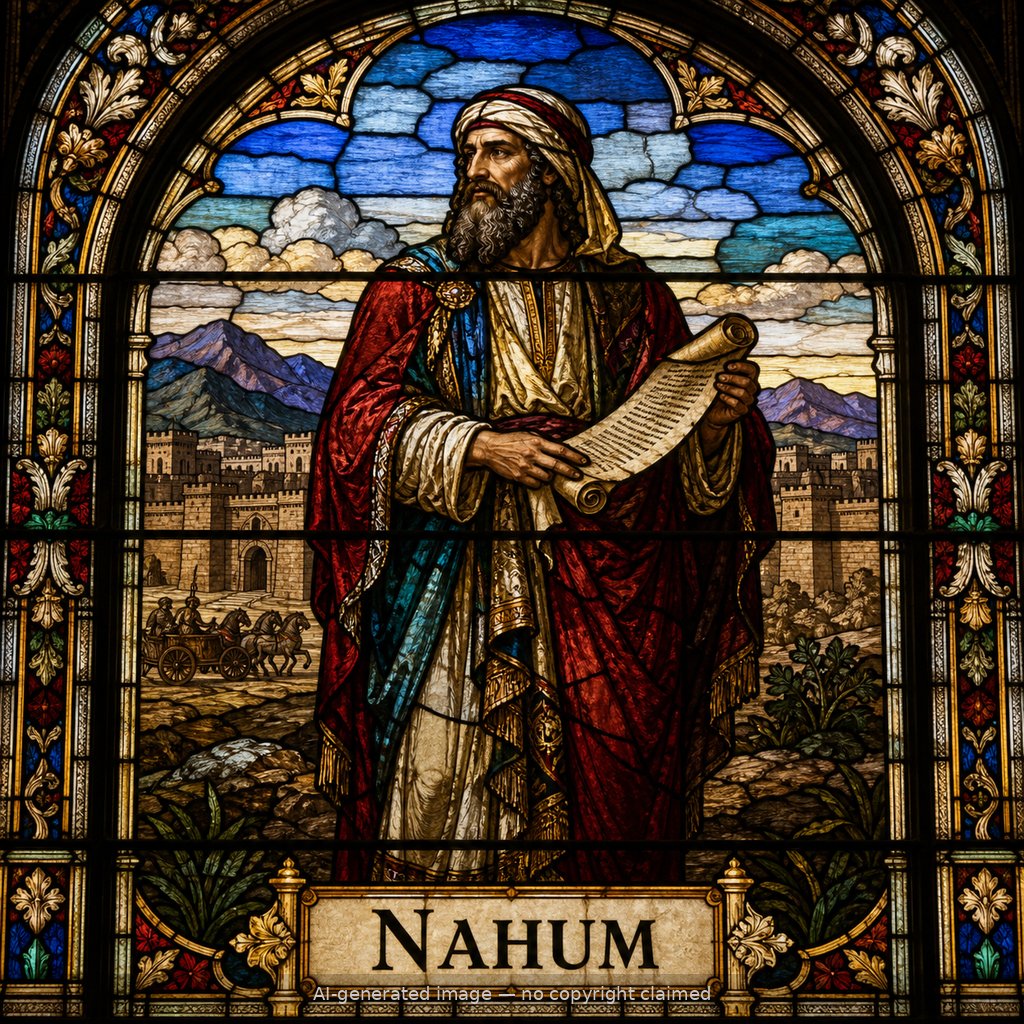
Nahum (M)
First named in Nahum 1:1
Almost nothing is recorded of Nahum beyond his hometown, Elkosh, a location no longer identifiable with certainty (Nahum 1:1). His entire brief book is directed at Nineveh, capital of the Assyrian empire that had brutalized Israel and Judah for generations — the same city that had repented under Jonah's preaching roughly a century earlier, but had since reverted to violent cruelty. Nahum opens by affirming God's patient character even as he pronounces judgment: "The LORD is slow to anger and great in power, and the LORD will by no means clear the guilty" (Nahum 1:3). He describes Nineveh's coming destruction in vivid, almost cinematic detail — chariots racing in the streets, its defenses collapsing, its plunder stripped bare — announcing that the empire's cruelty toward conquered nations had finally reached its limit (Nahum 2:1-3:19). Nahum points to the earlier fall of Egyptian Thebes ("No-amon") as proof that no city, however fortified, is beyond God's reach when its cruelty is finished being tolerated (Nahum 3:8-10). For Judah, still under Assyrian domination, Nahum's message was meant as comfort as much as threat: "Behold, on the mountains the feet of him who brings good news, who proclaims peace!" (Nahum 1:15). Nineveh did fall to a coalition of Babylonians and Medes in 612 BC, within a generation of Nahum's prophecy.
Thought for Today
Nahum announced that Nineveh's long-tolerated cruelty had finally reached its limit, since 'the LORD will by no means clear the guilty.' Jesus is the one place that same justice was actually satisfied for us instead of falling on us, at a cost we could never have paid ourselves.
References: Nahum 1:1